AI skin analyzers use computer vision and machine learning to flag skin concerns the way a dermatologist would. In this article we'll break down what skin analyzers are, how they work, and whether they're worth using.
AI skin analyzers use computer vision and machine learning to flag skin concerns the way a dermatologist would. In this article we'll break down what skin analyzers are, how they work, and whether they're worth using.
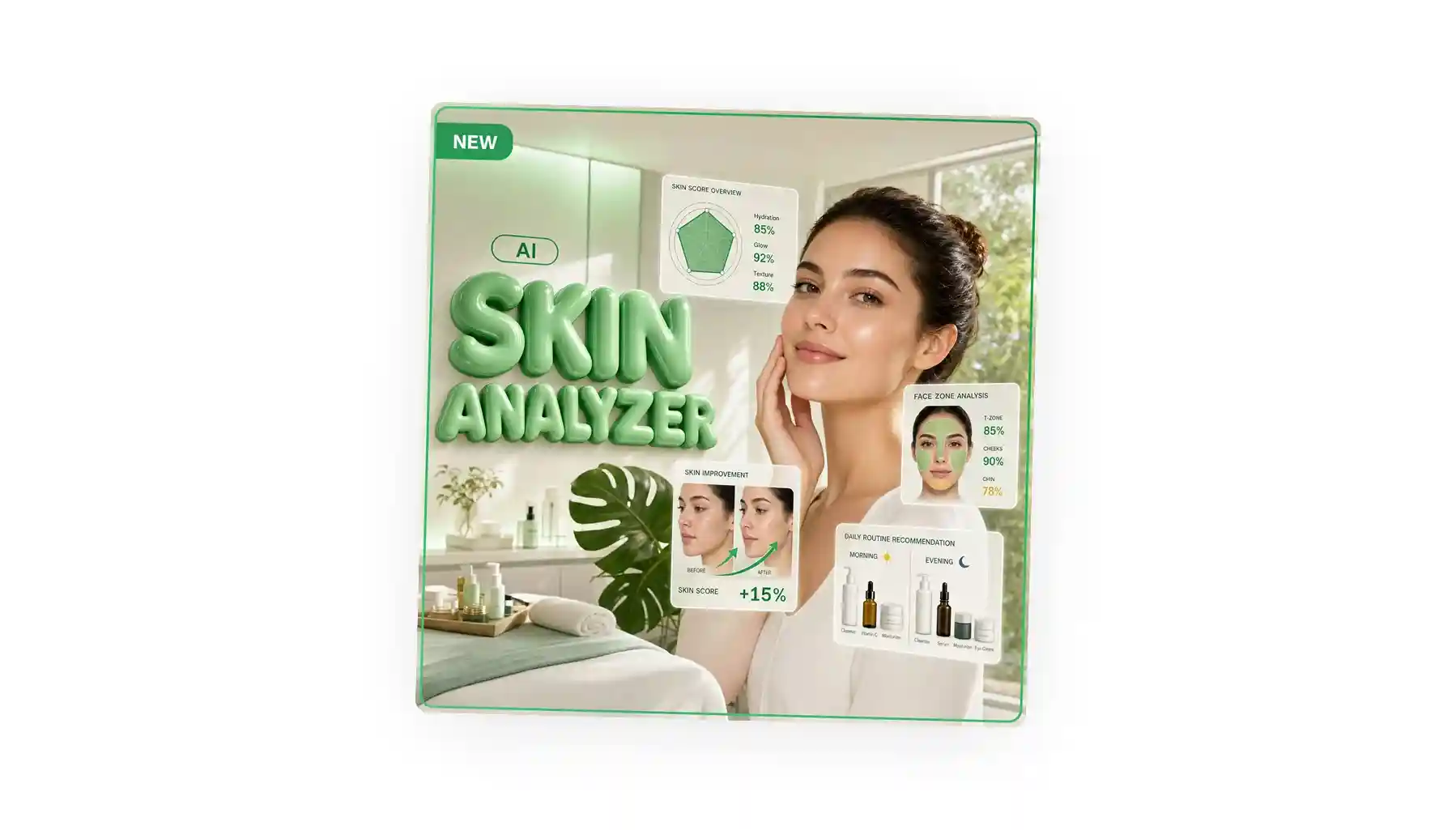
The best AI skin analyzer in 2026 is the Overchat AI Skin Analyzer. Overchat AI is an all-in-one AI platform with over 150 tools and models. Skin analyzers use computer-vision and LLM models trained on millions of photos to grade your skin and return a report — as a visual, as text, or both — on what to improve.
In a clinical setting, when you visit a dermatologist, they usually use a machine like VISIA to take a picture of your skin under controlled light and then analyze your skin type. The AI does roughly the same thing online, delivering the results within 30 seconds.
An AI scan is objective. AI skin analysis gives each concern a number, which makes it easier to track whether a product is working over a few weeks.
An AI skin analysis gives you skincare tips that are optimized for your specific skin type.
AI skin analysis is faster and cheaper than the alternatives. A dermatologist visit costs hundreds of dollars, while AI skin analysis is usually under $20 for a complete skincare report.
Is AI skin analysis as accurate as a professional one? No — AI tools are based on generative technology that isn't surgical, but for all intents and purposes, it's accurate enough for cosmetic purposes.
AI skin analysis tools use AI image-to-image models — vision models that take an image as input and produce a result. Since image models are trained on large sets of labeled face photos, the model has effectively "seen" enough skin to recognize normal, oily, or combination skin, as well as common skin concerns.
Yes — AI skin analysis is worth it, as long as you're using it cosmetically and not to diagnose a medical condition.
Disclaimer: AI can make mistakes. Do not use AI assistants as substitutes for professional healthcare services.
For cosmetic advice, AI skin analysis is very accurate. For instance, L'Oréal's Skin Genius tool reaches up to 95% agreement with a live dermatologist consultation.
Note: to make AI skin analysis accurate, take a photo in diffused, even light, since the quality of the image directly impacts the accuracy of the result. Make sure your skin isn't wet, and remove any makeup.
To summarize whether AI skin analysis is worth it — yes, because for cosmetic purposes it's as accurate as a professional dermatologist consultation, but more convenient (done online on demand) and cheaper (costing single or tens of dollars versus potentially hundreds).
After testing over 15 AI skin analyzers, we've landed on the 6 best ones. Here's what we think the best AI skin analyzers are:
| Tool | What it is |
|---|---|
| Overchat AI Skin Analyzer | Consumer scanner inside an all-in-one AI platform — 10+ concerns, a routine, and the photo feeds other image tools |
| Haut.AI | B2B skin-analysis platform trained on 3M+ images, 200+ metrics; powers other brands' tools |
| Perfect Corp | Beauty-tech leader with a free consumer app reading 15 skin concerns |
| AI Dermatologist (ai-derm) | Medical-leaning skin scanner focused on screening moles and lesions |
| La Roche-Posay MyRoutine | Skincare-brand quiz tool that ends in La Roche-Posay product picks |
| ScanSkinAI | Free no-login selfie scanner that returns 10 skin scores |
The Overchat AI Skin Analyzer is a web-based skin analysis tool that generates a visual skin report based on a photograph.
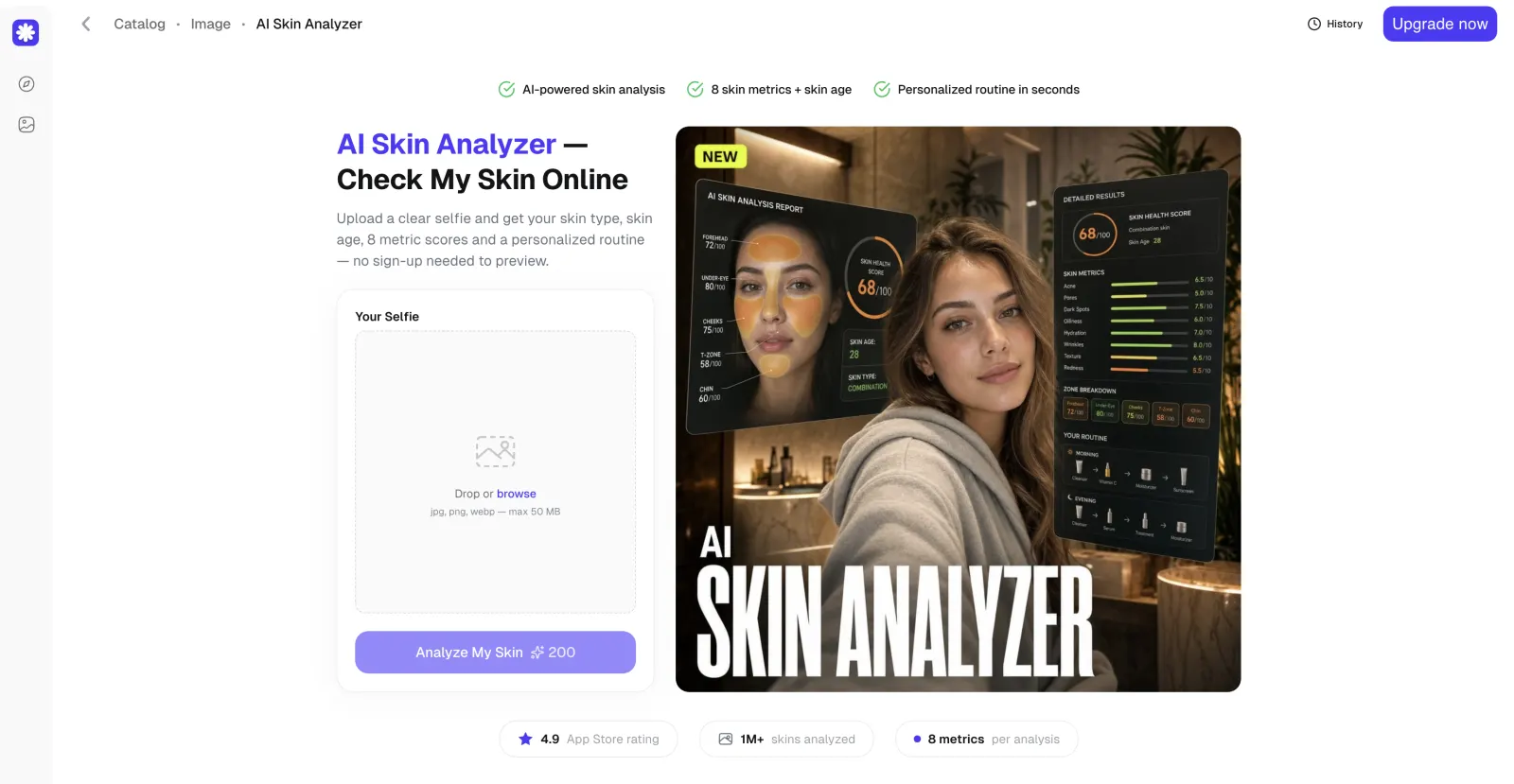
The Overchat AI Skin Analyzer flags 10+ concerns, including but not limited to:
It also classifies your skin type: dry, oily, combination, normal, or sensitive.
Overchat AI isn't affiliated with any skincare company, so it recommends the type of product that's right for you rather than a specific brand. You can then pick a product from any brand you trust, in any price bracket, knowing what kind of skincare to look for.
The Overchat AI Skin Analyzer is one of 150+ AI-powered tools on the Overchat AI platform, an all-in-one AI app. An Overchat AI subscription unlocks the entire platform, including other beauty tools such as AI looksmaxing, face rating, and the attractiveness test.
Price: $14.99/month or $49.99/year.
Pros:
✅ Region-by-region breakdown plus a real routine, not just scores
✅ The result feeds dozens of other AI image tools on the same platform
✅ Fast (about 30 seconds) and works from one phone selfie
Haut.AI is a B2B skin-analysis platform, not a consumer app. Founded in 2018 and based in Estonia, it sells its technology to beauty brands and retailers, who embed it in their own tools — so many of the branded "skin analysis" features you meet online run on Haut.AI underneath.
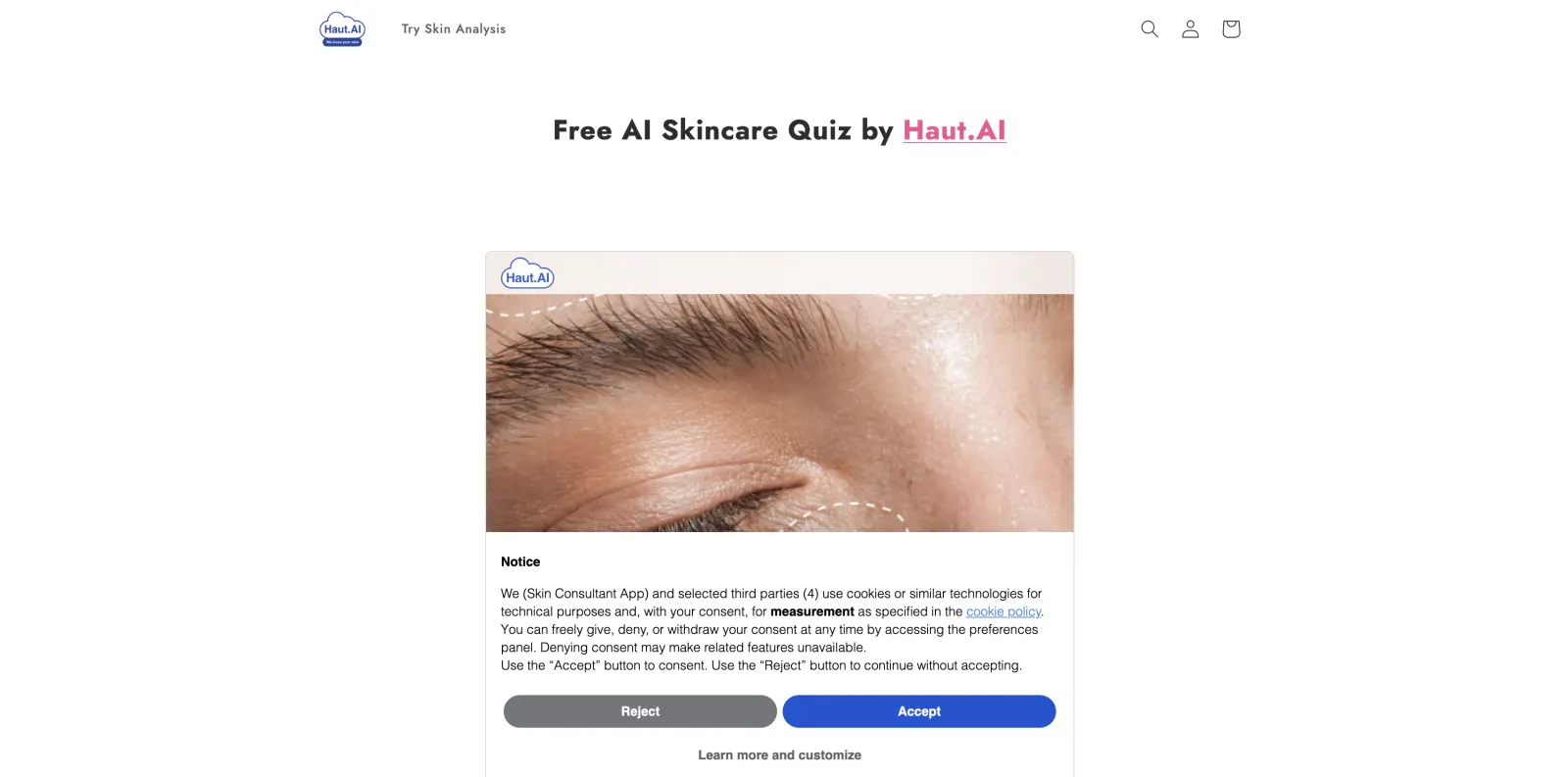
Its models are trained on over 3 million facial images and assess 150+ facial biomarkers across more than 200 skin and aging metrics. The closest thing to a consumer entry point is its Skin Analysis Pro quiz; the full engine is licensed to businesses.
Detects: 200+ metrics covering aging, hydration, pigmentation, sensitivity, skin type, and zone-specific scoring.
Price: Enterprise pricing for brands; a free consumer quiz is available separately.
Pros:
✅ One of the deepest analyses available, backed by a large training set
✅ Developed with dermatologists and AI researchers, strong on accuracy
Cons:
❌ Built for businesses, not as a self-serve consumer tool
❌ The consumer-facing quiz is a stripped-down version of the full platform
Perfect Corp is a beauty-tech company best known for its YouCam apps and AR virtual makeup try-on, which it licenses to cosmetics brands. It went public on the NYSE in 2022. Its skin analysis sits inside that wider product suite rather than as a single-purpose tool.
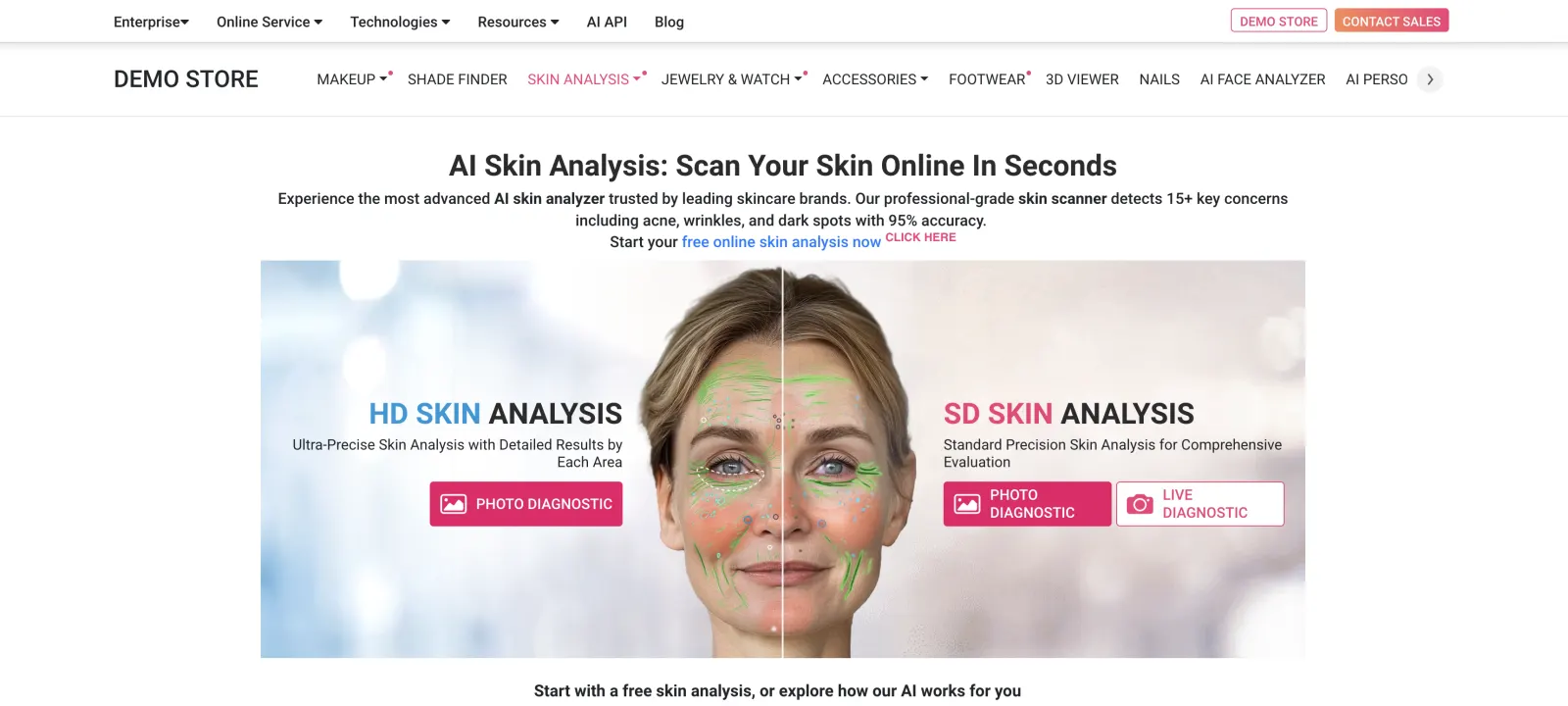
The analysis reads 15 skin concerns from a selfie:
| Skin concerns Perfect Corp detects | ||
|---|---|---|
| Spots | Wrinkles | Texture |
| Dark circles | Oiliness | Acne |
| Radiance | Eye bags | Redness |
| Firmness | Pores | Moisture |
| Droopy eyelids |
Price: Free consumer app; enterprise pricing for the brand-facing product.
Pros:
✅ Broad 15-concern read in a clean, mature interface
✅ Free to try, backed by an established public company
Cons:
❌ The consumer app leans toward product try-on over a standalone routine
❌ The deepest analysis features sit behind the business product
AI Dermatologist (ai-derm) is a medical-screening tool rather than a cosmetic one. You photograph a specific spot — a mole, a lesion, a rash — and it estimates the risk level and tells you whether it's worth getting checked by a doctor. It covers common dermatological conditions, including risk indicators for skin cancer.
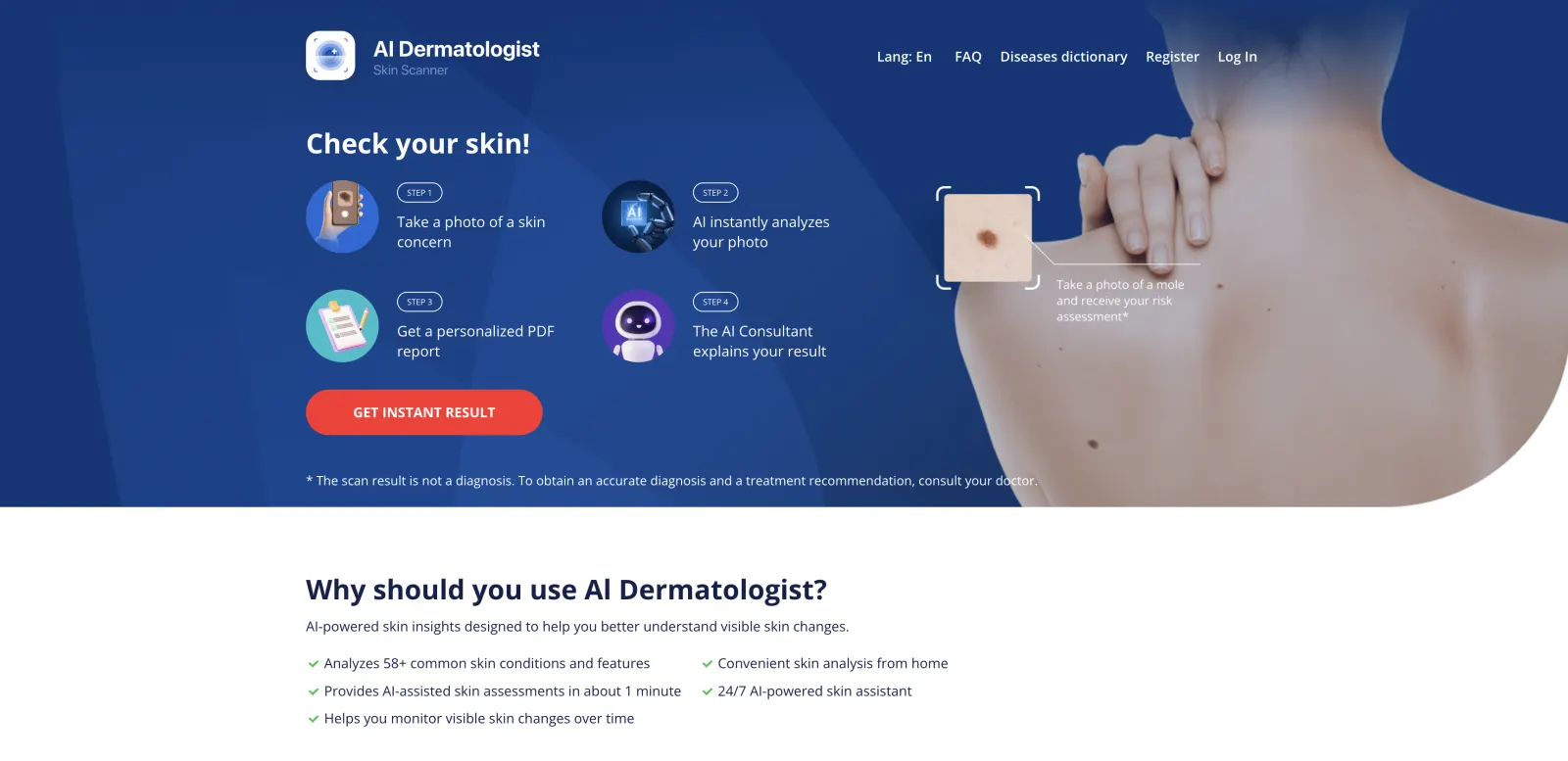
This makes it the tool to reach for when the question is "should I worry about this?" rather than "how is my skin doing?". It is explicit that its output is a screening, not a diagnosis.
Price: Free basic scans, with paid options for fuller reports.
Pros:
✅ The right tool when you're worried about a specific mole or spot
✅ Fills a screening gap the cosmetic tools ignore
Cons:
❌ Not built for routine cosmetic tracking like pores or hydration
❌ Only a screen — it can't replace a dermatologist's exam
MyRoutine is the skin-analysis tool from La Roche-Posay, the French dermatological skincare brand owned by L'Oréal. It combines a selfie-based read with a skincare quiz, then builds a personalized routine. Every product in that routine is a La Roche-Posay product. The analysis itself is solid and the brand has genuine dermatological credibility, so it works well if you already buy from them — the catch is that the output is effectively a shopping list for one company.
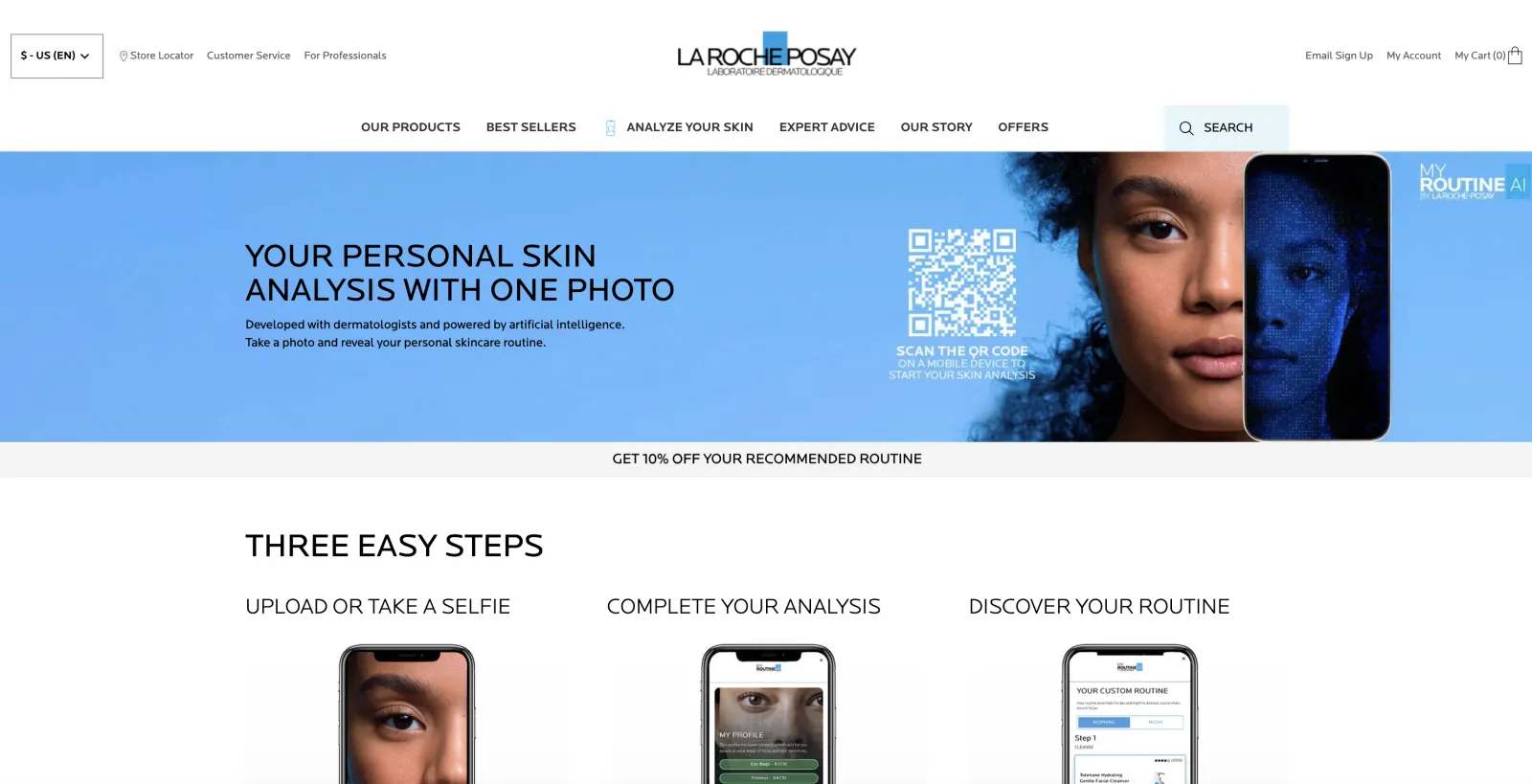
Price: Free.
Pros:
✅ Free, credible, and backed by a dermatological skincare brand
✅ Quick path from analysis to a concrete routine
Cons:
❌ Every recommendation routes back to La Roche-Posay products
❌ Closer to a personalized product finder than a neutral analyzer
ScanSkinAI is a free web-based skin scanner. You upload a selfie and it returns about 10 skin scores in roughly 30 seconds, with no sign-up and no app to install. There's no brand catalog attached, so the scores aren't steering you toward a particular product.
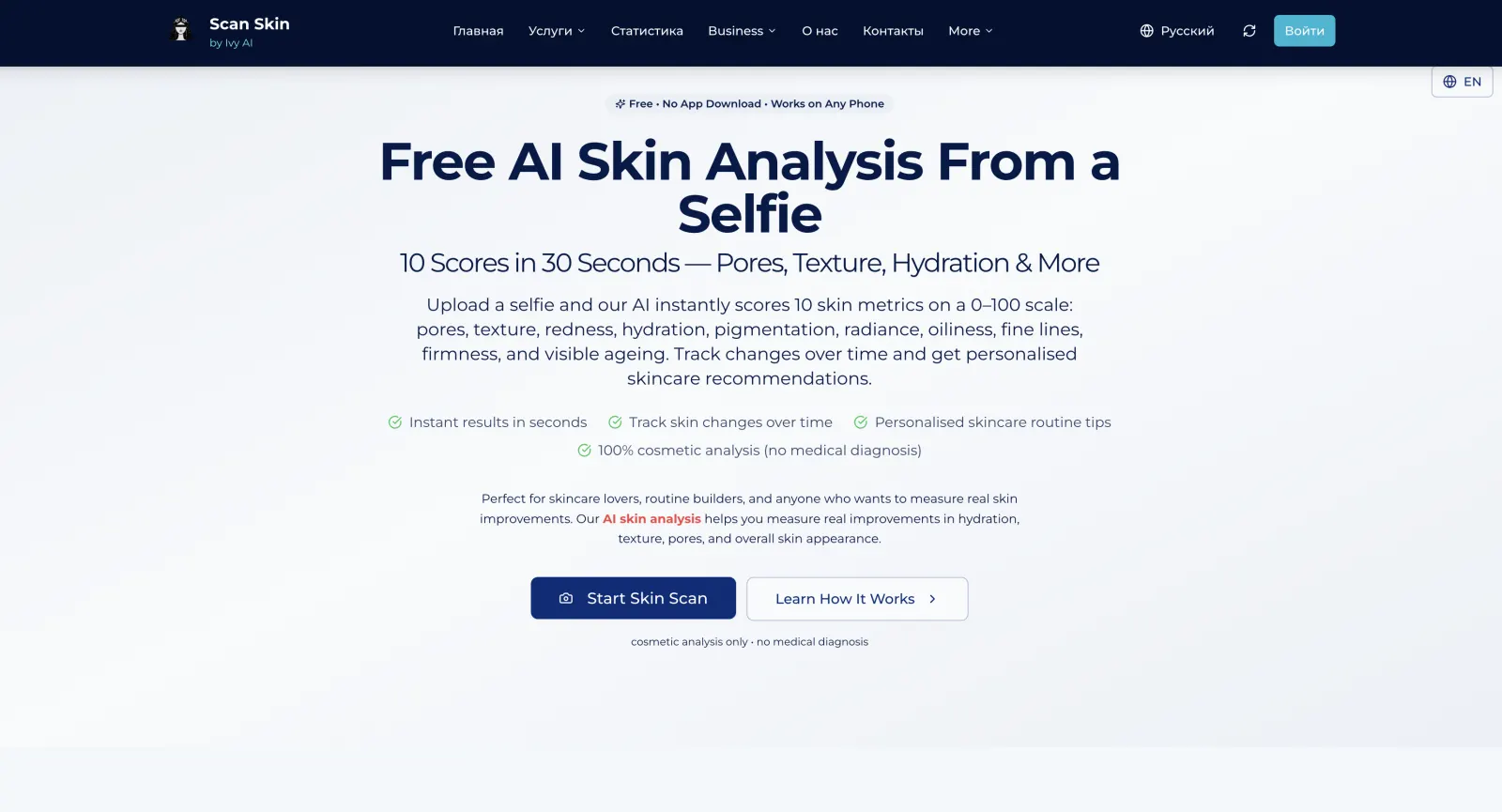
It's a quick read when you just want numbers. The trade-off is depth — you get the scores without the detailed routine or the wider tool set that the larger platforms include.
Price: Free.
Pros:
✅ No sign-up, no install, results in seconds
✅ Brand-neutral, so the scores aren't selling you anything
Cons:
❌ Light on guidance once you have the scores
❌ Less established and less transparent about its underlying model
Common questions about AI skin analysis.
Yes. An AI skin analyzer takes a selfie and uses a computer-vision model to score concerns like wrinkles, pores, pigmentation, redness, and hydration, then classifies your skin type. The result is a cosmetic read of your skin's surface, accurate enough to track changes and build a routine, but it isn't a medical diagnosis.
Often, yes. ScanSkinAI, La Roche-Posay's MyRoutine, and Perfect Corp's consumer app are free to use. The Overchat AI Skin Analyzer offers a free trial, with unlimited scans on its Pro plan that also unlocks the rest of the platform's tools. The deeper B2B platforms like Haut.AI are sold to brands rather than priced for individuals.
ChatGPT can look at a photo and describe skin concerns, and there are custom GPTs built for it. The accuracy is inconsistent, though — a study testing ChatGPT on diagnosing skin diseases from images found results varied a lot by condition. A purpose-built skin analyzer trained on dermatology-graded photos gives more consistent scores, which is why a dedicated tool is the better choice for tracking your skin.
For most people the Overchat AI Skin Analyzer is the best starting point: it reads 10+ concerns in about 30 seconds, gives a real routine, and sits inside an all-in-one platform so the same photo feeds other tools. Haut.AI offers the deepest analysis but is built for brands, and ai-derm is the one to use when you're screening a specific mole.
For surface concerns it's good — brand tools cite up to 95% agreement with a dermatologist on cosmetic grading, and accuracy improves with even lighting and a clear, front-facing photo. It's least reliable for anything below the surface or for serious conditions, so treat it as guidance and see a doctor for anything that looks like it's changing.
The Overchat AI Skin Analyzer is the best skin analysis tool. It's powered by GPT Image 2, a leading image model with high detection accuracy and broad world knowledge, and it flags over 10 common skin concerns from a single selfie. Because it isn't affiliated with any skincare brand, it gives you unbiased recommendations for a routine instead of pushing one company's products. It's also part of an all-in-one AI platform, which makes the subscription more valuable.