About GPT-6.1 Sol
GPT-6.1 Sol is OpenAI's model for coding, long documents and multi-step business workflows, released on September 29, 2026. It sits between GPT-6.1 Terra and GPT-6 Astra in the GPT-6 lineup, reads up to 1 million tokens of text, images and files and writes up to 128,000 tokens in one reply
GPT-6.1 Sol scores 31.0% on GDP.pdf, a test of questions about long professional PDFs, level with GPT-6 Astra and ahead of Claude Opus 5.5 at 26.2%. On hard questions at low reasoning effort, 7.7% of its answers contain a factual error, against 11.4% for GPT-6 Sol, and it says so plainly when a search tool or a source doesn’t work
On Overchat AI, GPT-6.1 Sol shares the chat with Claude Opus 5.5, Gemini 4 Carbon and other models: pick it in the model menu, or let Superchat choose the model for each task
- Modalities
- Intelligence Index?
- 55
- Context window?
- 1M tokens
- Released
- Sep 29, 2026
GPT-6.1 Sol vs other models
GPT-6.1 Sol ranks #5 on the Artificial Analysis Intelligence Index out of 54 models
- 65
 Claude Fable 5.2
- 60
 Gemini 4 Carbon
- 59Claude Opus 5.5
- 57
 GPT-6 Astra
- 55GPT-6.1 Sol
- 50
 Muse Wonder Full
- 46
 Kimi K3.1 Pro
- 44Muse Wonder
- 35
 Grok 4.7
- 33
 DeepSeek V4.1 Flash
- #3of 288 modelsCritPtResearch-level physics problems
- #4of 63 modelsAA-OmniscienceKnowledge questions answered correctly
- #7of 130 modelsTerminal-Bench 4.0Hard tasks an agent completes in a terminal
- #9of 344 modelsHumanity's Last ExamExpert-level questions across many subjects
Source: Artificial Analysis
Compare GPT-6.1 Sol
GPT-6.1 Sol vs GPT-6 Astra
GPT-6.1 Sol scores higher than GPT-6 Astra in 0 of 5 benchmarks. GPT-6 Astra is ahead in Terminal-Bench-Science 0.1: 63.3% against 58.1%. GPT-6.1 Sol writes 58 tokens per second, GPT-6 Astra writes 48
- Benchmarks won
- GPT-6.1 Sol: 0
- GPT-6 Astra: 5
- Average score
- GPT-6.1 Sol: 50.1%
- GPT-6 Astra: 52.9%
- Output speed, tokens/s
- GPT-6.1 Sol: 58
- GPT-6 Astra: 48
- Time to first token, s (log scale)
- GPT-6.1 Sol: 2.9
- GPT-6 Astra: 3.2
- GDP.pdf0.0
- FrontierCode 2.0−1.8
- Terminal-Bench 4.0−3.0
- AutomationBench−3.6
- Terminal-Bench-Science 0.1−5.2
GPT-6.1 Sol vs GPT-6.1 Terra
GPT-6.1 Sol scores higher than GPT-6.1 Terra in 4 of 5 benchmarks. The widest lead is in AutomationBench: 64.9% against 60.2%. GPT-6.1 Terra is ahead in FrontierCode 2.0: 42.3% against 40.6%. GPT-6.1 Sol writes 58 tokens per second, GPT-6.1 Terra writes 75
- Benchmarks won
- GPT-6.1 Sol: 4
- GPT-6.1 Terra: 1
- Average score
- GPT-6.1 Sol: 50.1%
- GPT-6.1 Terra: 48.9%
- Output speed, tokens/s
- GPT-6.1 Sol: 58
- GPT-6.1 Terra: 75
- Time to first token, s (log scale)
- GPT-6.1 Sol: 2.9
- GPT-6.1 Terra: 4.3
- AutomationBench+4.7
- GDP.pdf+2.4
- Terminal-Bench 4.0+0.5
- Terminal-Bench-Science 0.1+0.5
- FrontierCode 2.0−1.7
GPT-6.1 Sol vs Claude Opus 5.5
GPT-6.1 Sol scores higher than Claude Opus 5.5 in 1 of 5 benchmarks. The widest lead is in GDP.pdf: 31.0% against 26.2%. Claude Opus 5.5 is ahead in FrontierCode 2.0: 46.4% against 40.6%. GPT-6.1 Sol writes 58 tokens per second, Claude Opus 5.5 writes 88
- Benchmarks won
- GPT-6.1 Sol: 1
- Claude Opus 5.5: 4
- Average score
- GPT-6.1 Sol: 50.1%
- Claude Opus 5.5: 52.1%
- Output speed, tokens/s
- GPT-6.1 Sol: 58
- Claude Opus 5.5: 88
- Time to first token, s (log scale)
- GPT-6.1 Sol: 2.9
- Claude Opus 5.5: 1.9
- GDP.pdf+4.8
- Terminal-Bench-Science 0.1−0.9
- Terminal-Bench 4.0−3.5
- AutomationBench−4.6
- FrontierCode 2.0−5.8
GPT-6.1 Sol vs Claude Sonnet 5.5
GPT-6.1 Sol scores higher than Claude Sonnet 5.5 in 2 of 5 benchmarks. The widest lead is in GDP.pdf: 31.0% against 25.8%. Claude Sonnet 5.5 is ahead in Terminal-Bench 4.0: 63.6% against 56.1%. GPT-6.1 Sol writes 58 tokens per second, Claude Sonnet 5.5 writes 102
- Benchmarks won
- GPT-6.1 Sol: 2
- Claude Sonnet 5.5: 3
- Average score
- GPT-6.1 Sol: 50.1%
- Claude Sonnet 5.5: 51.2%
- Output speed, tokens/s
- GPT-6.1 Sol: 58
- Claude Sonnet 5.5: 102
- Time to first token, s (log scale)
- GPT-6.1 Sol: 2.9
- Claude Sonnet 5.5: 1.0
- GDP.pdf+5.2
- Terminal-Bench-Science 0.1+4.8
- FrontierCode 2.0−1.1
- AutomationBench−6.9
- Terminal-Bench 4.0−7.5
Best model by use case
Average benchmark scores of GPT-6.1 Sol and 4 other models by use case
Coding
?Average of 3 tests- 1Claude Opus 5.555.0%
- 2GPT-6 Astra54.9%
- 3Claude Sonnet 5.552.9%
- 4GPT-6.1 Terra51.8%
- 5GPT-6.1 Sol51.6%
Agents
?AutomationBench- 1Claude Sonnet 5.571.8%
- 2Claude Opus 5.569.5%
- 3GPT-6 Astra68.5%
- 4GPT-6.1 Sol64.9%
- 5GPT-6.1 Terra60.2%
Knowledge work
?GDP.pdf- 1GPT-6.1 Sol31.0%
- 2GPT-6 Astra31.0%
- 3GPT-6.1 Terra28.6%
- 4Claude Opus 5.526.2%
- 5Claude Sonnet 5.525.8%
GPT-6.1 Sol benchmarks
Compare GPT-6.1 Sol with 4 other models in 6 benchmarks measuring coding, agents and knowledge work
Coding
- Terminal-Bench 4.0?GPT-6.1 Sol56.1%GPT-6 Astra59.1%GPT-6.1 Terra55.6%Claude Opus 5.559.6%Claude Sonnet 5.563.6%56.1%−7.5
- FrontierCode 2.0?GPT-6.1 Sol40.6%GPT-6 Astra42.4%GPT-6.1 Terra42.3%Claude Opus 5.546.4%Claude Sonnet 5.541.7%40.6%−5.8
- Terminal-Bench-Science 0.1?GPT-6.1 Sol58.1%GPT-6 Astra63.3%GPT-6.1 Terra57.6%Claude Opus 5.559.0%Claude Sonnet 5.553.3%58.1%−5.2
Agents
- AutomationBench?GPT-6.1 Sol64.9%GPT-6 Astra68.5%GPT-6.1 Terra60.2%Claude Opus 5.569.5%Claude Sonnet 5.571.8%64.9%−6.9
Knowledge work
- AA-Briefcase?GPT-6.1 Sol1555.0%GPT-6 Astra1569.0%GPT-6.1 Terra1403.0%Claude Opus 5.51801.0%Claude Sonnet 5.51817.0%1555.0%−262.0
- GDP.pdf?GPT-6.1 Sol31.0%GPT-6 Astra31.0%GPT-6.1 Terra28.6%Claude Opus 5.526.2%Claude Sonnet 5.525.8%31.0%+0.0
Sources: OpenAI, Introducing GPT-6.1 Sol (Sep 29, 2026), Artificial Analysis, GPT-6.1 Sol
GPT-6.1 Sol speed
Output speed is how fast the model writes (tokens per second, higher is better). Time to first token is how long you wait before the answer starts (lower is better)
Output speed and time to first token of 35 models
?Percentile| Models | Output speed, tokens/s (log scale) | Time to first token, s (log scale) |
|---|---|---|
| GPT-6 Luna | 143 | 2.4 |
| GPT-6.1 Terra | 75 | 4.3 |
| GPT-6.1 Sol | 58 | 2.9 |
| GPT-6 Astra | 48 | 3.2 |
| Claude Opus 5.5 | 88 | 1.9 |
| Claude Opus 5 | 54 | 2.6 |
| Claude Opus 4.8 | 59 | 1.3 |
| Claude Fable 5.2 | 84 | 2.3 |
| Claude Sonnet 5.5 | 102 | 1 |
| Claude 5 Sonnet | 215 | 10.5 |
| Claude Sonnet 4.6 | 220 | 10.8 |
| Claude Haiku 5.5 | 167 | 2.1 |
| Gemini 4 Carbon | 169 | 29.5 |
| Gemini 4 Argon | 91 | 6 |
| Gemini 3.8 Flash | 203 | 7.5 |
| Gemini 3 Pro | 270 | 11.2 |
| Grok 4.7 | 81 | 8.9 |
| Grok 4.6 | 290 | 32 |
| Qwen 3.8 Max | 81 | 30.6 |
| DeepSeek V4 Pro | 144 | 1.1 |
| DeepSeek V4.1 Flash | 422 | 2.2 |
| Mistral Large 4 | 226 | 8.6 |
| Hy4 | 214 | 37.7 |
| ERNIE 5.5 Flash | 405 | 2.7 |
| Muse Wonder | 980 | 8.7 |
| Muse Spark | 1129 | 6.2 |
| Kimi K3.1 Pro | 340 | 7.4 |
| Kimi K3 | 338 | 5.9 |
| GLM 5.3 | 197 | 1.2 |
| Flint | 194 | 12.3 |
| Llama 4 | 81 | 0.7 |
| Claude 4.5 Haiku | 162 | 0.9 |
| MiniMax M3 | 169 | 4.5 |
| MiniMax M3.1 Flash | 656 | 7.2 |
| Kimi K2.7 Code | 455 | 3.6 |
Typing test
Every model writes the same answer. The test waits the model's time to first token, then prints the text at the model's output speed and shows the total time
- GPT-6.1 Sol58 tokens/s2.9 s to first token
- GPT-6 Astra48 tokens/s3.2 s to first token
- GPT-6.1 Terra75 tokens/s4.3 s to first token
- Claude Opus 5.588 tokens/s1.9 s to first token
Source: Overchat AI, 2026-11-11
See how GPT-6.1 Sol answers
Examples of GPT-6.1 Sol answers to 3 prompts: Fix failing code, Read a contract and Plan a workflow. Each answer is the unedited output of the model
This test fails. Find why and fix the function, not the test. ```js function slugify(title) { return title.toLowerCase().replace(' ', '-'); } test('slugify', () => { expect(slugify('Hello Big World')).toBe('hello-big-world'); expect(slugify(' Café au lait ')).toBe('cafe-au-lait'); }); ```
GPT-6.1 Solreplace(' ', '-') replaces only the first space. The function also needs to trim surrounding whitespace and remove accents.
function slugify(title) {
  return title
    .toLowerCase()
    .normalize('NFD')
    .replace(/\p{M}/gu, '') // Remove combining accent marks
    .trim()
    .replace(/\s+/g, '-'); // Replace every whitespace run
}
This produces hello-big-world and cafe-au-lait, so both assertions pass.
I'm about to sign this lease. Explain in plain words what this clause means for me and what I should ask the landlord to change. "Tenant shall be responsible for all repairs to the Premises, including but not limited to plumbing, electrical and HVAC systems, regardless of cause, except for structural repairs to the roof and foundation. Any repair exceeding $500 shall require Landlord's prior written approval, and Tenant shall use contractors designated by Landlord."
GPT-6.1 SolThis clause could make you pay for very expensive problems you didn’t cause, while giving the landlord control over how they’re fixed. I would ask to change it before signing.
Whether it’s enforceable depends on where the property is and whether this is a residential or commercial lease. Residential landlords often have repair duties they cannot legally shift to tenants.
What it means for you
- You pay for almost every repair. “Including but not limited to” means plumbing, electrical, and HVAC are examples—not the full list.
- “Regardless of cause” is the biggest concern. As written, the landlord could demand that you pay when an old furnace fails, wiring is defective, or a pipe breaks—even if the problem existed before you moved in or you did nothing wrong.
- The exceptions are narrow. Only structural repairs to the roof and foundation are expressly excluded. Other structural problems—and possibly nonstructural roof repairs—aren’t clearly excluded.
- The $500 figure is not a limit on your bill. It only triggers the requirement for advance written approval. You could still be responsible for a repair costing thousands.
- You don’t get to choose the contractor. The landlord chooses, but you pay. There’s no requirement for competitive pricing, a deadline for approval, or an exception for emergencies.
For example, if the HVAC system fails from age and the repair costs $4,000, the landlord could argue that you must pay the entire bill and use their chosen contractor.
What to ask the landlord to change
Prioritize these protections:
- Limit your responsibility to damage you cause. You should pay only for damage caused by your or your occupants’ or guests’ negligence or intentional misconduct—not ordinary wear, age, pre-existing defects, or the landlord’s actions.
- Make the landlord responsible for building systems and structure. Specifically include plumbing, electrical, HVAC, roof, foundation, and all structural components, including replacement when necessary.
- Separate routine upkeep from major repairs. If you agree to change filters or do other minor maintenance, list those tasks explicitly.
- Add an emergency procedure and response deadline. You should not have to wait indefinitely for approval while a leak causes further damage or essential services are unavailable.
- Control contractor costs. Require qualified, licensed and insured contractors where applicable, commercially reasonable pricing, and no undisclosed markups.
Suggested replacement to negotiate
“Landlord shall maintain, repair, and, when necessary, replace the Premises’ structural components, roof, foundation, plumbing, electrical, and HVAC systems. Tenant shall be responsible only for reasonable repair costs to the extent damage is caused by the negligent or intentional acts of Tenant, occupants, or guests, excluding ordinary wear and tear and pre-existing conditions. Approval of Tenant-responsible repairs shall not be unreasonably withheld or delayed. The lease shall provide an emergency repair procedure. Any contractors required by Landlord shall be appropriately qualified, and their charges shall be commercially reasonable. Nothing in this provision limits Landlord’s obligations under applicable law.”
Bottom line: Don’t accept “regardless of cause” as harmless boilerplate. Get any agreed changes into the signed lease—not just an email assurance that the landlord “would never enforce it that way.”
Plan an automation for a small online store: when an order is paid in Shopify, add a row to Google Sheets, send the customer a thank-you email the next day and alert me in Slack if the order is over $500. List the steps and the tools, briefly.
GPT-6.1 SolUse Zapier or Make to connect Shopify, Google Sheets, your email service, and Slack.
- Trigger — Shopify: Start when an order’s payment status becomes Paid. Use the order ID to prevent duplicate processing.
- Log — Google Sheets: Add a row with the order ID, payment date, customer name/email, order total, and currency.
- Branch into two paths:
- High-value alert: If the order total is over $500, immediately send you a Slack message with the total and a link to the order. Define which currency the $500 threshold uses.
- Thank-you email: Wait 24 hours after payment, then send the customer a thank-you email via Gmail or your transactional email provider. Skip it if the order has since been cancelled or fully refunded.
- Test and enable: Test orders below, at, and above $500, then turn on the automation and failure notifications.
Tools: Shopify + Zapier/Make + Google Sheets + Gmail/transactional email provider + Slack.
More prompts to try with GPT-6.1 Sol
What GPT-6.1 Sol is best for
Coding and debugging
GPT-6.1 Sol finds why a test fails, fixes the code instead of the test and explains the change in a few lines. It scores 56.1% on Terminal-Bench 4.0, ahead of GPT-6.1 Terra, and 58.1% on Terminal-Bench-Science
Long documents and PDFs
Attach a contract, a report or a statement, and Sol reads the tables, charts and fine print and answers in plain words. It scores 31.0% on GDP.pdf, level with GPT-6 Astra and ahead of Claude Opus 5.5 and Sonnet 5.5
Business workflows
Describe a process, and GPT-6.1 Sol plans the automation step by step: the trigger, the tools and the checks that stop duplicates and mistakes. It scores 64.9% on AutomationBench, a test of workflows across many business apps
Facts you can rely on
GPT-6.1 Sol says when it can’t check something, and on hard questions at low reasoning effort only 7.7% of its answers contain a factual error, against 11.4% for GPT-6 Sol. Its answers need less fact-checking
How to use GPT-6.1 Sol on Overchat AI
Start in the chat at the top of this page or in the Overchat AI app on the web, iOS or Android
- 01
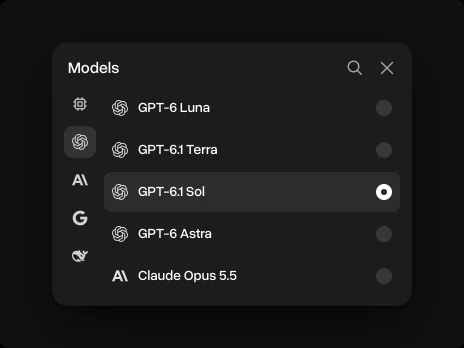
Pick GPT-6.1 Sol
It is already picked in the chat on this page. In the Overchat AI app, open the model list next to the message field and pick GPT-6.1 Sol
- 02
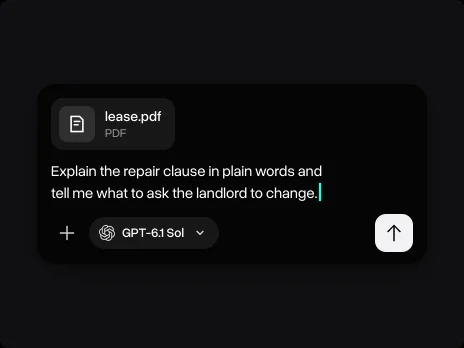
Attach your code or a file
Add code, a document, a spreadsheet or a screenshot, and write what you need: the result, the format and what must stay the same
- 03
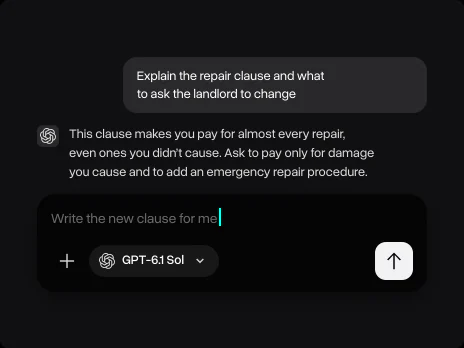
Keep going in the same chat
Ask a follow-up, ask for tests or a shorter version, or switch to another model without losing the conversation
Why use GPT-6.1 Sol on Overchat AI
One account for chat, images and video, on every device
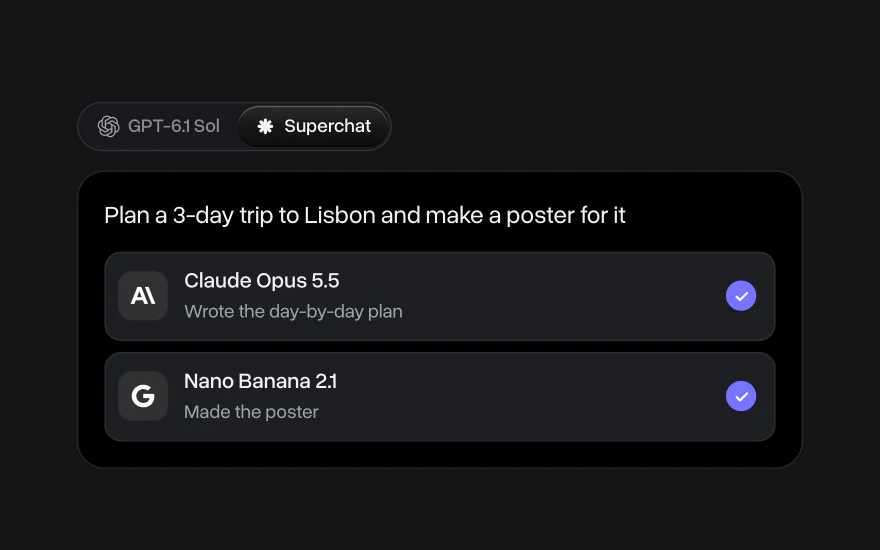
Superchat AI agent
Superchat Agent automatically routes your message to the model best suited for the task. It can generate images and videos, use the AI tools built into Overchat AI, and learn from your interactions to get better over time
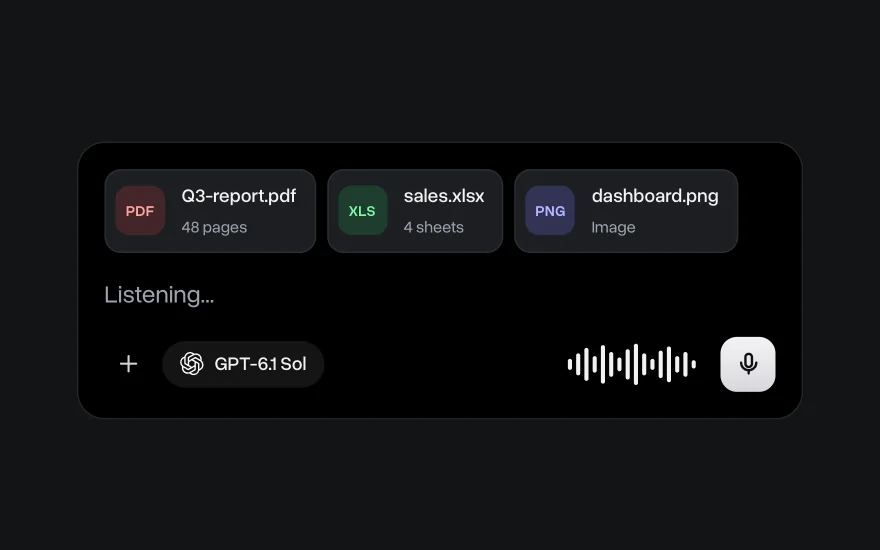
Chat with images and files
Upload PDFs, spreadsheets, code and screenshots and ask GPT-6.1 Sol about them. You can also dictate a message instead of typing it
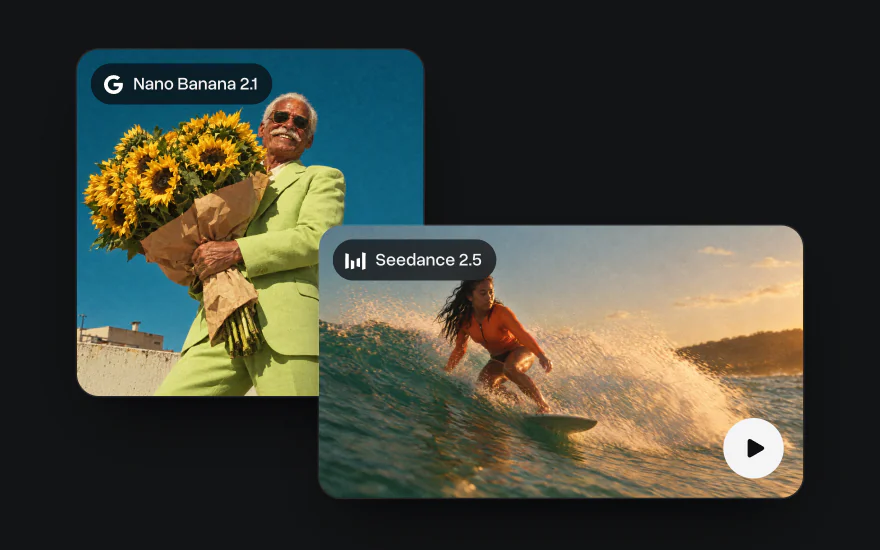
Go beyond text
Generate images with Nano Banana and GPT Image and videos with Seedance and Kling in the same account, with the same credits as chat
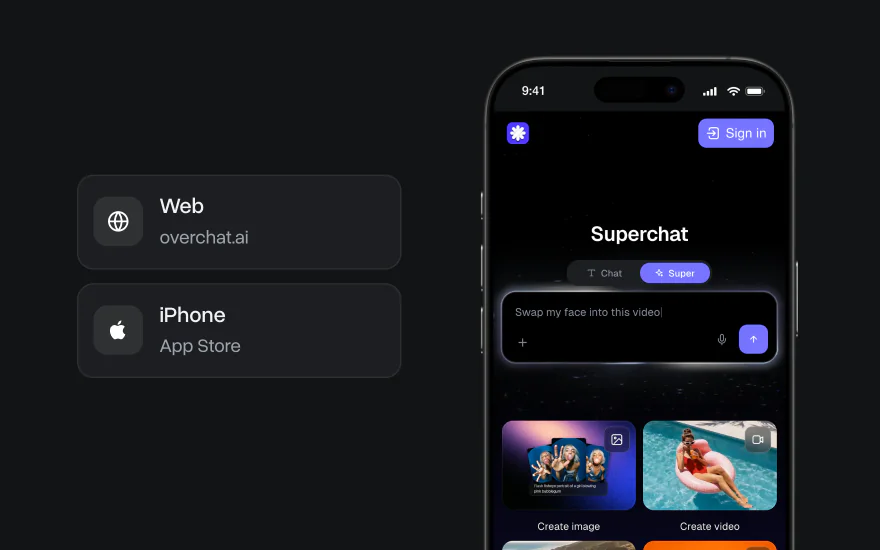
On the web and iPhone
Start a chat on your laptop and finish it on your phone. The Overchat AI app has the same models, and your chats stay in one account on every device

GPT models on Overchat AI
Compare 4 GPT models on Overchat AI by output speed, time to first token and the price of one message
GPT-6.1 SolThis pageGPT-6 AstraSource: Overchat AI, 2026-11-11
Explore other models
Models marked Soon are coming to Overchat AI; the rest are available now


Learn more about AI models

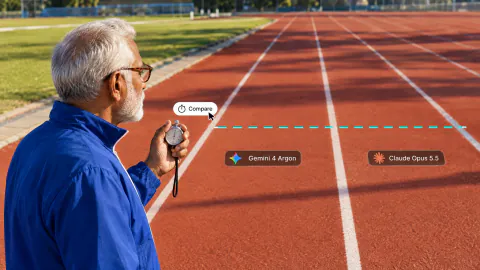
We tested Gemini 4 Argon against Claude Opus 5.5, GPT-6 Astra and Muse Wonder
We tested Gemini 4 Argon against Claude Opus 5.5, GPT-6 Astra and Muse Wonder on three coding tasks. See benchmarks, speed and how to use it
Muse Wonder vs Muse Spark: Meta's New Model Tested
We tested Muse Wonder against Muse Spark 1.3 on logic, writing and coding tasks. See benchmarks and which Meta model is better
10 Best All-in-One AI Platforms in 2026: Why One AI Subscription Beats Many
Compare the 10 best all-in-one AI platforms in 2026, from Overchat AI to Poe and Magai, with prices, free plans and the newest GPT and Claude models