


About Gemini 4 Carbon
Gemini 4 Carbon is Google's most capable model for work that takes many steps: large coding projects, security reviews, financial research and science. It checks its own work before it answers and keeps going past dead ends
Carbon ranks first on CursorBench 4.0 and Zapier AutomationBench and leads the SEC-bench Pro, ExploitGym and CWE-bench security tests. It reads up to 1 million tokens of code and documents, and it tells you when data is missing instead of making it up
In the Gemini app, Carbon is only for Google AI Ultra subscribers. On Overchat AI, you can chat with Gemini 4 Carbon without an Ultra plan, attach code, PDFs and spreadsheets, and switch to Gemini 4 Argon, Claude or GPT-6 at any time
- Developer
- Google DeepMind
- Released
- Nov 10, 2026
- Family
- Gemini 4
- Context window
- 1M tokens
- Intelligence Index
- 60
- Input
- Text, images, audio, video, files
See how Gemini 4 Carbon answers
Write a single HTML file with a Pomodoro timer: 25-minute focus and 5-minute break cycles, Start, Pause and Reset buttons and a circular progress ring. Plain HTML, CSS and JavaScript, no libraries, under 120 lines
<!DOCTYPE html>
<html lang="en">
<head>
  <meta charset="UTF-8">
  <meta name="viewport" content="width=device-width, initial-scale=1.0">
  <title>Pomodoro Timer</title>
  <style>
    * { box-sizing: border-box; margin: 0; padding: 0; }
    body {
      min-height: 100vh;
      display: grid;
      place-items: center;
      background: #0f172a;
      color: #f8fafc;
      font-family: system-ui, -apple-system, sans-serif;
    }
    .card {
      background: #1e293b;
      padding: 2.5rem;
      border-radius: 1.5rem;
      box-shadow: 0 20px 40px rgba(0, 0, 0, 0.4);
      text-align: center;
    }
    .status {
      font-size: 1.1rem;
      font-weight: 600;
      letter-spacing: 0.1em;
      text-transform: uppercase;
      color: #94a3b8;
      margin-bottom: 1.5rem;
    }
    .ring-wrap {
      position: relative;
      width: 220px;
      height: 220px;
      margin: 0 auto 2rem;
    }
    svg { transform: rotate(-90deg); width: 100%; height: 100%; }
    circle { fill: none; stroke-width: 10; }
    .bg { stroke: #334155; }
    .progress {
      stroke: #f43f5e;
      stroke-linecap: round;
      transition: stroke-dashoffset 0.3s linear, stroke 0.3s ease;
    }
    .time {
      position: absolute;
      inset: 0;
      display: grid;
      place-items: center;
      font-size: 3rem;
      font-weight: 700;
      font-variant-numeric: tabular-nums;
    }
    .controls { display: flex; gap: 0.75rem; justify-content: center; }
    button {
      padding: 0.65rem 1.25rem;
      border: none;
      border-radius: 0.5rem;
      background: #334155;
      color: #f8fafc;
      font-size: 0.95rem;
      font-weight: 600;
      cursor: pointer;
      transition: background 0.2s, transform 0.1s;
    }
    button:hover { background: #475569; }
    button:active { transform: scale(0.97); }
    #startBtn { background: #f43f5e; }
    #startBtn:hover { background: #e11d48; }
  </style>
</head>
<body>
  <div class="card">
    <div class="status" id="status">Focus</div>
    <div class="ring-wrap">
      <svg viewBox="0 0 220 220">
        <circle class="bg" cx="110" cy="110" r="96"></circle>
        <circle class="progress" id="ring" cx="110" cy="110" r="96"></circle>
      </svg>
      <div class="time" id="time">25:00</div>
    </div>
    <div class="controls">
      <button id="startBtn">Start</button>
      <button id="pauseBtn">Pause</button>
      <button id="resetBtn">Reset</button>
    </div>
  </div>

  <script>
    const FOCUS = 25 * 60, BREAK = 5 * 60, CIRCUMFERENCE = 2 * Math.PI * 96;
    let isFocus = true, total = FOCUS, remaining = FOCUS, timer = null;

    const ring = document.getElementById('ring');
    const timeEl = document.getElementById('time');
    const statusEl = document.getElementById('status');
    const startBtn = document.getElementById('startBtn');
    ring.style.strokeDasharray = CIRCUMFERENCE;

    function render() {
      const m = String(Math.floor(remaining / 60)).padStart(2, '0');
      const s = String(remaining % 60).padStart(2, '0');
      timeEl.textContent = `${m}:${s}`;
      statusEl.textContent = isFocus ? 'Focus' : 'Break';
      const color = isFocus ? '#f43f5e' : '#10b981';
      ring.style.stroke = color;
      startBtn.style.background = color;
      ring.style.strokeDashoffset = CIRCUMFERENCE * (1 - remaining / total);
    }

    function tick() {
      if (remaining > 0) {
        remaining--;
      } else {
        isFocus = !isFocus;
        total = remaining = isFocus ? FOCUS : BREAK;
      }
      render();
    }

    startBtn.onclick = () => { if (!timer) timer = setInterval(tick, 1000); };
    document.getElementById('pauseBtn').onclick = () => { clearInterval(timer); timer = null; };
    document.getElementById('resetBtn').onclick = () => {
      clearInterval(timer);
      timer = null;
      isFocus = true;
      total = remaining = FOCUS;
      render();
    };

    render();
  </script>
</body>
</html>My SaaS has 1,800 customers paying $39 a month. Monthly churn is 4%, gross margin is 78% and it costs $260 to acquire a customer. What are LTV, LTV:CAC and CAC payback, and is this healthy? Keep the math short
The Math
- Monthly Gross Profit per Customer: $39 × 78% = $30.42
- LTV: $30.42 ÷ 0.04 = $760.50
- LTV:CAC: $760.50 ÷ $260 = 2.9x (2.93)
- CAC Payback: $260 ÷ $30.42 = 8.6 months (8.55)
Is this healthy?
It’s borderline—decent unit economics on paper, but held back by high churn.
- The Good: An 8.6-month payback is solid (under 12 months is the goal for low-ACV SaaS), meaning you recycle cash reasonably fast. Your 78% gross margin is also right in the healthy SaaS sweet spot (75%–85%).
- The Warning Sign: Your 2.9x LTV:CAC sits just below the standard 3.0x+ benchmark, leaving thin room for R&D, overhead, and marketing inefficiencies.
- The Bottleneck: 4% monthly churn equals ~39% annual customer loss. At 1,800 customers ($70.2k MRR), you are losing 72 customers a month—meaning you have to spend ~$18,720/month on acquisition just to stay flat.
Bottom line: Don't scale ad spend aggressively yet. Dropping monthly churn from 4% to 3%—or nudging ARPU from $39 to $49 via tiers/upsells—will push LTV:CAC comfortably past 3.5x and make this very healthy.
We ran an A/B test on our pricing page for two weeks. Control: 12,400 visitors and 496 signups. Variant: 12,100 visitors, and signups went up a lot. Is the variant significantly better, and by how much?
To calculate whether the variant is statistically significant and by how much, I’ll need the exact number of signups (or conversion rate) for the Variant—it looks like that number got left out!
In the meantime, here is what we know from your numbers so far and the benchmark your Variant needs to beat:
- Control Conversion Rate: 4.00% (496 / 12,400)
- Threshold for 95% Statistical Significance (two-tailed, p < 0.05): With 12,100 visitors in the Variant, you need at least 546 signups (4.51% conversion rate, or a +12.8% relative lift) for the improvement to be statistically significant.
- Threshold for 99% Statistical Significance (p < 0.01): You would need at least 566 signups (4.68% conversion rate, or a +16.9% relative lift).
(Quick side note: If your traffic split was intended to be 50/50, a 12,400 vs. 12,100 split has a p-value of ~0.055 for Sample Ratio Mismatch—not a definite bug, just slightly uneven, so worth double-checking your randomization.)
Reply with the Variant's signup count and I'll give you the exact conversion rate, relative/absolute lift, p-value, and 95% confidence interval!
More prompts to try with Gemini 4 Carbon
Gemini 4 Carbon vs other models
Compare Gemini 4 Carbon with Claude Opus 5.5, GPT-6 Astra and Gemini 4 Argon on coding, automation, long-context and security tests
| Spec | Gemini 4 Carbon | Claude Opus 5.5 |
|---|---|---|
| Developer | Anthropic | |
| Released | Nov 10, 2026 | Sep 22, 2026 |
| Context window? | 1M tokens | 1M tokens |
| Spec | Gemini 4 Carbon | GPT-6 Astra |
|---|---|---|
| Developer | OpenAI | |
| Released | Nov 10, 2026 | Sep 3, 2026 |
| Context window? | 1M tokens | 1M tokens |
| Spec | Gemini 4 Carbon | Gemini 4 Argon |
|---|---|---|
| Developer | ||
| Released | Nov 10, 2026 | Sep 30, 2026 |
| Context window? | 1M tokens | 1M tokens |
Sources: Google, Gemini 4 Carbon is now available (Nov 10, 2026), Gemini API changelog, Google DeepMind, Gemini 4 Carbon model evaluation, Artificial Analysis, Gemini 4 Carbon
Gemini 4 Carbon main features
Where Gemini 4 Carbon is stronger than Gemini 4 Argon, Claude Opus 5.5 and GPT-6 Astra
Long coding tasks
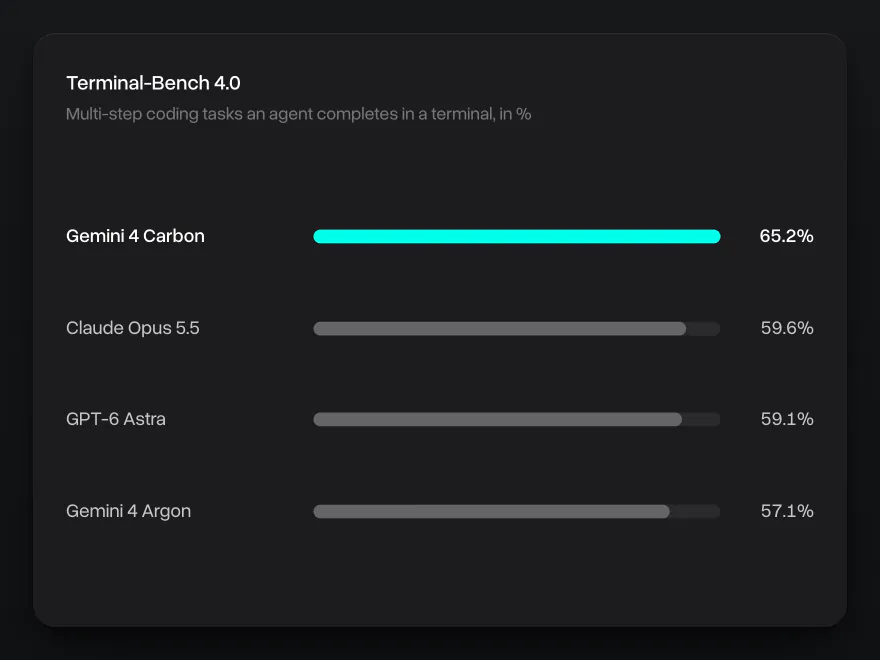
Gemini 4 Carbon works through large coding tasks step by step: it reads the code, finds the cause of a bug, fixes it and runs the tests. It ranks first on CursorBench 4.0 and scores 65.2% on Terminal-Bench 4.0, against 59.6% for Claude Opus 5.5 and 59.1% for GPT-6 Astra
Security reviews
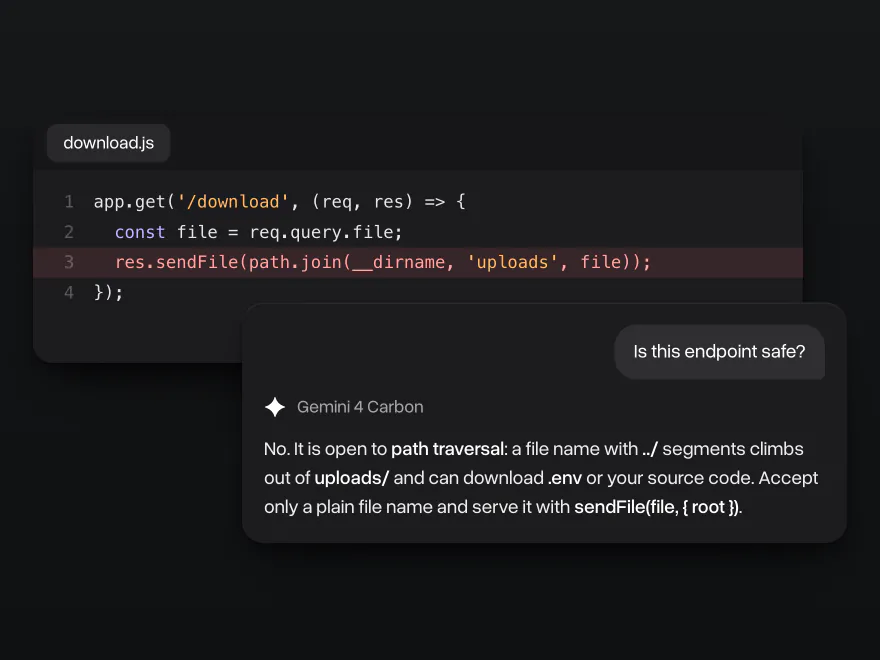
Carbon finds vulnerabilities in code, shows how each one can be exploited and writes the patch. It scores 54.8% on ExploitGym and 71.0% on CWE-bench, ahead of Claude Opus 5.5, GPT-6 Astra and Gemini 4 Argon, and in a test by Wiz it found zero-day vulnerabilities in two major SaaS products in under two hours
1M tokens of context
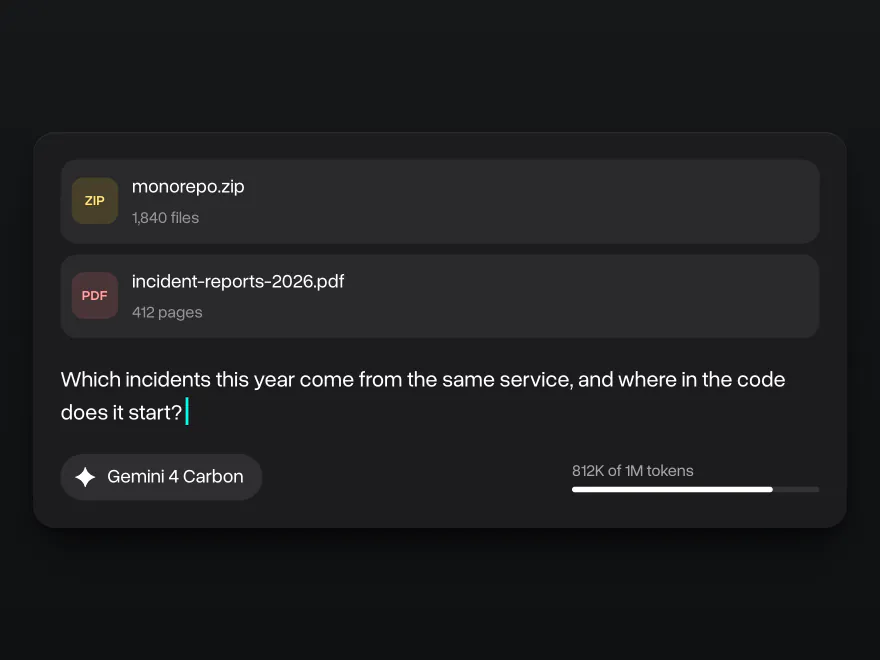
Attach a whole codebase, a long contract or a year of reports, and Carbon finds the answer across all of it. On GraphWalks, a test with 256K to 1M tokens of input, it scores 96.2%, against 84.2% for Gemini 4 Argon and 66.8% for Claude Opus 5.5
Honest answers
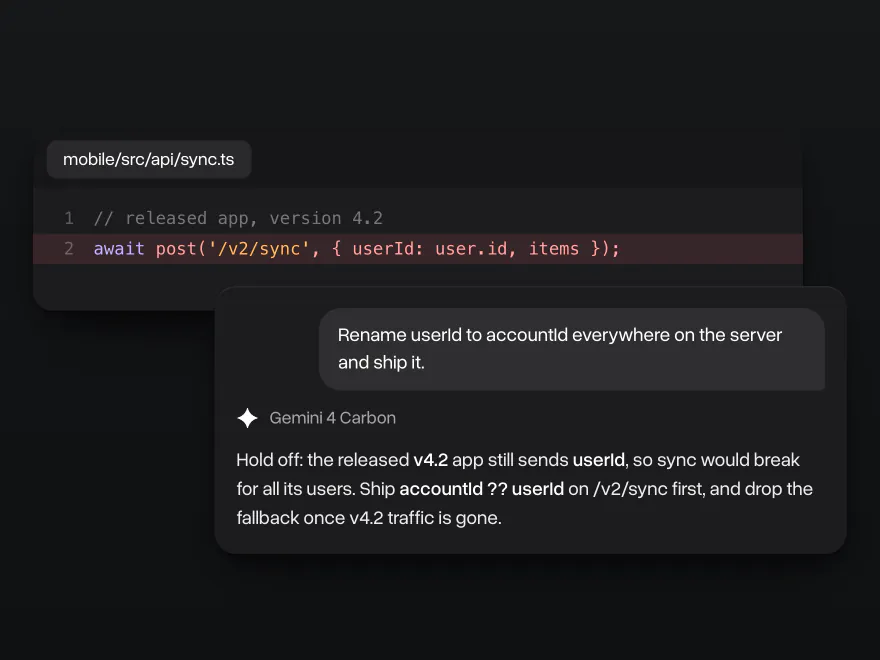
Carbon tells you when a request doesn't add up instead of guessing. On a test of 375 agent tasks that checks honesty, it passed 92% against 70% for Gemini 4 Argon, and it refused to make up missing data 98% of the time
Why use Gemini 4 Carbon on Overchat AI
One account for chat, images and video, on every device
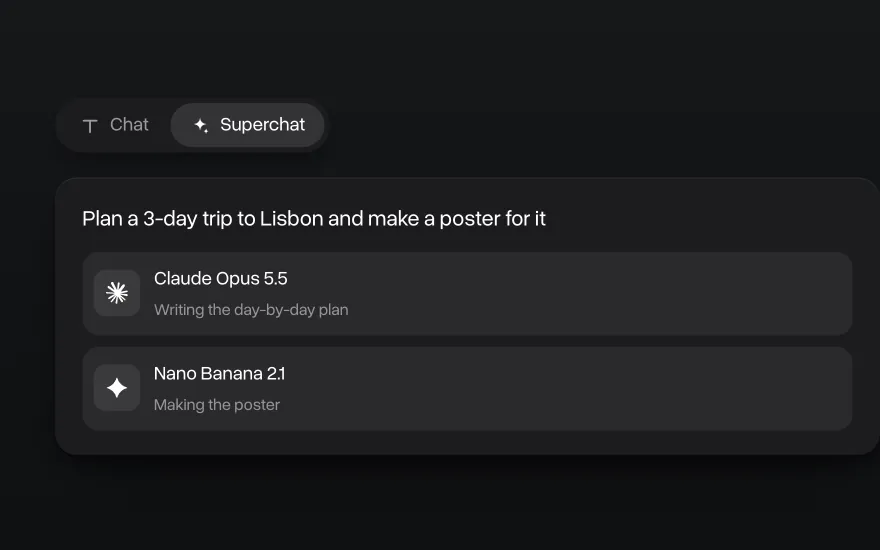
Superchat AI agent
Superchat Agent automatically routes your message to the model best suited for the task. It can generate images and videos, use the AI tools built into Overchat AI, and learn from your interactions to get better over time
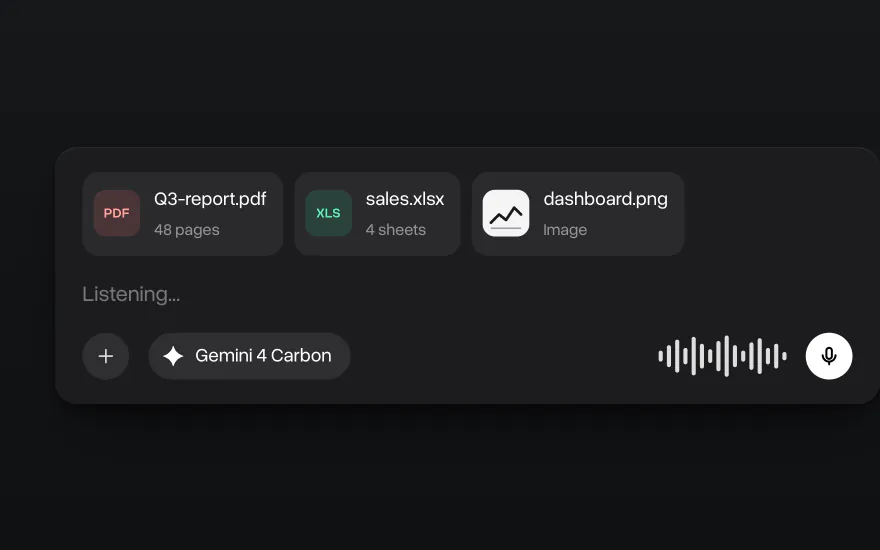
Chat with images and files
Upload PDFs, spreadsheets, code and screenshots and ask Gemini 4 Carbon about them. You can also dictate a message instead of typing it
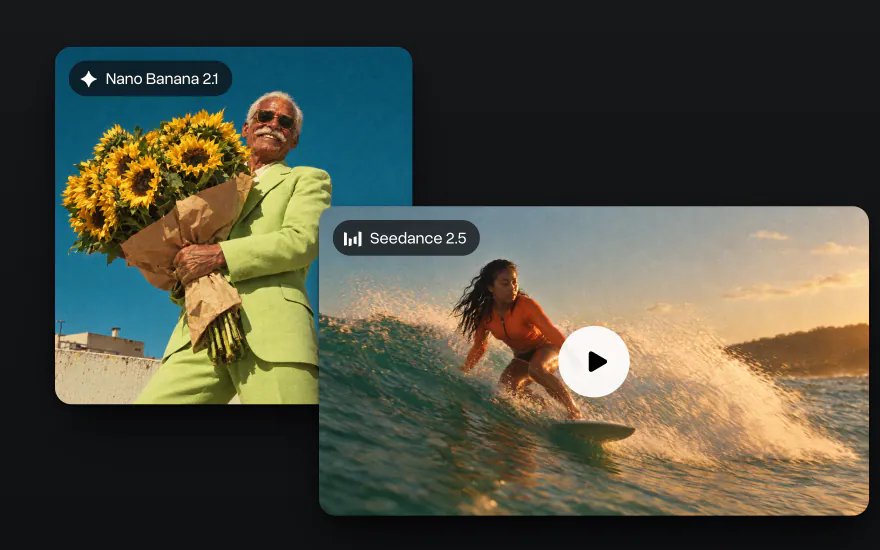
Go beyond text
Generate images with Nano Banana and GPT Image and videos with Seedance and Kling in the same account, with the same credits as chat
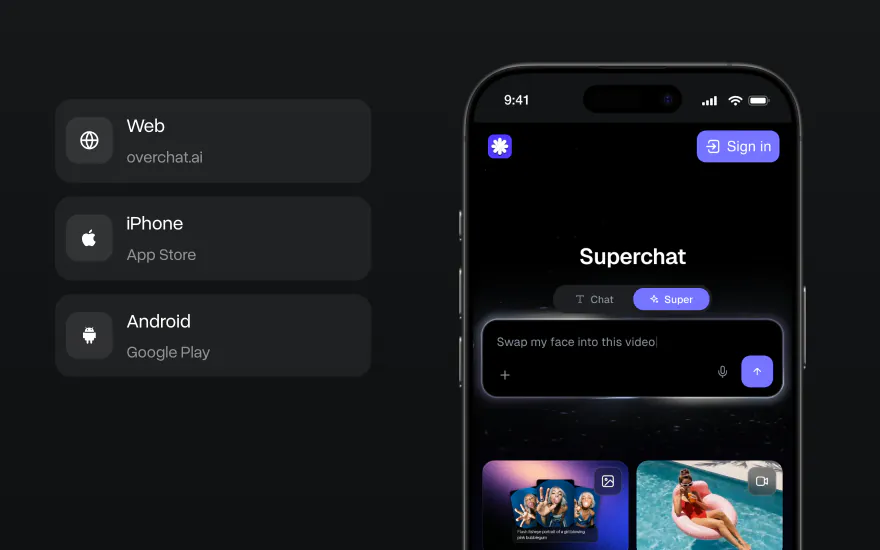
On the web, iPhone and Android
Start a chat on your laptop and finish it on your phone. The Overchat AI app has the same models, and your chats stay in one account on every device


How to use Gemini 4 Carbon on Overchat AI
Use the chat at the top of this page or the Overchat AI app on the web, iOS or Android
- 01
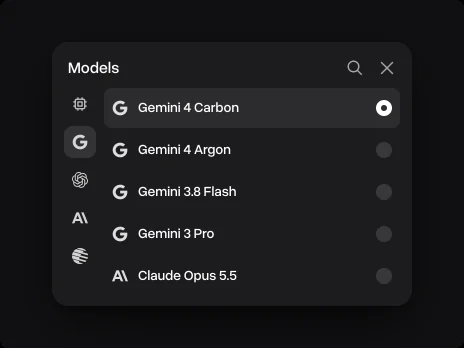
Pick Gemini 4 Carbon
It is already picked in the chat on this page. In the Overchat AI app, open the model list, choose Google and pick Gemini 4 Carbon
- 02
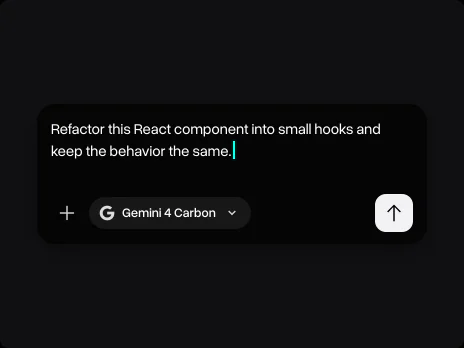
Paste your code
Paste the code or attach a file, and say what you need: a refactor, a fix or a review
- 03
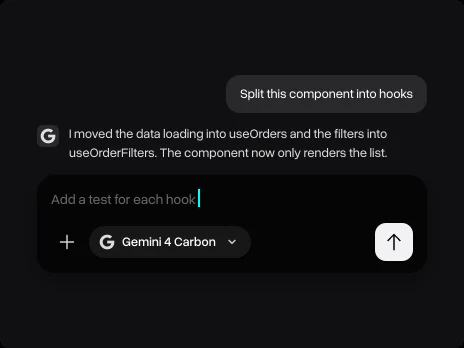
Ask for the next step
Ask for tests, another approach or a shorter version, or switch models without losing the conversation
Explore other models
Models marked Soon are coming to Overchat AI; the rest are available now


Learn more about AI models

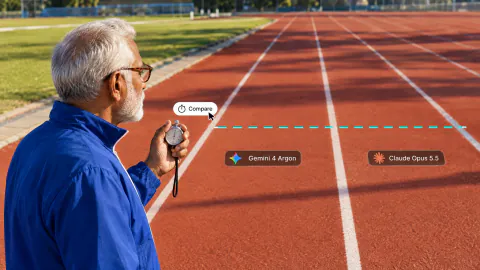
We tested Gemini 4 Argon against Claude Opus 5.5, GPT-6 Astra and Muse Wonder
We tested Gemini 4 Argon against Claude Opus 5.5, GPT-6 Astra and Muse Wonder on three coding tasks. See benchmarks, speed and how to use it
Muse Wonder vs Muse Spark: Meta's New Model Tested
We tested Muse Wonder against Muse Spark 1.3 on logic, writing and coding tasks. See benchmarks and which Meta model is better
10 Best All-in-One AI Platforms in 2026: Why One AI Subscription Beats Many
Compare the 10 best all-in-one AI platforms in 2026, from Overchat AI to Poe and Magai, with prices, free plans and the newest GPT and Claude models

Gemini 4 Carbon FAQ
If you have any questions,
reach out to us at hello@overchat.ai
Gemini 4 Carbon is Google DeepMind's most capable Gemini model, released on November 10, 2026. It is built for long coding tasks, security work and complex analysis, reads text, images, audio, video and files and holds up to 1 million tokens in one conversation
Yes. Google made Gemini 4 Carbon generally available on November 10, 2026, in the Gemini API, where its model ID is gemini-4-carbon, and in Gemini for business. In the Gemini app, AI Mode in Search and Google Antigravity it is rolling out to Google AI Ultra subscribers. It is also in the Overchat AI chat
For hard tasks, yes. Carbon scores higher than Argon on all 17 published benchmarks, for example 65.2% against 57.1% on Terminal-Bench 4.0 and 96.2% against 84.2% on GraphWalks. Argon answers faster and uses fewer tokens, which makes it the better pick for everyday coding and work
On most coding and agent tests, yes: Terminal-Bench 4.0 65.2% against 59.6% and 59.1%, and AutomationBench 53.9% against 42.5% and 41.4%. Claude Opus 5.5 is ahead on computer use (OSWorld 2.1: 87.2% against 81.5%), and GPT-6 Astra on FrontierSWE 2 (65.5% against 61.2%)
Not on coding and agent tests: Claude Fable 5.2 scores higher, for example 69.9% against 61.2% on FrontierSWE v2 and 89.3% against 81.5% on OSWorld 2.1. Both models are on Overchat AI, so you can ask both and compare the answers
Google AI Ultra subscribers: Carbon is rolling out to them in the Gemini app, AI Mode in Search and Google Antigravity. Developers get it in the paid tier of the Gemini API. On Overchat AI, Gemini 4 Carbon is in the model list without a Google subscription
Gemini 4 Carbon reads up to 1 million tokens in one conversation, roughly 750,000 words or a large codebase with its documentation
Write your task in the chat at the top of this page and press Send; add code or a file with the plus button. Sign in, and Gemini 4 Carbon answers in the Overchat AI chat, which also works on iOS and Android


