Claude vs Gemini: Which AI Should You Use in 2026?
Last Updated:
2026-09-17
Claude vs Gemini: Which AI Should You Use in 2026?
Claude and Gemini are two of the most popular AI assistants, bar only ChatGPT. If you're wondering which one you should use, in this guide you'll learn what the difference between Claude and Gemini is, which one offers the best models, which one is best for coding, reasoning, and writing, and whether Claude or Gemini has more useful features.
We'll also show you how to use Overchat AI, an AI app we've built, to access both Claude and Gemini in one place without paying for 2 separate subscriptions.
Claude is the best AI for coding, long-document work, and writing, while Gemini is the best for users who work with code, text, and images, or want to use AI inside other Google products, like Documents and Sheets. Gemini is also cheaper than Claude. Here are the most important takeaways:
At the time of writing, Claude is powered by the Fable 5, Opus 5, and Sonnet 5 models, which are the best for coding and reasoning.
Gemini is powered by Gemini 3.1 Pro and 3.6 Flash as of the time of writing, and its biggest advantage over Claude is that it can generate images natively via Nano Banana 2.
On benchmarks, Claude offers the best models for coding, while the two are neck-and-neck on science and reasoning.
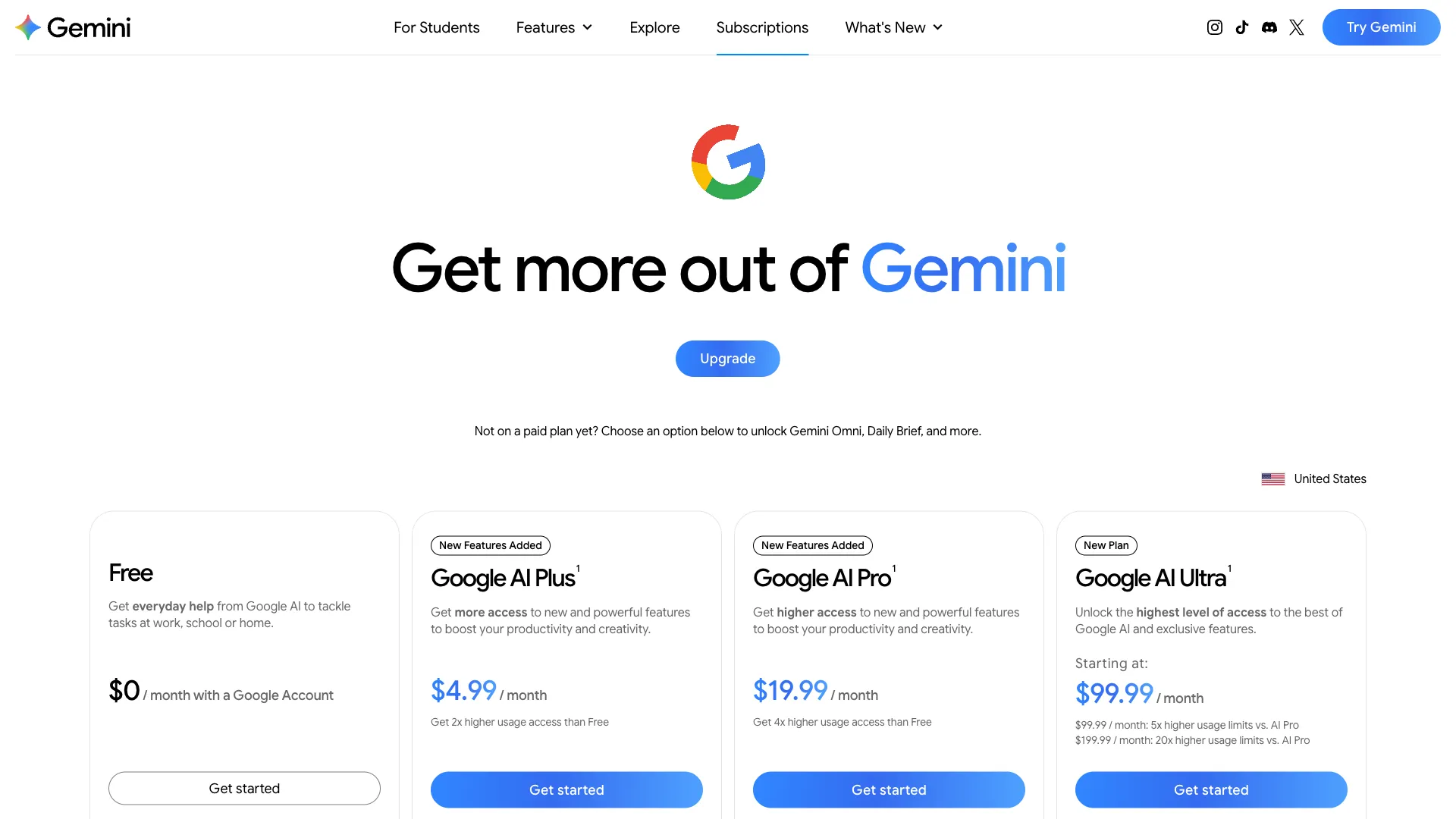
On price, Gemini is cheaper than Claude — its entry paid plan is $4.99/month against Claude's $20/month, and it's cheaper per API token too.
You can access both Claude and Gemini models on Overchat AI. Overchat AI is an all-in-one AI app we've built that provides access to the most popular AI models in a single place, and for $14.99/month you can use both Gemini and Claude models (yes, including Claude Fable).
Claude vs Gemini at a glance
The table below highlights the main differences between Claude and Gemini:
Claude
Gemini
Maker
Anthropic
Google DeepMind
Flagship model
Claude Fable 5
Gemini 3.1 Pro
Default paid model
Claude Opus 5
Gemini 3.1 Pro
Free-tier model
Claude Sonnet 5
Gemini 3.6 Flash
Entry paid plan
$20/month
$4.99/month
Context window
1M tokens
1M tokens
Strongest at
Coding, writing, long-doc analysis
Multimodal creation, Google Workspace
Native media generation
No
Yes
Before we dive deep into the head-to-head, let's quickly establish some background information about each option:
What is Claude?
Claude is a family of large language models built by Anthropic — and an AI chat application under the same name. It's a direct alternative to Gemini and ChatGPT. Anthropic, the company behind Claude, was founded in 2021 by Dario and Daniela Amodei, both former research leads at OpenAI. Anthropic is backed by Amazon and Google, which have together committed tens of billions of dollars in investment and cloud infrastructure, and the company was valued at $380 billion in early 2026. All of this to say, it's one of the biggest AI model and product developers in the world.
Anthropic's thesis is that it focuses on AI safety, but really the core of their work focuses on coding, workspace, and enterprise products — in other words, work and productivity using AI.
As of this writing, you'll find these models in Claude:
Claude Fable 5 — the first publicly available Mythos-class model, built for the highest-capability work and long-running autonomous agents.
Claude Opus 5 — launched July 2026, it offers close to Fable 5's intelligence at half the price and is tuned for complex agentic coding.
Claude Sonnet 5 — the everyday model.
Claude Haiku 4.5 — the fastest and cheapest model, for quick tasks.
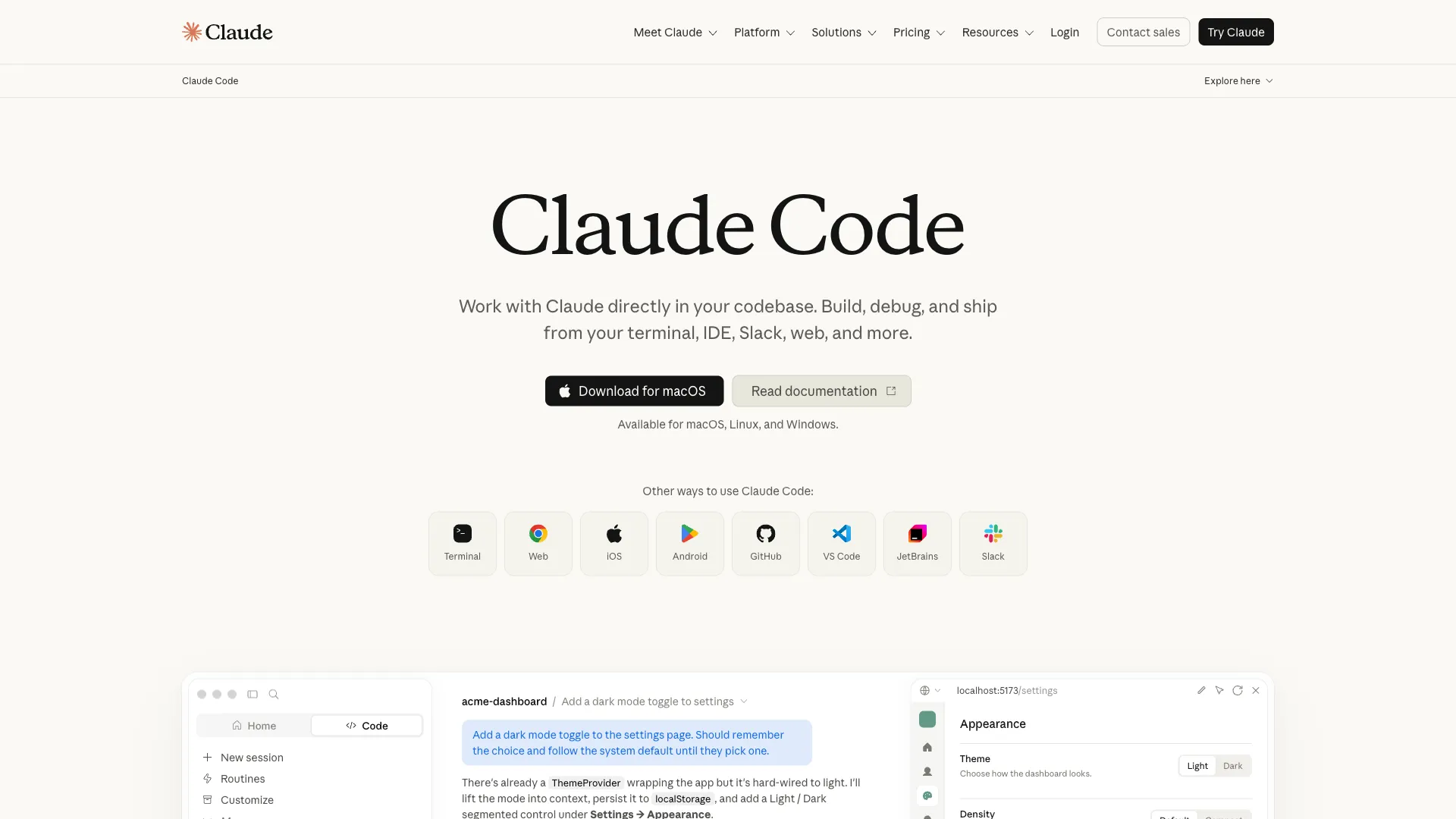
Claude Code works across the terminal, IDE, web, and Slack.
What is Gemini?
Gemini is Google's family of AI models, built by Google DeepMind. Gemini is built to be natively multimodal — it can understand and create text, images, audio, video, and code. Gemini is also used to power features of Google Search, such as AI Overviews, and you can access it inside an online AI app under the same name — Gemini.
As of the time of writing, Gemini offers the following AI models:
Gemini 3.1 Pro — Google's flagship model with a 1-million-token context window and multimodal input across text, images, audio, and video.
Gemini 3.6 Flash — the low-cost model launched July 2026, offering nearly 3.1 Pro-level performance at a fraction of the cost.
Claude vs Gemini: benchmarks and performance
While both Claude and Gemini have their own features and UI flourishes that may make you prefer one over the other, the biggest difference comes from the models that they offer. Here's how they compare:
Benchmark
What it measures
Claude Opus
Gemini 3.1 Pro
SWE-bench Verified
Real-world software fixes
88.6%
80.6%
GPQA Diamond
PhD-level science questions
93.6%
94.3%
Humanity's Last Exam
Hard expert reasoning (no tools)
—
44.4%
ARC-AGI-2
Novel visual reasoning
—
77.1%
As the table above shows, Claude models are the best for coding. On SWE-bench Verified, the test that measures how well a model can fix bugs in real repositories, Claude Opus scores 88.6% against Gemini 3.1 Pro's 80.6%, while Anthropic's Fable 5 flagship has a score near 95% — this means that the model fixed 95% of bugs in real projects.
When it comes to science and reasoning, the two are effectively tied. GPQA Diamond, a set of PhD-level science questions, shows almost identical performance — 93.6% for Claude Opus against 94.3% for Gemini 3.1 Pro.
On context window, both Gemini 3.1 Pro and Claude's current models handle 1 million tokens — roughly 750,000 words — which is enough to ingest entire coding repositories. (Google's unreleased Gemini 3.5 Pro is expected to raise that to 2 million, but it isn't in the app yet and has been delayed as of writing.)
Claude vs Gemini: writing and everyday chat
Claude is generally considered the better model for creative and academic writing, as it uses fewer AI slop phrases and more varied language than most models.
For chatting, however, in our opinion Gemini has a warmer personality, while Claude often sounds abrupt or condescending, a phenomenon that's been happening since the Opus 4.7 release. Also, with Gemini you can generate images with Nano Banana 2, a capability that Claude doesn't have. Gemini also makes it easy to work with items from your Google Suite, as it's available as a sidebar in Gmail, Docs, and Drive.
Claude vs Gemini: main features
Comparing these two apps, besides the models, different features are probably the biggest reason to pick one over the other. Over time, Claude has taken their product more towards productivity, coding, and team work, while Gemini is a more balanced everyday assistant. Here's how they both compare:
Claude's features
Claude Code — this is an agentic coding tool that works across your codebase from the terminal, VS Code, JetBrains, a desktop app, the web, and Slack. Arguably, it's the most powerful AI coding tool.
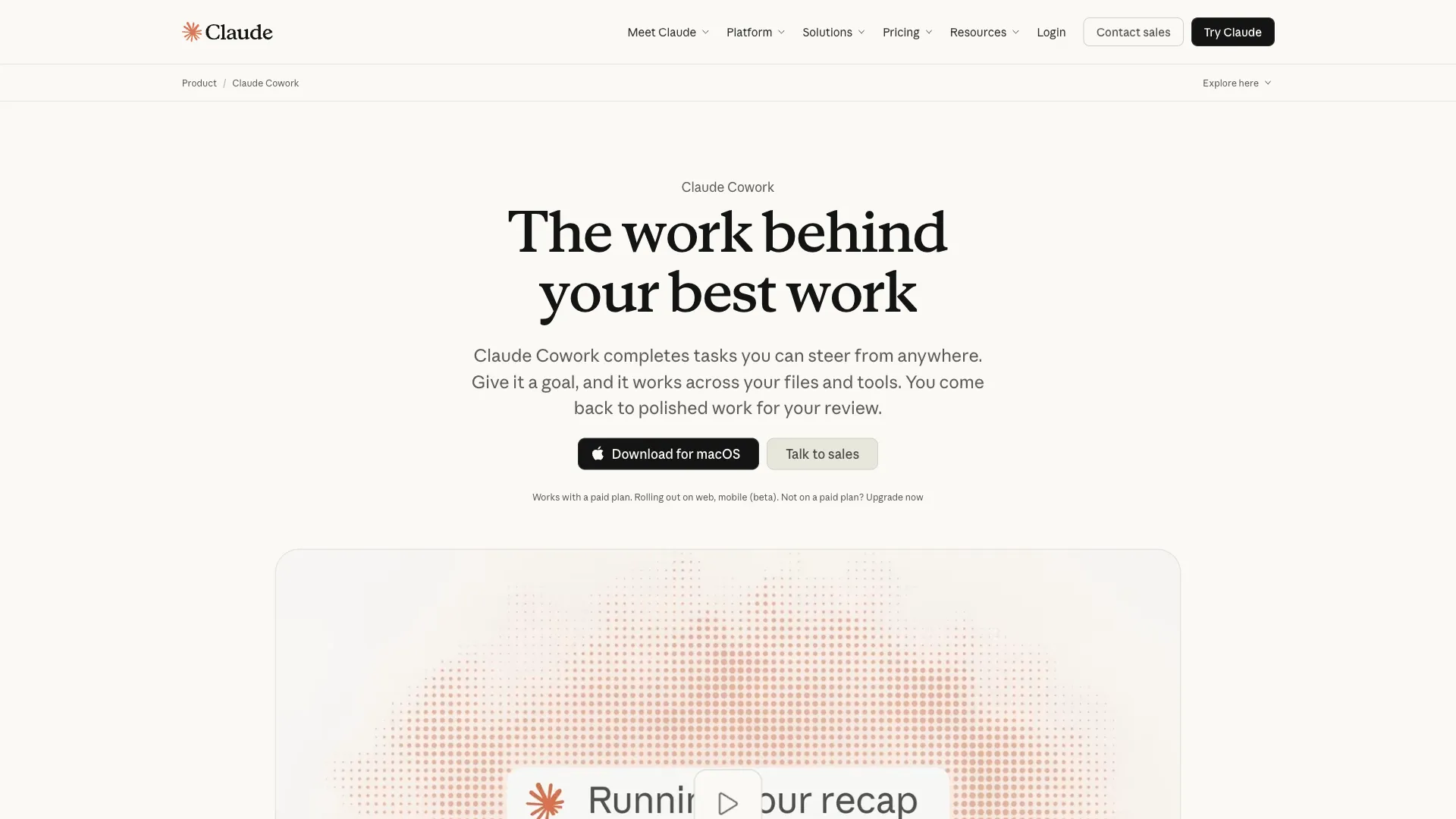
Cowork — this is a version of Claude Code for non-engineers: you give it a goal and it works across your files, calendar, email, and connected apps until the job is done, like a true AI agent.
Claude Design — Claude also has an app where you can turn prompts into design systems and mockups, that many people swear by for prototyping.
Artifacts — in Claude, the AI can bring out a side panel where it builds working apps, documents, and dashboards you can run and edit through the chat. In 2026 they became shareable with public links and multiplayer editing, and can pull live data from the web through connectors. They're incredibly useful for teams to share live data and mini-apps.
Projects and Skills — Projects are persistent workspaces that carry your files and instructions across chats. Skills are reusable capability bundles Claude can invoke on its own or that you trigger by name.
Computer Use and Claude in Chrome — Claude can control a desktop or drive your browser, clicking, typing, and filling forms to finish multi-step tasks.
Voice mode and Research — a voice mode that now runs on Opus, Sonnet, or Haiku across about 20 languages, and a Research mode that works autonomously for up to 45 minutes to produce a sourced report.
Claude Cowork completes multi-step tasks across your files and tools.
Gemini's features
Google Workspace — Gemini is built into Gmail, Docs, Sheets, Slides, and Drive as a side panel. You can use this to write emails, summarize threads, generate formulas and pivot tables.
Gemini in Chrome — Gemini made a browser assistant that can read and see images on the page you have open, work across multiple tabs, and run an auto-browse agent that handles errands like booking or updating orders with your confirmation.
Nano Banana 2 — inside Gemini, you can generate and edit images using one of the best image generation models in 2026.
Canvas and Gems — Canvas is an interactive workspace for co-editing docs and code and building prototypes, Gems are custom assistants you configure once and reuse.
Gemini Live — hands-free voice conversation with camera and screen sharing, so it can see and talk through whatever is on your screen or in front of your phone.
Agent Mode and Scheduled Actions — an Ultra-tier agent that live-browses and executes multi-step tasks in a split screen, plus scheduled recurring tasks and a proactive Daily Brief digest.
Personal Context — Gemini automatically remembers past chats and preferences to tailor answers, and can import chat history from other AI platforms.
There are even more features unique to each platform, but that covers the main ones. To summarize, Gemini has a lot more features tailored to personal productivity, while Claude has more developer-oriented features.
Claude vs Gemini: pricing
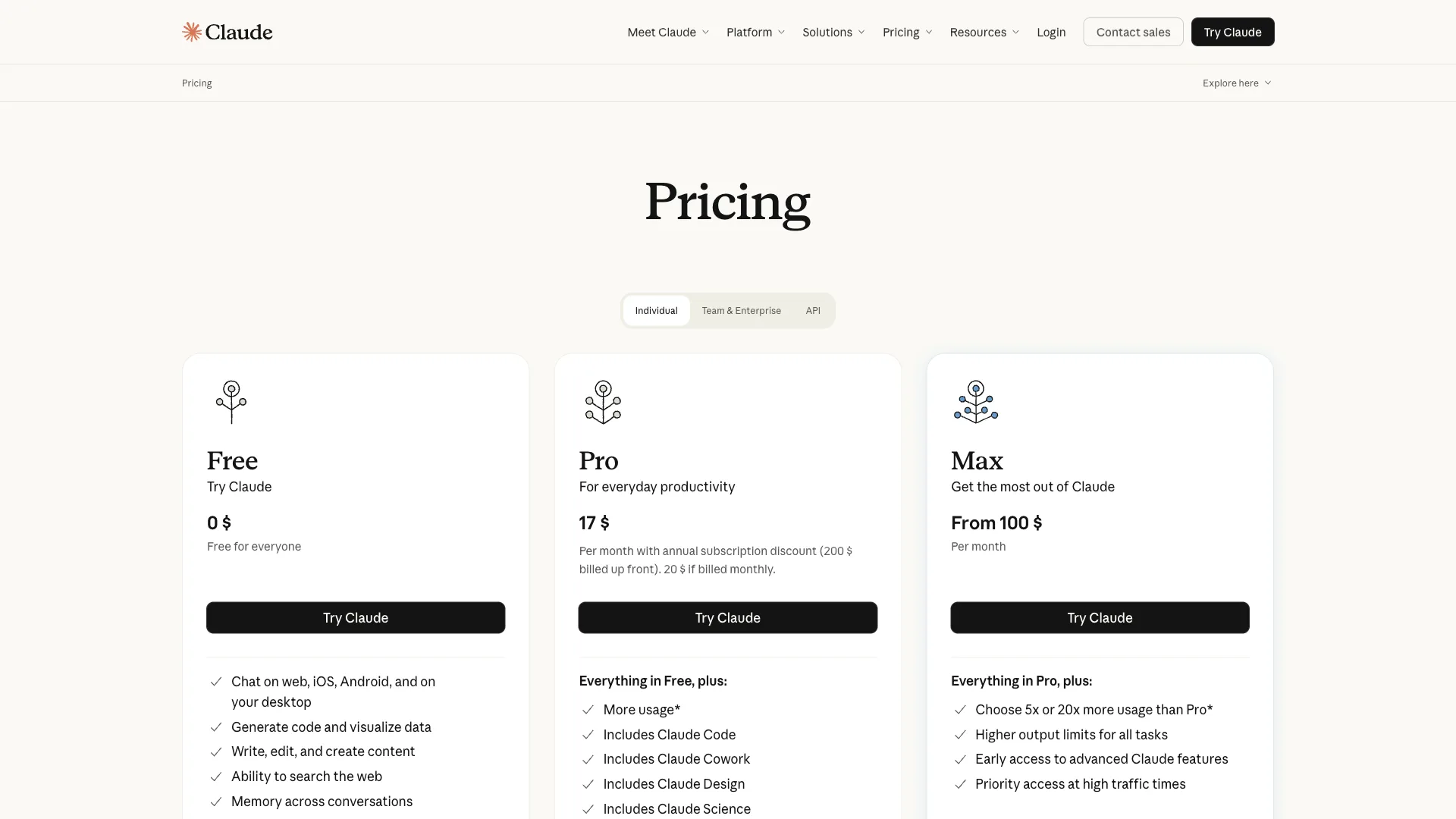
Gemini is cheaper than Claude both on consumer plans and on API tokens. Claude's paid tier starts at $20/month, while Gemini's starts at $4.99. The table below compares pricing across both apps:
Tier
Claude plan
Claude price
Gemini plan
Gemini price
Free
Free
$0
Free
$0
Entry
Pro
$20/month
AI Plus
$4.99/month
Mid
Max 5x
$100/month
AI Pro
$19.99/month
Top
Max 20x
$200/month
AI Ultra
$99.99–$199.99/month
Claude plans: Free, Pro, and Max.
Gemini plans: Free, AI Plus, AI Pro, and AI Ultra.
For developers using the models through an API, Gemini is again cheaper per million tokens:
Model
Input (per 1M tokens)
Output (per 1M tokens)
Claude Opus 5
$5.00
$25.00
Gemini 3.1 Pro
$2.00
$12.00
Gemini 3.6 Flash
$1.50
$7.50
It's worth noting that the higher cost for Claude is partially explained by the fact that Opus 5 is the stronger model, although this might change when Gemini 3.5 Pro releases. We should also note that Gemini 3.6 Flash is incredibly close in performance to Opus models, while costing a lot less.
Is Claude better than Gemini?
Yes, for coding, Claude is better than Gemini — especially the Claude Fable models. Practically, if you point Fable at a bug, there's a 95% chance it will solve it on the first try.
However, Claude isn't better universally. For example, Gemini is better if you work with images and videos, or if you want an AI that you can easily bring up to chat about the things currently open in your Chrome tabs — with Claude you can also do this, but the experience is a lot clunkier and less streamlined.
Use both Claude and Gemini without paying 2 subscriptions
Many power users reach for different AI models for different cases. When you need to solve a complex bug, ask Fable. When you want personal guidance on something, ask Gemini. The issue is, this quickly becomes expensive if you end up paying for multiple subscriptions.
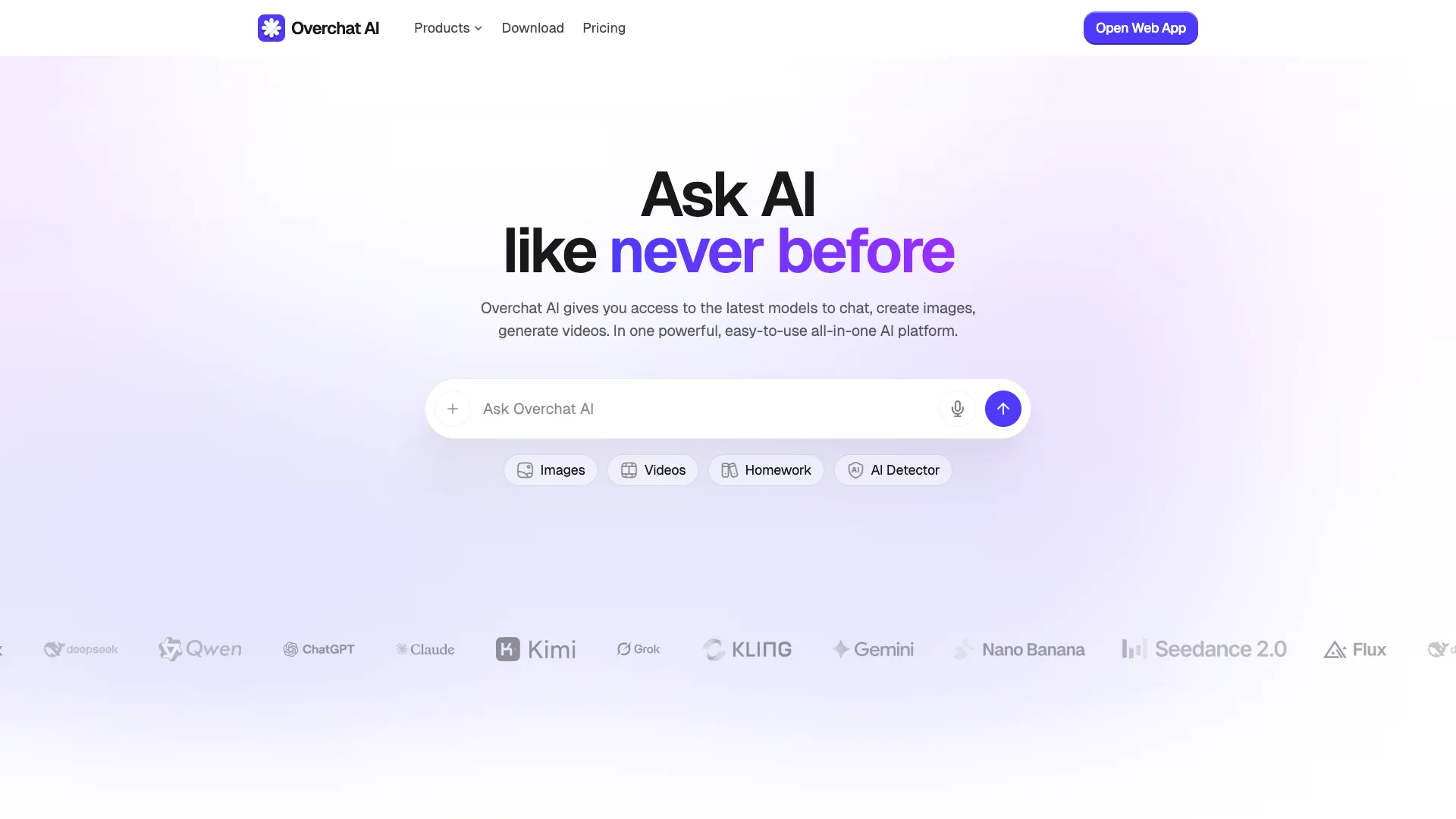
Overchat AI gives you Claude, Gemini, and other models in one app.
That's why we've built Overchat AI. Overchat AI is an all-in-one AI platform that provides access to the leading AI models, including Claude Opus 5, Claude Fable, and Gemini 3.1 Pro and 3.6 Flash in a single place — so you can use the most powerful model for your specific task, every time.
And, because all these AI models are accessible via a single platform, your context and memory carry over from chat to chat, so you can start a chat with Claude and end it with Gemini. What's more, Overchat AI offers not just text models, but also image and video models, including Nano Banana 2.
Is there a downside to using Overchat AI vs Claude or Gemini? We've developed our own web app that lets you interact with these models — it offers many powerful features like shared context and specialized tools for different tasks (like humanizing text or editing images with AI), but it doesn't have direct replacements for some features unique to each platform.
The choice comes down to what's more important to you — access to more models for less, or a specific feature, such as Claude Code?
Which should you use, Claude or Gemini?
The decision tree might look something like this:
If you're a developer or need AI for technical work (ranging from writing code to product management) — choose Claude.
If you want AI for personal tasks, chatting, making images, and working with text and documents — choose Gemini.
If you do a bit of everything and want to access both Claude and Gemini for less — choose Overchat AI.
FAQ
Here are the most common questions about choosing between Claude and Gemini.
Is Claude better than Gemini?
Claude is better than Gemini for coding, writing quality, and careful reasoning over long documents, while Gemini is better for multimodal work, image and video generation, and anything tied to Google Workspace. The clearest gap is in coding: on SWE-bench Verified — the standard benchmark that measures how often a model can fix a real bug in a real code repository — Claude Opus scores 88.6% against Gemini 3.1 Pro's 80.6%, and Anthropic's Fable 5 flagship pushes near 95%. On PhD-level science (GPQA Diamond) the two are effectively tied, at 93.6% for Claude Opus against 94.3% for Gemini 3.1 Pro. So "better" depends on the task — Claude for code and writing, Gemini for multimodal and Google's apps.
What can Claude do that Gemini can't?
Claude's edge is depth in text and code: it writes more human-sounding prose, produces more reliable code on complex tasks, and runs agentic coding through Claude Code in your terminal. Its Artifacts feature builds and runs working apps inside the chat, Cowork handles multi-step office work on its own, and MCP connects it to hundreds of external tools through an open standard.
Which AI is more powerful than Gemini?
For coding, Claude Opus 5 outperforms Gemini on SWE-bench, the standard test for fixing real bugs. On PhD-level science and general reasoning the two are effectively tied, and Gemini 3.1 Pro edges ahead on a few reasoning benchmarks. "More powerful" depends on the metric — there's no single model that wins every category, which is why using more than one is often the better move.
Is Gemini cheaper than Claude?
Yes. Gemini's entry paid plan is $4.99/month against Claude's $20/month, and Gemini is cheaper per API token — Gemini 3.1 Pro runs $2.00/$12.00 per million input/output tokens versus Claude Opus 5's $5.00/$25.00.
Can I use Claude and Gemini together?
Yes. Overchat AI gives you both Claude and Gemini under one subscription, so you can use each for what it's best at without paying for two separate plans or switching between apps.