
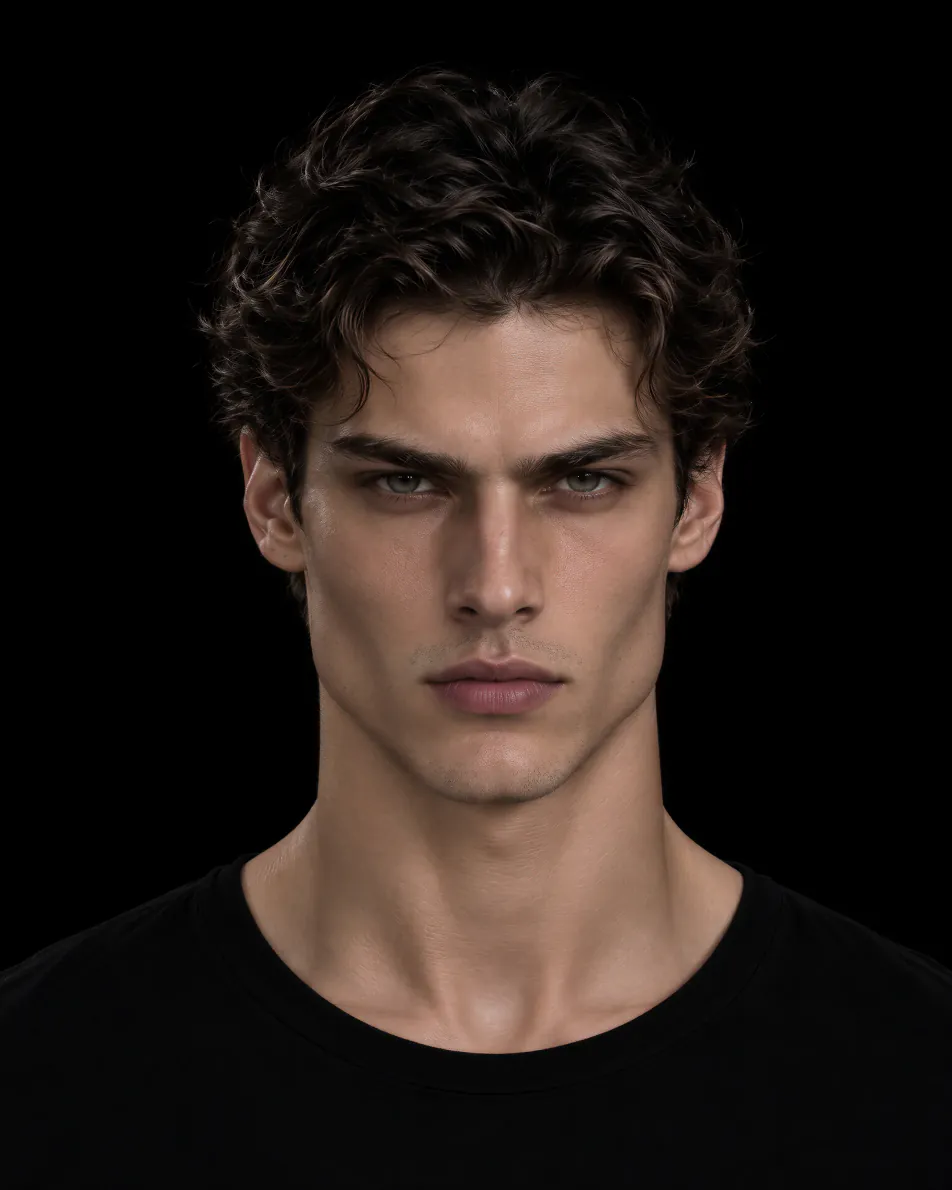


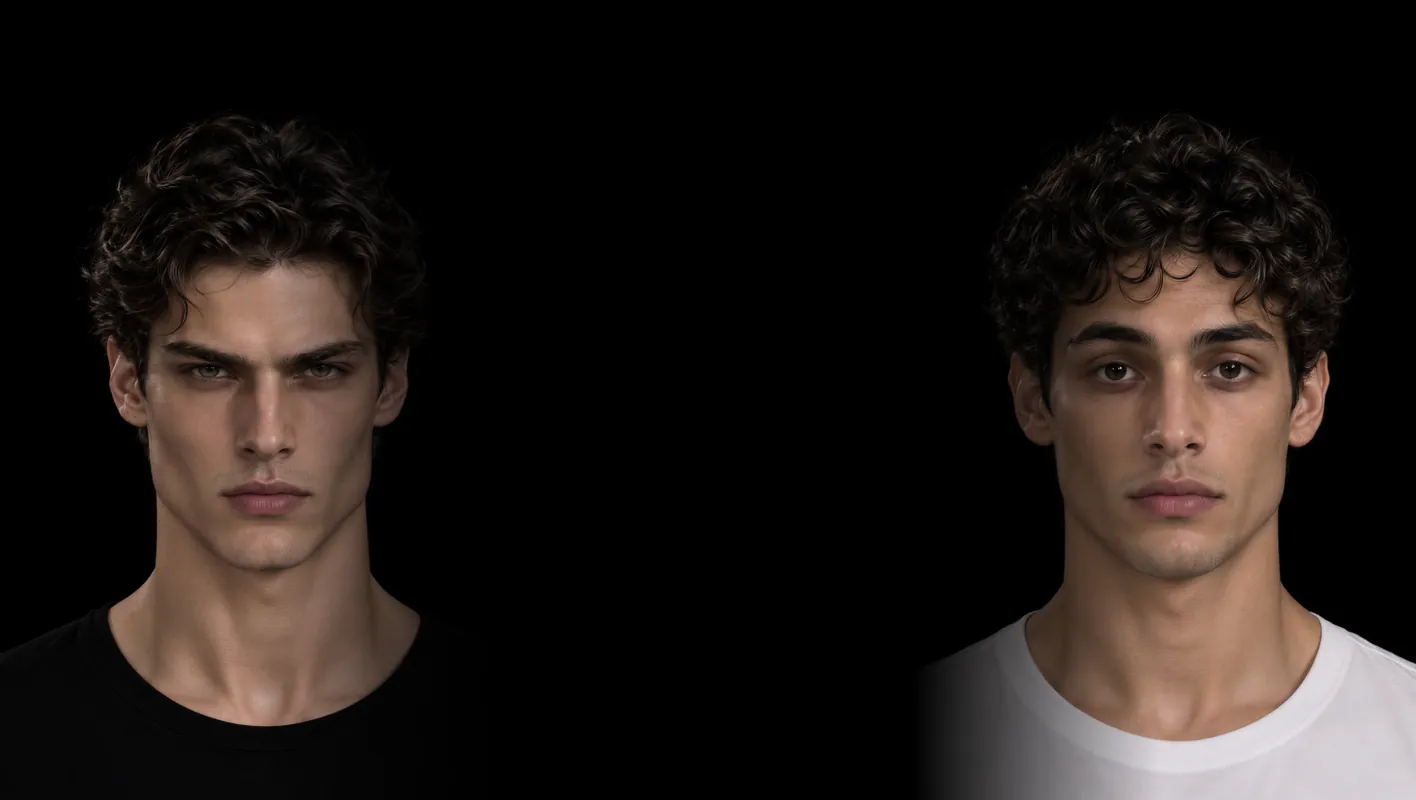
See how different midfaces measure
Every face gets its midface ratio and whether its midface is compact, balanced or long
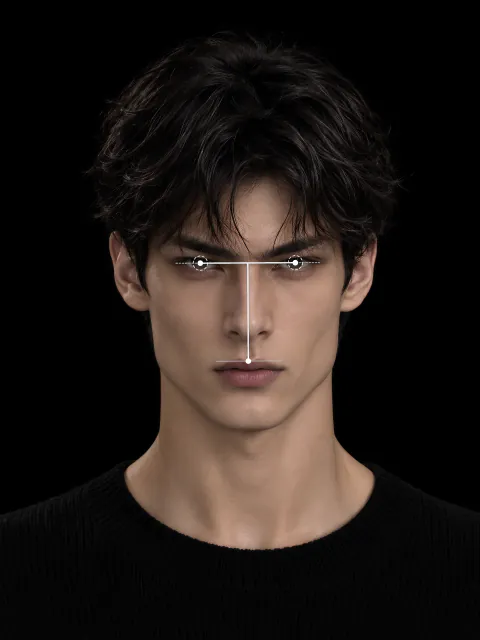
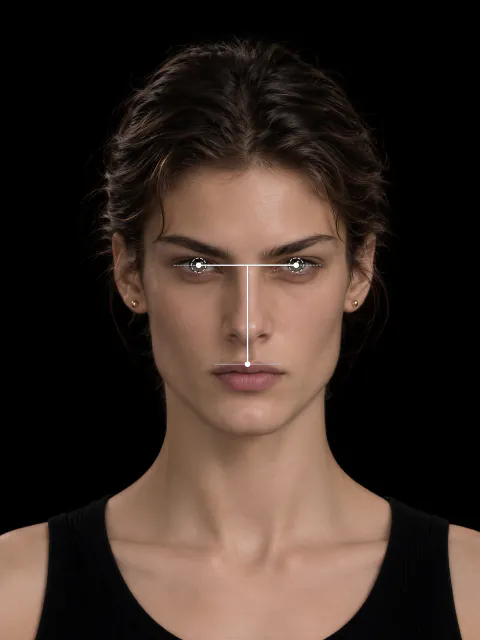
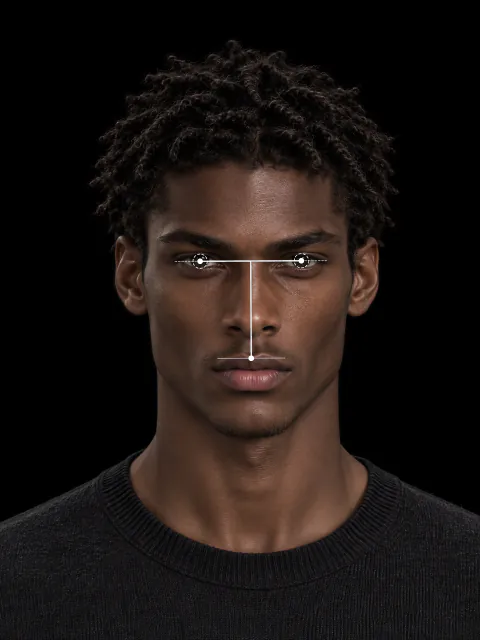
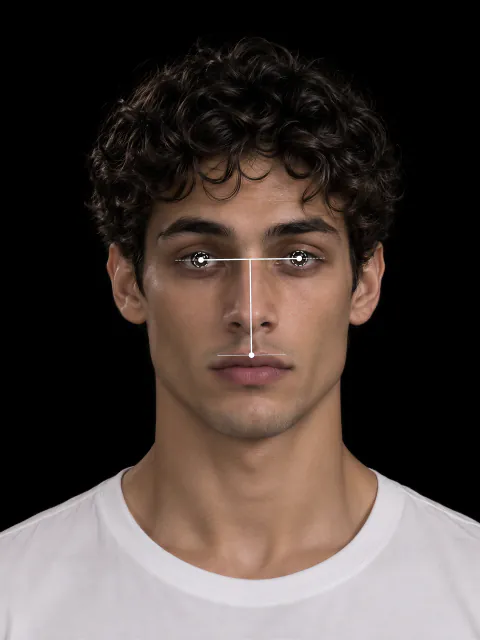
What is the midface ratio?
The midface ratio compares two distances: the space between your pupils and the height from your pupils down to your upper lip. When the two are about equal, your midface is balanced
How the midface ratio is measured
Find the centres of your pupils and measure the distance between them. Then measure straight down from the line through your pupils to the top of your upper lip. Divide the pupil span by the height. 62 mm across and 60 mm down gives a ratio of 1.03
Midface ratio, fWHR and facial thirds
What is a normal midface ratio?
We read 0.95 to 1.15 as a balanced midface, where the pupil span is about the same as the height. Under 0.95 the midface is long, over 1.15 it is compact. Some sources divide the height by the span instead, which turns 1.03 into 0.97, so check the formula before you compare
Long and compact midface
A long midface has more height between the eyes and the mouth than width between the eyes. A compact midface is the opposite: wide-set pupils and a short distance down to the lip. Looksmaxxing calls a compact midface attractive, but both are normal variations
Can you change your midface ratio?
The ratio is set by the bone of your upper jaw and the position of your eyes, so face exercises do not move it. A mustache or makeup can change how long your midface looks
How to measure your midface ratio yourself
Take a straight-on photo with your eyes open and looking at the camera. Measure from pupil to pupil, then from the pupil line down to the top of your upper lip, and divide the first by the second. The calculator above does it from one photo in a few seconds
How we measure the midface ratio
We find 478 points on your face, including the centre of each iris, and level your head on the line between your pupils. We take the pupil span and the height from that line down to the top of your upper lip, then divide one by the other
Read our methodologyHow to calculate your midface ratio
Get your result in three steps
- 01

Upload a selfie
Take a front-facing photo with your phone camera or pick one from your gallery
- 02
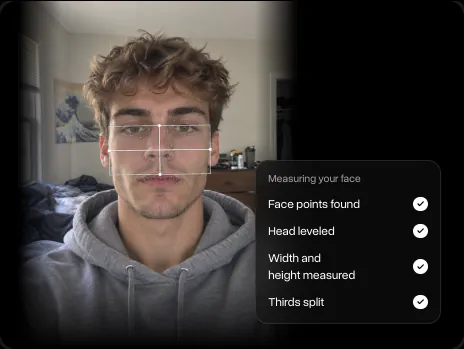
We map your face
We place 478 points on your face, level your head and find your cheekbones, pupils, brows, nose and chin
- 03
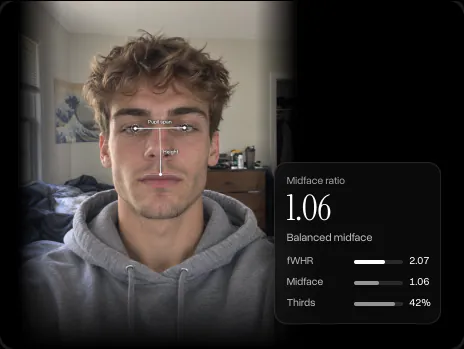
Get your midface ratio
See your midface ratio, your fWHR and your facial thirds, each on its range
Get an accurate midface reading
Your pupils and your upper lip are what the ratio needs to see
- 01
Face the camera
Look straight into the lens. A turned head narrows your face and shifts your pupils in the photo
- 02
Keep your hair off your forehead
Bangs hide your hairline, and the upper third reads shorter than it is
- 03
Use even light
Face a window or a lamp so both cheekbones and both pupils are clearly lit
- 04
Hold the camera at eye level
A camera above or below your face stretches or squashes its height in the photo
Explore More AI Tools
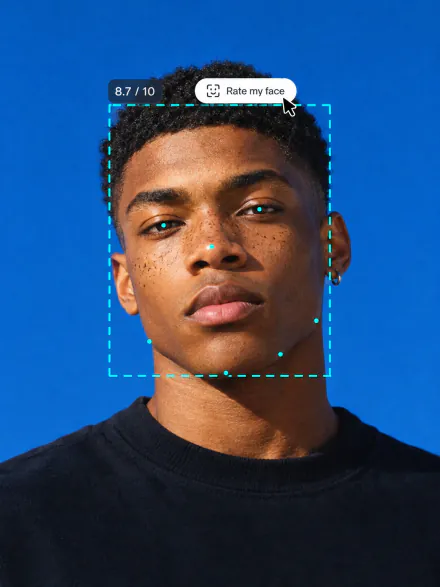
Try haircuts, glasses and beards on your photo, or rate your face








FAQ
If you have any questions,
reach out to us at hello@overchat.ai
A ratio of about 1.0, where the space between your pupils equals the height from your pupils to your upper lip, reads as balanced. We read 0.95 to 1.15 as balanced
Under 0.95 there is more height between your eyes and your mouth than width between your pupils. That is a long midface
A midface with a ratio over 1.15: wide-set pupils and a short distance down to the upper lip
No. The midface ratio uses the pupil span and the pupil-to-lip height. fWHR uses the cheekbone width and the eyelid-to-lip height
A head tilted up or down changes the height in the photo, and looking away moves your pupils. Face the camera with your head level
Yes. The ratio divides two distances on the same photo, so the unit cancels out
Yes. Your midface ratio, fWHR and facial thirds are free
Your photo is used only to measure your face and build your result. It is not shared with anyone


