
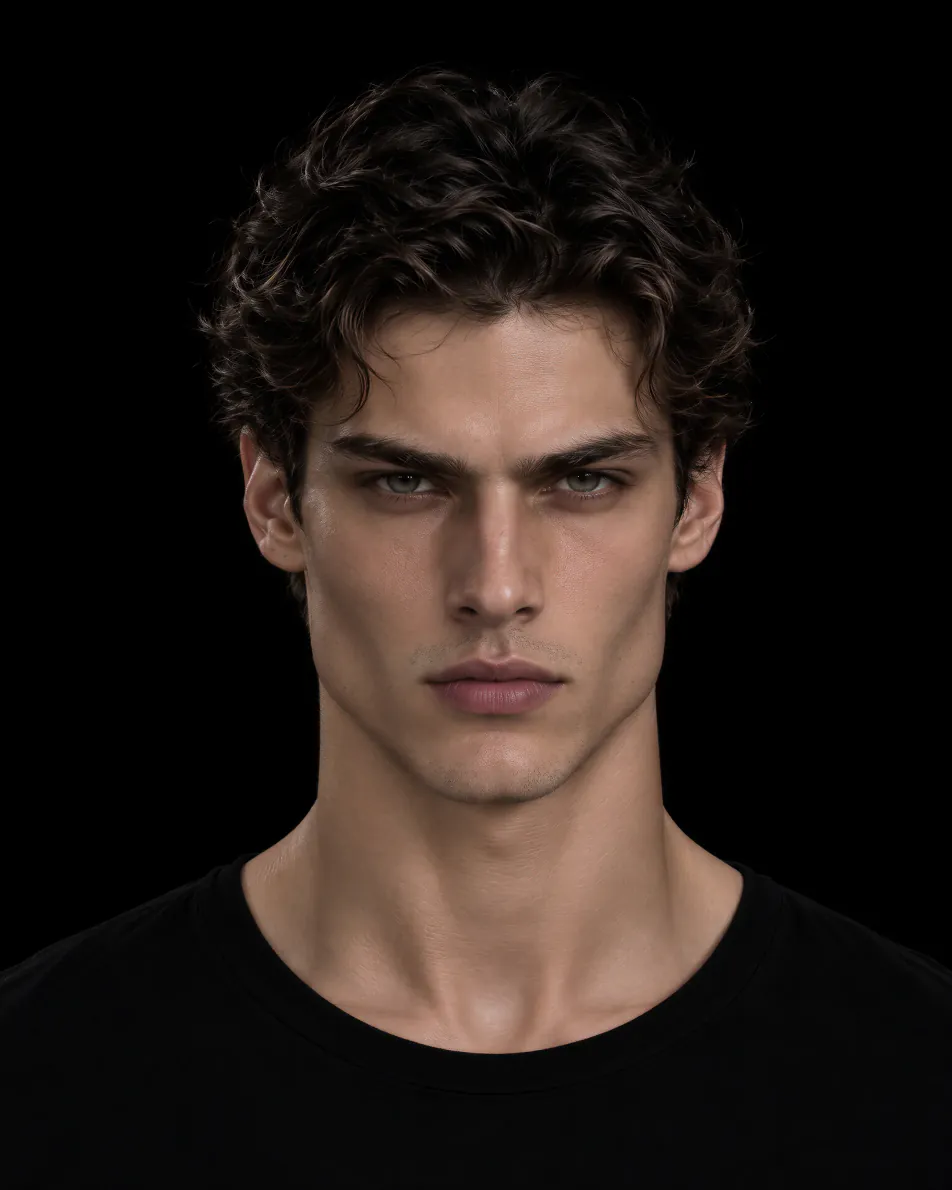


See how different faces measure
Every face gets its fWHR and what it means for its width
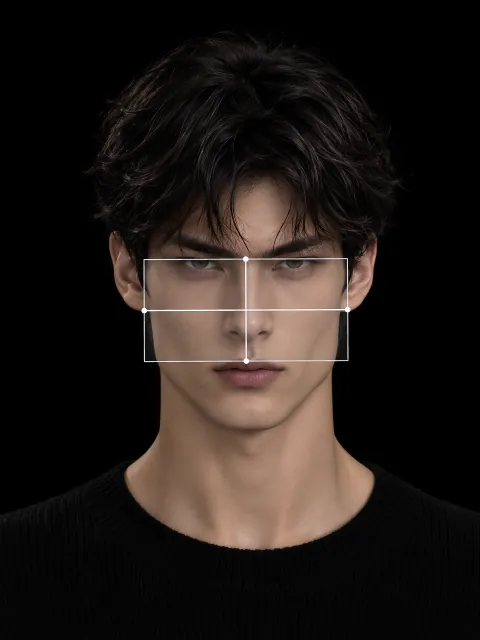
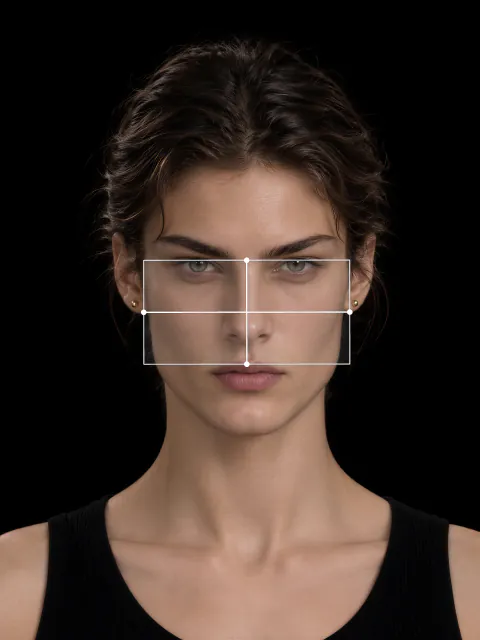
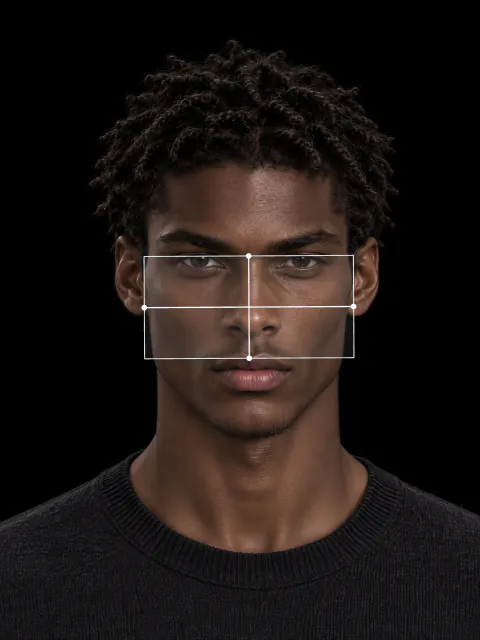
What is fWHR?
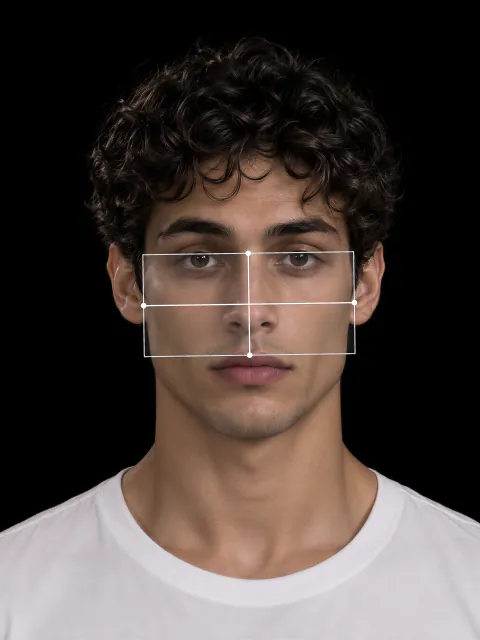
fWHR, or facial width-to-height ratio, is how wide your face is for its height: the width across your cheekbones divided by the height from your upper eyelids to your upper lip. Most faces measure 1.6 to 2.2
How fWHR is measured
Take the widest points of your cheekbones and measure the distance between them. Then measure straight down from the line of your upper eyelids to the top of your upper lip. Divide the first number by the second. A face 14 cm wide with 7 cm of upper-face height has an fWHR of 2.0
fWHR, midface ratio and facial thirds
What is a normal fWHR?
Most faces fall between 1.6 and 2.2, with an average of about 1.9. We read under 1.8 as a long face, 1.8 to 2.0 as average width and over 2.0 as a wide face. Men tend to measure a little higher than women
What a high fWHR means
A high fWHR means a wide, short upper face: broad cheekbones and little height between the eyes and the mouth. In studies people rate faces with a higher fWHR as more dominant and more masculine. It is a reading of proportion, not a score of attractiveness
Can you change your fWHR?
Your fWHR is set by the bone of your cheekbones and upper jaw. Losing or gaining face fat changes it a little. Hairstyles and beards change how wide your face looks, not the ratio itself
How to measure fWHR yourself
Take a straight-on photo with your eyes open and your head level. Mark the widest points of your cheekbones, the top of your upper eyelids and the top of your upper lip. Divide the width by the height. The calculator above does the same from one photo in a few seconds
How we measure fWHR
We find 478 points on your face and level your head on the line between your pupils. We take the width between the widest points of your cheekbones and the height from your upper eyelids down to your upper lip, the definition used in facial width research
Read our methodologyHow to calculate your fWHR
Get your result in three steps
- 01

Upload a selfie
Take a front-facing photo with your phone camera or pick one from your gallery
- 02
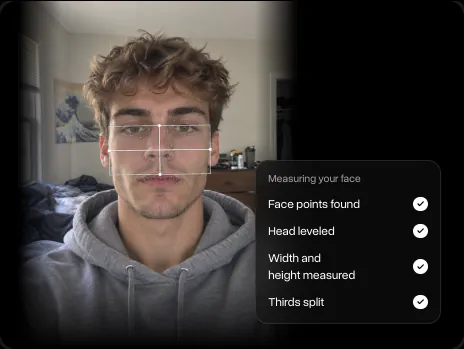
We map your face
We place 478 points on your face, level your head and find your cheekbones, pupils, brows, nose and chin
- 03
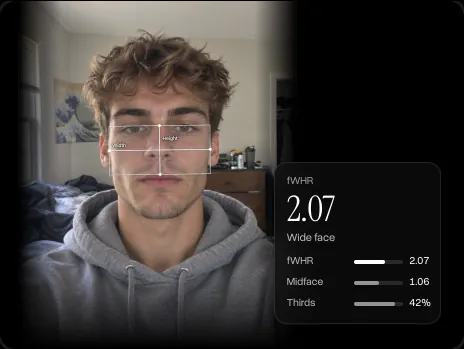
Get your fWHR
See your fWHR, your midface ratio and your facial thirds, each on its range
Get an accurate fWHR reading
The straighter your face is to the camera, the truer your width
- 01
Face the camera
Look straight into the lens. A turned head narrows your face and shifts your pupils in the photo
- 02
Keep your hair off your forehead
Bangs hide your hairline, and the upper third reads shorter than it is
- 03
Use even light
Face a window or a lamp so both cheekbones and both pupils are clearly lit
- 04
Hold the camera at eye level
A camera above or below your face stretches or squashes its height in the photo
Explore More AI Tools
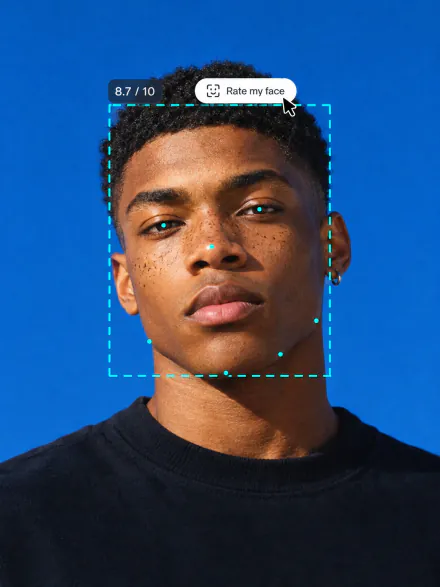
Try haircuts, glasses and beards on your photo, or rate your face







FAQ
If you have any questions,
reach out to us at hello@overchat.ai
There is no good or bad fWHR. Most faces measure 1.6 to 2.2. A higher ratio reads as a wider, more dominant face, a lower one as a longer, softer face
About 1.9. Men tend to measure slightly higher than women, and most faces fall between 1.6 and 2.2
Your cheekbone width divided by the height from your upper eyelids to your upper lip. We measure both on your photo after leveling your head
No. fWHR compares your whole face width with your upper-face height. The midface ratio compares the space between your pupils with the height from your pupils to your upper lip
A turned head narrows your face in the photo, and a camera above or below your face changes its height. Face the camera at eye level to compare photos
Not much. It is set by your bone structure. Face fat changes it slightly, and beards and hairstyles change how wide your face looks
Yes. Your fWHR, midface ratio and facial thirds are free
Your photo is used only to measure your face and build your result. It is not shared with anyone


