
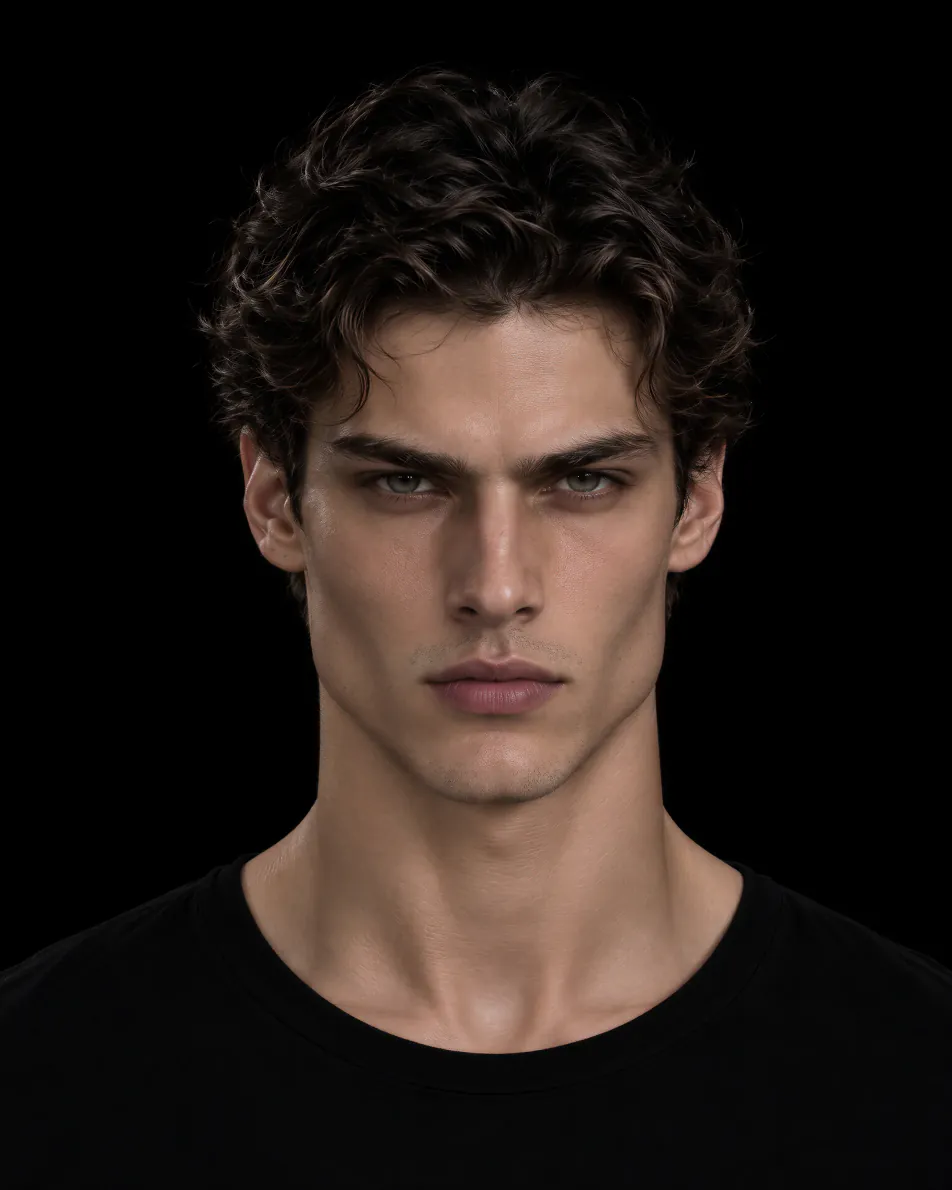


See how different faces split
Every face gets its three thirds in percent and which one is longest
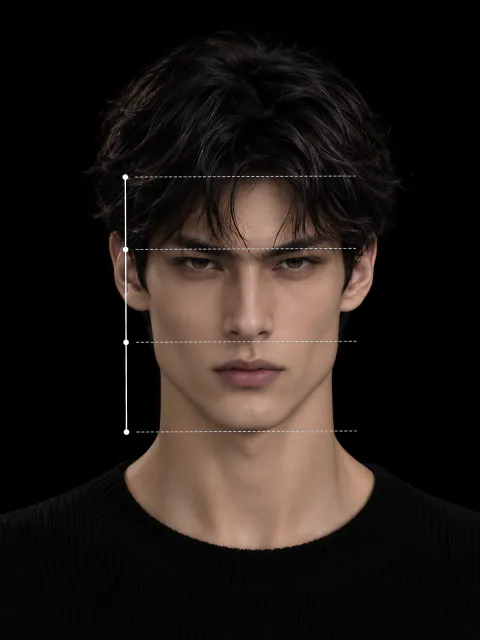
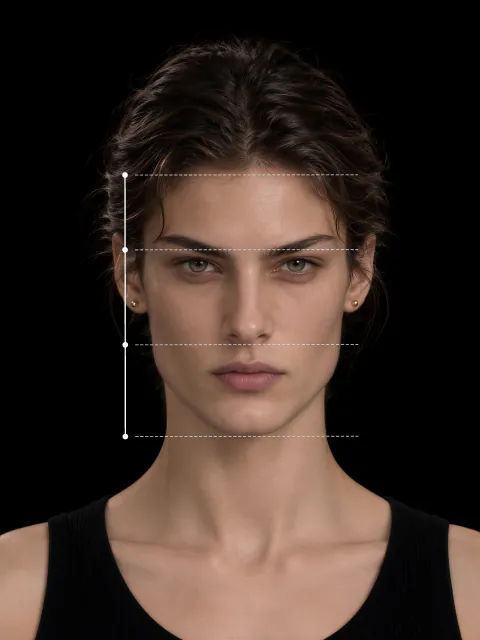
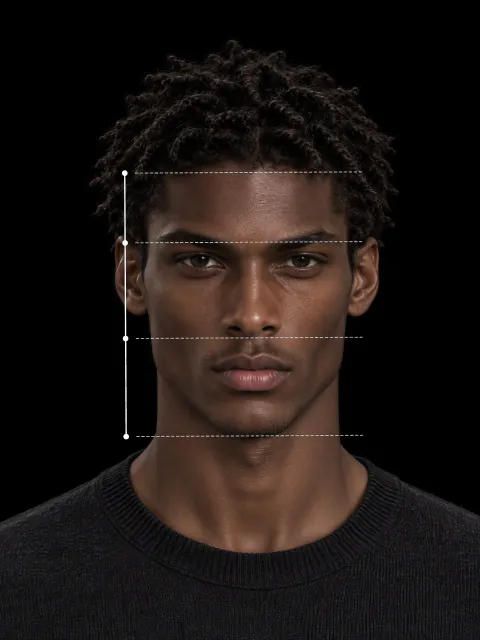
What are facial thirds?
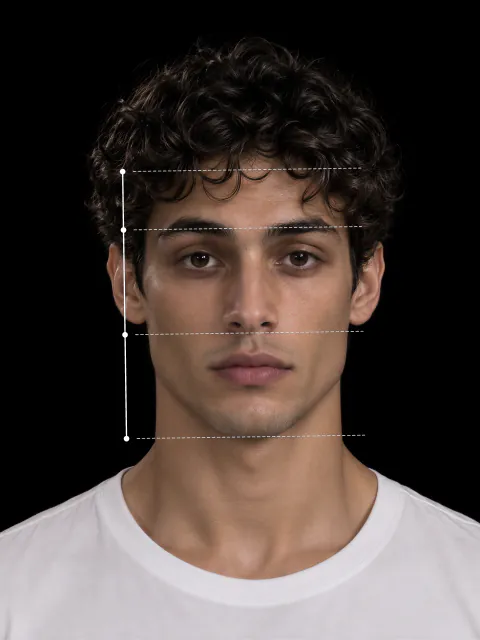
Facial thirds split your face into three parts from top to bottom: hairline to brows, brows to the base of your nose, and the base of your nose to your chin. In a balanced face each part takes about a third
How facial thirds are measured
Mark four levels on a straight-on photo: your hairline, the point between your brows, the base of your nose and the bottom of your chin. Measure the three distances between them and divide each by the total. Three equal parts give 33% each
Facial thirds, fWHR and midface ratio
What are balanced facial thirds?
We read the thirds as balanced when all three are within 5 percentage points of each other, for example 32%, 34% and 34%. A third that is clearly longer than the others gives the face its character: a high forehead, a long nose or a strong chin
Upper, middle and lower third
The upper third is your forehead, the middle third runs from your brows to the base of your nose, and the lower third covers your lips and chin. In many adults the lower third is a little longer than the other two
Can you change your facial thirds?
Hairstyles and bangs change how long your upper third looks, and a beard changes your lower third. The bone underneath stays the same
How to measure your facial thirds yourself
Take a straight-on photo with your hair off your forehead. Mark the four levels, measure the three gaps and divide each by the full height. The calculator above does it from one photo in a few seconds
How we measure facial thirds
We find 478 points on your face and level your head on the line between your pupils. We take the point between your brows, the base of your nose and your chin from those points, and estimate your hairline above the top of your forehead
Read our methodologySource: Farkas et al., 1985 · Plastic and Reconstructive Surgery
How to measure your facial thirds
Get your result in three steps
- 01
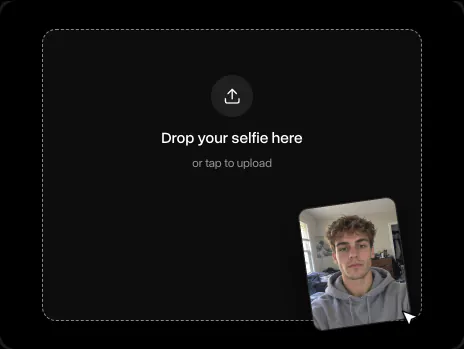
Upload a selfie
Take a front-facing photo with your phone camera or pick one from your gallery
- 02
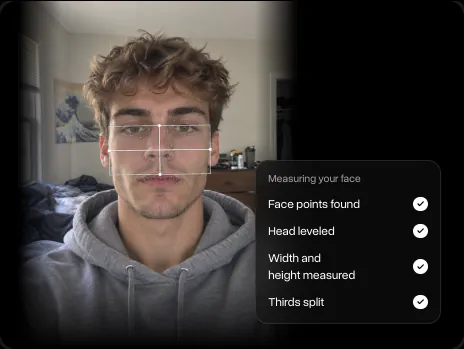
We map your face
We place 478 points on your face, level your head and find your cheekbones, pupils, brows, nose and chin
- 03
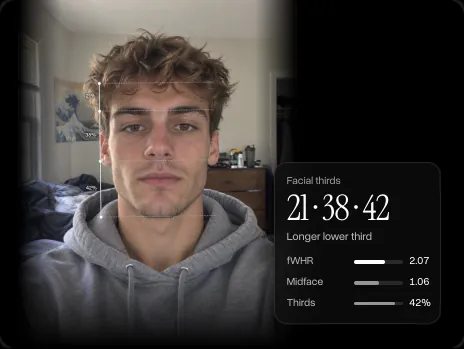
Get your facial thirds
See each third in percent, which one is longest, and your fWHR and midface ratio
Get an accurate facial thirds reading
Your hairline and your chin are the two ends of the measure
- 01
Face the camera
Look straight into the lens. A turned head narrows your face and shifts your pupils in the photo
- 02
Keep your hair off your forehead
Bangs hide your hairline, and the upper third reads shorter than it is
- 03
Use even light
Face a window or a lamp so both cheekbones and both pupils are clearly lit
- 04
Hold the camera at eye level
A camera above or below your face stretches or squashes its height in the photo
Explore More AI Tools
Try haircuts, glasses and beards on your photo, or rate your face






FAQ
If you have any questions,
reach out to us at hello@overchat.ai
Three equal parts, about 33% each. We read the thirds as balanced when all three are within 5 percentage points of each other
Push your hair back off your forehead for the photo. With bangs, the upper third reads shorter than it is
The distance from the base of your nose to your chin is longer than the other two. It often comes with a strong chin and jaw
The distance from your brows to the base of your nose is the longest. It usually means a longer nose
No. Facial thirds compare three vertical parts of the face. The golden ratio is a single proportion of about 1.618 applied to many measures
Hair, bangs and beards change how the thirds look. The bone underneath stays the same
Yes. Your facial thirds, fWHR and midface ratio are free
Your photo is used only to measure your face and build your result. It is not shared with anyone


