AI is creating new ways to make money, and you don't need technical skills to get started. The numbers back it up: On average, jobs using AI pay 28% more.
However, you don't need to find a full-time job to get started. You can use free tools like Overchat AI to earn money right now.
In this guide, we’ll cover 20 ways to earn money with realistic timelines and estimates of how much you can realistically make — some results might surprise you!
"Vibe working" — completing real jobs by using AI as a low-level assistant and describing the desired outcome — is the competitive edge behind most of these income streams.
Content-based paths (writing, translation, resume writing, YouTube, affiliate marketing) have the lowest barrier to entry and pay $20–$150/hour once established.
Design and creative work (graphic design, video editing, AI art) pays $30–$80/hour and rewards visual taste and prompt skill over traditional craft training.
Technical paths (software development, chatbots, data analytics, cybersecurity) pay the highest ($40–$150/hour) but need basic coding, SQL, or security knowledge.
Business/operations niches (ecommerce, digital marketing, recruitment, inventory, supply chain, agriculture) pay $25–$120/hour and often scale well through retainer or commission models.
Prompt engineering is its own specialty now — $35–$90/hour for designing prompt systems and reproducible AI workflows, no coding required.
Common traps to avoid: relying 100% on AI (always edit and fact-check), building something nobody wants (validate before investing time), and competing on price instead of value.
Pricing tip: forget hourly rates once you have traction — charge based on the value delivered. If your AI solution saves a client 10 hours/week at their $100/hour rate, $700/week is reasonable.
Tool advice: don't overspend on 10+ subscriptions. A bundled platform like Overchat AI covers about 90% of what most AI freelancers need for $4.99/week or $59.99/year.
Getting started path: 1–2 weeks learning the basics, 2–4 weeks testing one specific service offering, 2–4 weeks landing your first paying client, then iterate and raise rates with every project.
Can you really make money with AI?
Yes, absolutely. Using AI tools allows you to take smart shortcuts and create quality, specialized work without spending 10,000+ hours learning the fundamentals first.
If you're creative, you can start with art, coding, or writing to bring your ideas to life. You can then turn this into a business or side hustle.
This phenomenon is called vibe working, which is when you complete actual jobs using AI as a low-level assistant by describing the desired outcome. Vibe working can give you a huge competitive edge.
What are the quickest ways to earn with AI?
The table below summarizes 20 ideas for working with AI to start earning money.
Idea
Time to Get Started
Time to First Client
Hourly Rate
AI Ecommerce
1–2 weeks
2–8 weeks
…
AI Website Creation
1 week
1–2 weeks
$40–$100
AI Writing
1 week
1–2 weeks
$25–$60
AI Graphic Design
1 week
1–2 weeks
$30–$80
AI Video Editing
1–2 weeks
1–3 weeks
$35–$75
AI Translation Services
1 week
1–4 weeks
$25–$50
AI Resume Writing
1 week
1–2 weeks
$20–$45
AI Software Development
2–4 weeks
2–6 weeks
$40–$120
AI Digital Marketing
1–2 weeks
2–4 weeks
$30–$85
Prompt Engineering
1–2 weeks
2–6 weeks
$35–$90
Creating AI Chatbots
1–3 weeks
4–8 weeks
$40–$100
AI Data Analytics
2–3 weeks
3–6 weeks
$45–$110
AI Training Programs
3–6 weeks
3–8 weeks
$40–$85
AI Affiliate Marketing
2–4 weeks
4–8 weeks
$25–$70
YouTube Content Creation
2–4 weeks
4–12 weeks
$30–$150+
AI Hiring & Recruitment
3–6 weeks
4–12 weeks
$35–$80
AI Cybersecurity
4–8 weeks
4–16 weeks
$50–$150
AI Inventory Management
4–8 weeks
6–12 weeks
$45–$95
AI Agricultural Management
8–16 weeks
12–52 weeks
$40–$90
AI Supply Chain Optimization
6–10 weeks
8–24 weeks
$50–$120
1. AI ecommerce
AI makes it easier to start an online store without technical skills or a large budget. For example, many ecommerce platforms have built-in AI tools that can design and launch your store in minutes.
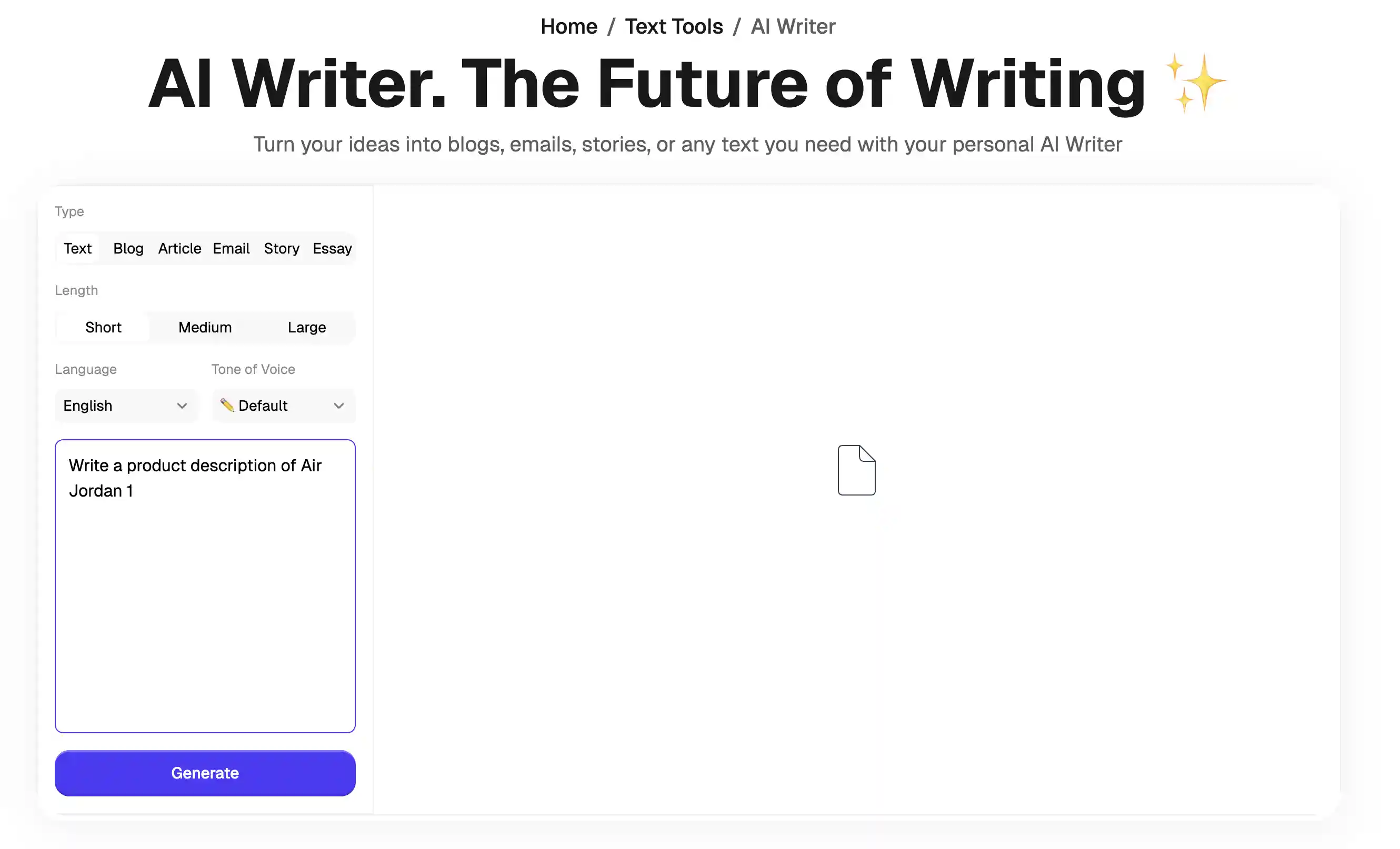
Then, you can use a service like Overchat's AI Writer to quickly generate product descriptions and AI product photography to create professional-looking images.
How much you can earn: You could make your first sale in 2-8 weeks if you use paid ads.
What you need: Basic understanding of online shopping. Willingness to learn about product research and marketing. No coding required.
2. AI website creation
With AI, you can design and build entire websites in minutes using any tech stack you can imagine. That's a huge advantage for developers. You could offer this service to small businesses, entrepreneurs, or anyone else who needs a professional website.
For a simpler approach, consider platforms like Wix, which offer AI-powered website builders that create custom designs based on basic descriptions.
If you want more control and are willing to take a low-code approach, where you need to understand the code and sometimes edit it, you can use Gemini 2.5 Pro on Overchat AI. It's an excellent coding assistant.
How much you can earn: First client site delivered in 1–2 weeks. Referrals typically start around 1–2 months. Hourly rates range from $40–$100.
What you need: Understanding of what makes a good website. Basic knowledge of web platforms. You don’t need to know coding, but basic CSS and HTML knowledge would come in handy.
Freelance writers can use AI to generate ideas and write faster than ever before. This opens up your bandwidth to work with more clients and earn more money.
For example, Overchat AI can help you brainstorm content ideas, create outlines, and generate first drafts. You can also use it to rewrite sections until they sound natural and engaging.
How much you can earn: First paid assignment in 1–2 weeks with samples. Steady pipeline in 1–3 months. Writers earn $25–$60 per hour on average.
What you need: Strong editing skills. Understanding of brand voice and tone. Ability to fact-check AI output. Experience with content strategy helps but isn't required.
4. AI graphic design
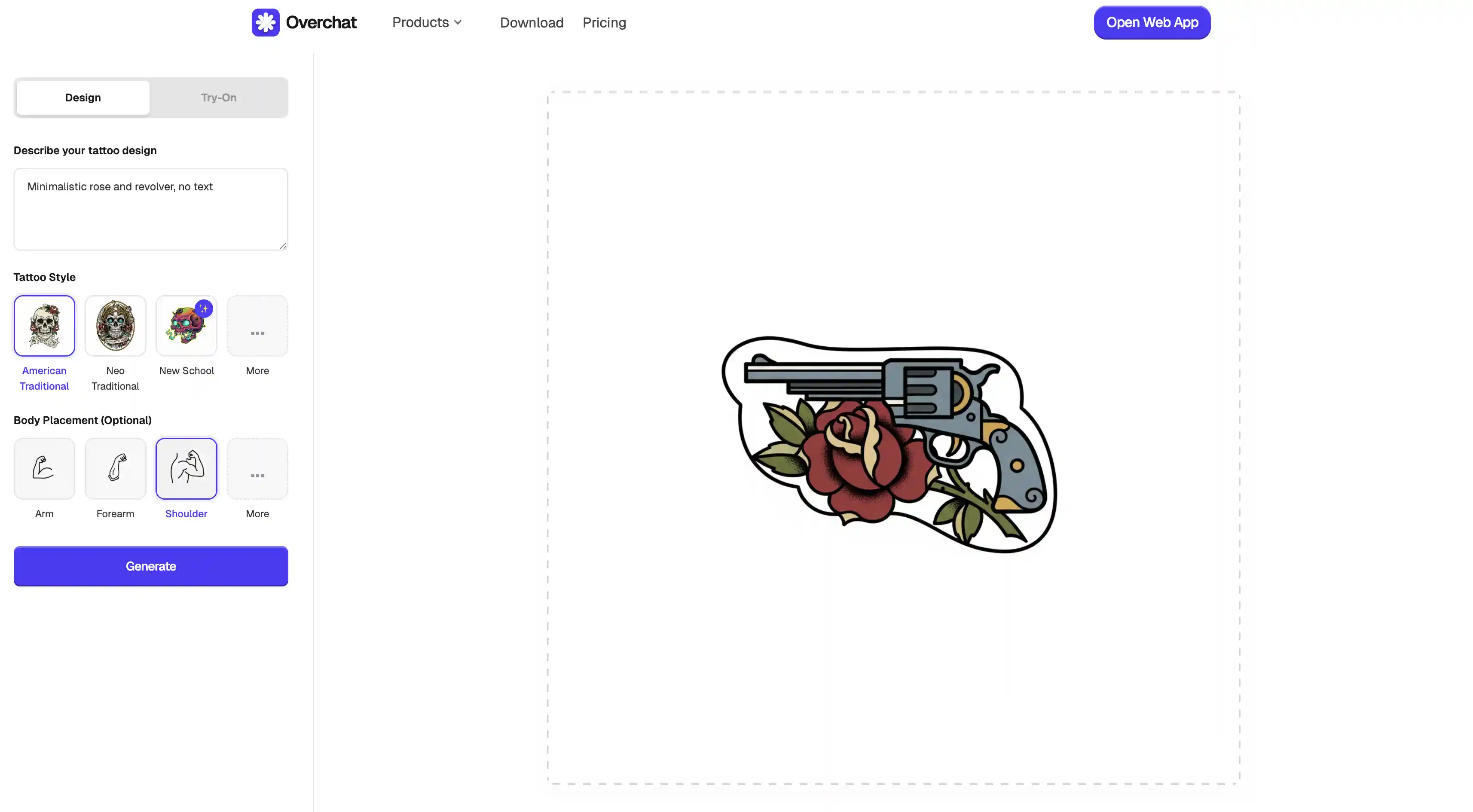
AI-powered tools can produce digital artwork for logos, web design, tattoos, and more. You don’t need drawing or design skills to get started — just good taste and knowledge of the latest trends in design.
Here’s how the process looks like:
Tell the AI assistant what you want to see
The AI will generate an image of your description
Follow up or change your prompt to make edits to the design
Download the finished version
How much you can earn:Designers charge $30–$80 per hour.
What you need: Knowledge of how to write a good prompt. Good visual taste. Understanding of design principles. Basic photo editing skills. If you can work with Canva or Adobe, it will help refine AI-generated designs.
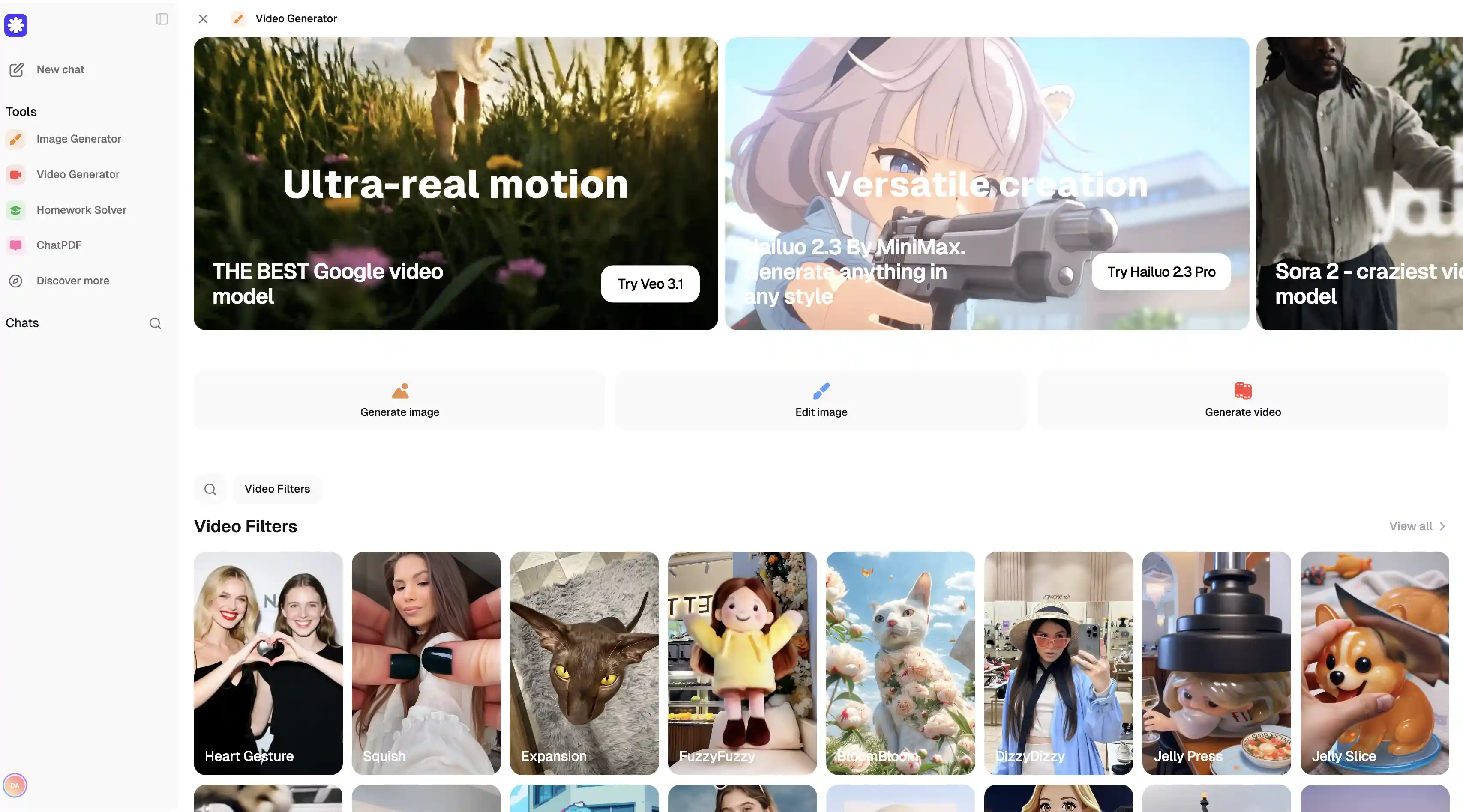
AI video generators can create videos based on written instructions. This technology works on everything from YouTube videos to professional commercials.
Video editors with AI skills can work faster and take on more clients. The software handles tedious tasks like cutting clips, adding captions, and adjusting pacing. You focus on storytelling and making sure the final product looks professional.
For example, on Overchat AI you can use models like Sora 2 and Veo 3.1 to create videos, animate images, and add motion to still designs.
How much you can earn: Video editors earn $35–$75 per hour.
What you need: Basic understanding of video storytelling. Sense of pacing and rhythm. Familiarity with video editing concepts. Technical skills with editing software help but many AI tools are beginner-friendly.
6. AI translation services
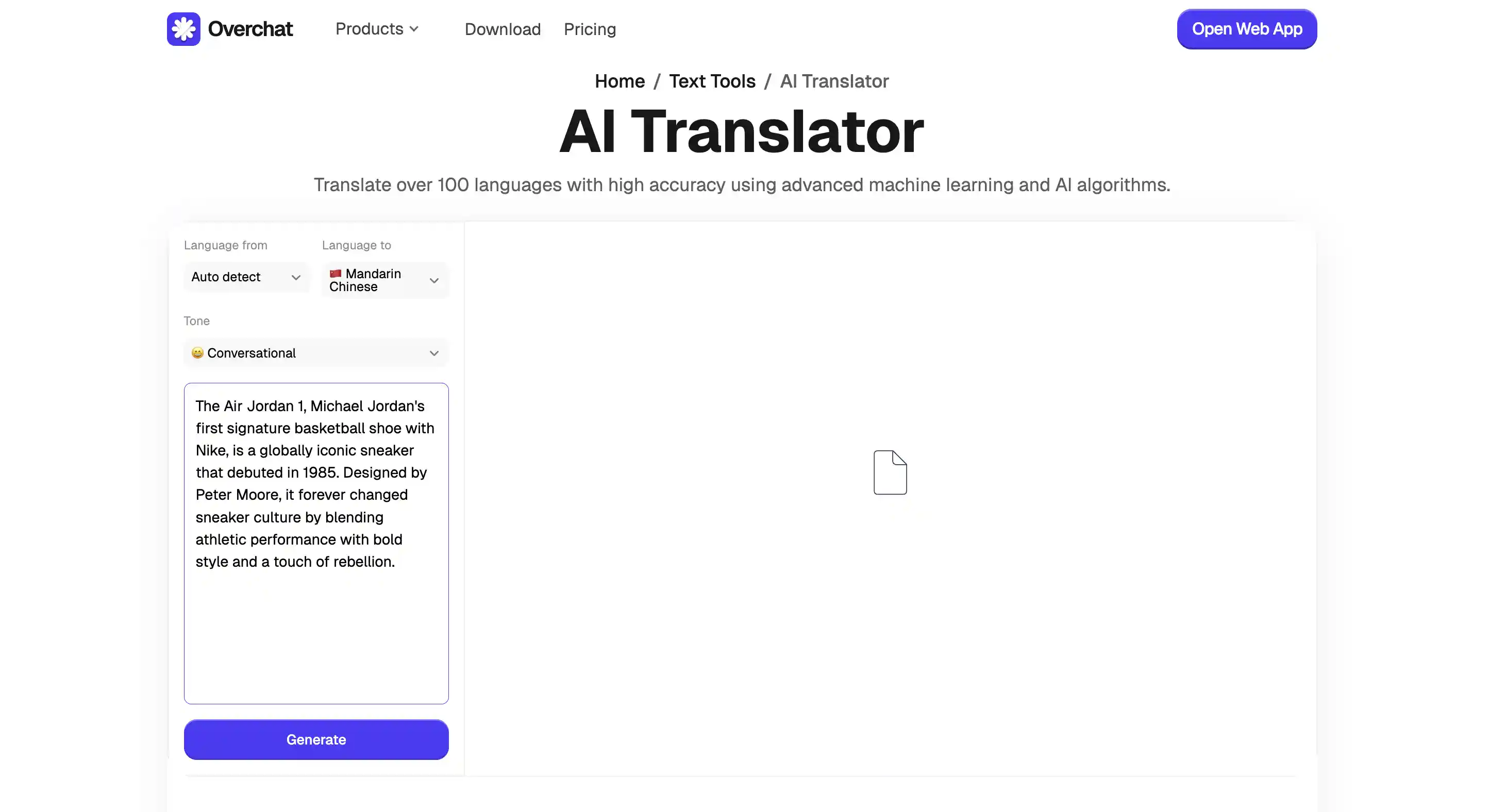
Large language models understand many languages, making them powerful translation tools. If you're multilingual, you can offer AI-assisted translation and localization services.
Then you review the output, checking for accuracy, cultural nuances, and proper syntax before delivering to clients.
Your language skills ensure the translation sounds natural, and the AI helps to speed up the work.
You can translate marketing materials for companies expanding internationally. You can create foreign-language voiceovers for YouTube creators. You can help businesses launch localized websites in their customers' languages.
How much you can earn: Translators earn $25–$50 per hour.
What you need: Fluency in at least two languages. Understanding of cultural context and idioms. Attention to detail for catching errors. Domain expertise in specific fields (medical, legal, technical) increases your rates.
7. Resume writing
AI tools can create and tailor resumes for specific industries or job types. This makes starting a resume writing business one of the fastest ways to earn with AI.
Job seekers struggle to write resumes that get past automated screening systems. They don't know how to highlight their skills or format their experience properly. You solve this problem by using AI to generate strong, targeted resumes quickly.
Connect with potential clients on LinkedIn or job seeker forums. Use an AI to help you create multiple versions of a client's resume tailored for different job applications. You can also generate cover letters and interview preparation questions.
This is a great side hustle idea. You can handle clients in the evenings and weekends while keeping your day job.
How much you can earn: Resume writers charge $20–$45 per hour, making it an accessible entry point.
What you need: Understanding of what employers look for in resumes. Knowledge of industry-specific keywords. Basic editing skills to refine AI output. No formal credentials required.
8. AI software development
You can build a freelance business offering software development services while using AI coding assistants like GitHub Copilot or ChatGPT to speed up your work. This lets you take on more clients without working longer hours.
The software you create can include AI features. Build an automated bookkeeping app that categorizes expenses. Design custom chatbots for specific industries. Create niche tools that solve particular problems.
How much you can earn: Land your first paid build in 2–6 weeks if you have a portfolio, or 1–3 months starting from scratch. Developers charge $40–$120 per hour.
What you need: Basic coding skills in JavaScript or Python. Understanding of APIs and how to connect systems. UX thinking to design software people actually want to use.
9. AI digital marketing
You can start a digital marketing business helping clients with SEO, paid advertising, social media management, and email campaigns. AI handles the time-consuming work while you focus on strategy and client relationships.
Use AI to analyze which keywords to target. Let it generate multiple ad variations for testing. Have it create social media content calendars. Use it to write email sequences that convert.
How much you can earn: Digital marketers earn $30-–85 per
hour depending on specialization.
What you need: Understanding of marketing funnels and customer journeys. Basic knowledge of ad platforms like Google and Meta. Ability to track and interpret metrics. Creative thinking for campaigns.
10. Prompt engineering
Prompt engineering is the skill of writing instructions that get AI tools to produce exactly what you want. Businesses pay well for people who can do this consistently.
Companies using AI need someone who understands how to craft prompts that deliver accurate, useful results. In this role, you would:
Design prompt systems
Create templates
Connect prompts to business outcomes
Ensure reproducible AI answers based on your prompts
How much you can earn: Prompt engineers often charge $35–$90 per hour, sometimes more based on experience.
What you need: Ability to break down complex tasks into clear steps. Understanding of how language models interpret instructions. Pattern recognition to see what prompts work best. No coding required.
11. AI-powered chatbots and virtual assistants
Businesses need customer service AI chatbots that can handle thousands of questions per minute. Unlike humans, chatbots respond instantly at any time of day, which saves businesses massive amounts of money.
You could and customize AI chatbots for businesses looking to improve their customer service. To do this, you’d need to train the chatbot on the specific business, its products, and how it talks to customers. This is a very demanded skill in 2026.
How much you can earn: Developers charge $40–$100 per hour for chatbot services.
What you need: Conversation design skills to map customer journeys. Understanding of how to structure prompts and responses. Basic JavaScript knowledge helps but isn't required. Ability to test and iterate based on real conversations.
12. AI data analytics
AI data analytics turns numbers into insights, and businesses pay well for information that can give them insights into how to earn more money.
This is a high-valued skill. According to the Bureau of Labor Statistics, data scientists earn a median annual salary of $112,590. Even entry-level data analysts command strong rates because companies desperately need people who can make sense of their data.
You use AI to analyze customer behavior, optimize processes, spot trends, and predict future outcomes. The AI handles the heavy computational work while you interpret results and present recommendations.
How much you can earn: Analysts charge $45-$110 per hour depending on complexity and industry.
What you need: Basic understanding of SQL and Python. Ability to use dashboarding tools like Tableau or PowerBI. Strong communication skills to explain findings to non-technical clients.
13. AI-based training programs
You can create online courses, training programs, and workshops using AI to speed up the entire process. AI handles outlining, content generation, and even script writing.
The corporate training market is especially lucrative because companies pay premium rates.
Overchat's AI Course Creator can generate lesson outlines, write quiz questions, create transcripts for video lessons, and even suggest engagement activities for students.
How much you can earn: Launch in 3–8 weeks. Steady course sales typically begin in 2–4 months. Course creators earn $40–$85 per hour, with top creators earning significantly more through passive sales.
What you need: Expertise in a topic people want to learn. Understanding of how people learn and retain information. Basic video recording setup if creating video courses. Familiarity with platforms like Teachable or Kajabi.
14. AI affiliate marketing
Affiliate marketing lets you earn commissions by promoting other companies' products. AI makes the entire process faster — from building your website to creating content that ranks in search engines.
This can become passive income over time, but it's not instant. You need to put in initial work setting up the site, creating quality content, optimizing for SEO, and building an audience.
How much you can earn: Successful affiliate marketers earn $25–$70 per hour equivalent, with top performers earning much more.
What you need: Basic SEO knowledge and understanding of how search engines work. Patience to build traffic over time. Ability to write or edit compelling product reviews.
15. YouTube content creation
YouTube creators can earn six figures annually according to ZipRecruiter. AI makes it easier than ever to produce videos consistently without spending hours on every aspect of production.
Your earnings depend on views, subscribers, and how you monetize. Popular niches include gaming, cooking, fitness, fashion, and AI tutorials themselves.
AI helps at every stage. Use it to write video scripts, make videos in a Sora 2 AI video generator, generate thumbnails and channel art. Edit your videos faster with AI-powered tools. Even analyze what types of content perform best with your audience.
How much you can earn: Timeline varies widely. Some creators see revenue in 4–12 weeks, others take 6+ months. Rates range from $30–$150+ per hour equivalent once monetized, depending on niche and audience size.
What you need: Consistency to post regularly. Basic video recording equipment (even a smartphone works initially). Understanding of your chosen niche. Willingness to learn what your audience responds to and adapt.
16. AI hiring and recruitment
AI can automate much of the hiring process — screening resumes, matching candidates to jobs, and even conducting initial interviews.
Many leading job recruitment platforms already use AI-powered software. You can offer similar capabilities to smaller companies that can't afford enterprise solutions.
How much you can earn: First placement fees in 4–12 weeks depending on role seniority and your network. Recruiters earn $35—$80 per hour, with many working on commission for successful placements.
What you need: Understanding of sourcing and screening processes. Strong communication skills for working with both companies and candidates. Ability to craft effective job descriptions and interview questions. Network in your target industry helps accelerate placements.
17. AI cybersecurity
With cyberattacks increasing, businesses invest heavily in advanced security measures. Your target audience will likely be companies storing large amounts of customer data.
How much you can earn: Small business engagements in 4–8 weeks. Enterprise pilots take 2–4 months. Cybersecurity consultants charge $50–$150 per hour depending on expertise and client size.
What you need: Understanding of threat models and common attack vectors. Knowledge of security protocols and compliance requirements. Ability to explain technical risks to non-technical clients. Certifications like CompTIA Security+ help but aren't always required.
18. AI inventory management
Use AI to help companies prevent overstocking (which ties up cash) and understocking (which loses sales), and to forecast demand more accurately.
How much you can earn: Measurable savings appear in 6–12 weeks after implementation. Inventory specialists earn $45–$95 per hour, often charging project fees for setup and optimization.
What you need: Understanding of supply chain basics and how inventory flows. Ability to map operational processes. Familiarity with inventory management software. Strong analytical skills to interpret demand patterns.
19. AI agricultural management
Farmers, seed producers, and resource managers already use AI tools to improve food production. Help them by using AI to analyze satellite imagery, weather patterns, soil conditions, and historical data to make recommendations.
How much you can earn: Agricultural consultants earn $40–$90 per hour.
What you need: Basic understanding of agronomy and farming practices. Familiarity with sensor technology and data collection
20. AI supply chain optimization
Help companies identify bottlenecks in their supply chain and implement AI solutions to fix them. This might involve route optimization for deliveries, demand forecasting to prevent stockouts, or quality control systems that catch defects early.
How much you can earn: Supply chain consultants charge $50–$120 per hour depending on company size and complexity.
What you need: Understanding of logistics and network design. Ability to map complex processes and identify inefficiencies. Strong project management skills since implementations involve multiple stakeholders.
Tips for making money with AI
We’ve already covered 19 of the most promising ways to make money with AI — but how do you actually put those ideas into practice? Here are a few tips that have worked for many people:
Start with real problems. Before you dive in, talk to people in the field you’ve chosen and find out where they’re running into friction. Look for tasks that are repetitive, time-consuming, or frustrating — and see if AI could help smooth things out or automate part of the process.
Test and iterate. Don’t spend weeks perfecting your first idea. Instead, build a quick, rough version and get real feedback from potential users as soon as possible. The great thing about AI is that it’s never been easier to create an MVP and start learning fast.
Don't rely only on AI. AI is powerful, but it’s not perfect. Always double-check the output and refine it before sharing it with clients. Never send raw AI results directly — take the time to polish, personalize, and fact-check everything. Quality is what sets you apart.
Price based on value. Pricing can be tricky when you’re starting out. A good rule of thumb: forget about hourly rates and focus on the value you deliver. For example, if your AI solution saves a client 10 hours a week and they charge $100 an hour, you might charge around 70% of that — $700 per week. When clients clearly see the return on investment, they’re happy to pay.
How to get started with AI
Getting started with AI doesn't require a tech degree or expensive software. Here's your step-by-step path from complete beginner to earning your first dollar.
1. Learn the basics (1–2 weeks)
To get started, you don't need to understand how AI works internally, but you need to know what it can and can't do, and how to use it.
Sign up for free Overchat AI and test it for a week
Give it different tasks — writing, brainstorming, editing, research
Notice when it does well and when it fails
Learn what makes a good prompt versus a bad one
Try Overchat's AI tools for specialized tasks in your field
Watch a few YouTube tutorials if you learn better visually. But the best learning happens by actually using the tools.
2. Test your first idea (2–4 weeks)
Choose one service to offer:
Pick something people already pay for
Make sure you can deliver it with AI help
Start with a clear, specific offer
Then create a simple portfolio:
Make 2–3 sample pieces using AI
Show them to potential clients or post them online
Get feedback before you start charging
3. Find your first client (2–4 weeks)
Getting started is always the hardest part. But once you begin gaining traction — and if you’re offering real value — clients will start finding you through word of mouth. The key is to push through those first few quiet weeks and the inevitable early rejections.
That said, here are a few things that can help make the early stages a little smoother:
Tell everyone you know what service you're offering
Post on freelance platforms like Upwork or Fiverr
Join relevant Facebook groups or subreddits
Offer your first project at a discount (not free)
Deliver amazing work and ask for a testimonial
Where to find clients:
LinkedIn for B2B services
Twitter for creative work
Local business groups for service businesses
Reddit communities in your niche
4. Improve and scale (ongoing)
Once you land your first paying client, shift your focus to getting better with every project. After each one, take a moment to:
Ask what the client liked (and what they didn’t)
Note what took longer than expected
Look for ways AI can handle more of the work
Adjust your pricing based on the value you deliver
Doing this consistently will help you grow your income over time. As you deliver better results, you’ll be able to charge higher rates, collect stronger testimonials, and build reusable templates for repetitive tasks. You’ll also get better at using AI to automate more of your workflow — freeing you up to take on more clients or larger projects.
This approach is far more sustainable than simply trying to earn more by working longer hours. And remember — your work isn’t “cheap” just because you’re using AI. What matters is the outcome you deliver, not the tools you use to get there.
Which brings us neatly to the next topic: common mistakes to avoid.
Common Mistakes to Avoid When Making Money With AI
Most people trying to make money with AI fall into one (or several) of these common traps — and many fail because of them.
Avoiding these mistakes alone will already put you ahead of 80% of freelancers on Fiverr and similar platforms:
Relying 100% on AI. We’ve talked about this before, but it’s worth repeating: AI is fast, but it’s not foolproof. You can’t just type “Write an article about X” or “Code me a Y” and hand that straight to a client. Working with AI still means working — editing, refining, and adding your own expertise. AI is a tool, not a substitute for quality or judgment.
Building something nobody wants. A lot of beginners jump straight into creating AI tools or services without ever speaking to potential customers. They spend months building, only to realize no one’s willing to pay for what they made. Always validate your idea early — talk to people, ask if they’d actually pay for it, and if possible, secure pre-orders or signed letters of intent before you invest serious time.
Competing on price instead of value. NMany newcomers undercharge because they feel like the AI did most of the work or assume clients won’t pay full price for AI-assisted services. That might’ve been true a few years ago, but not anymore. In 2026, clients understand that using AI at a high level is a high-paying skill. So, if you solve a $10,000 problem in two hours using AI, charge based on the value you delivered — not the time it took.
How to Choose the right AI tools for your business
Another common mistake is thinking you need every AI tool out there — and then overspending on subscriptions. Many AI tools cost around $20 a month each, so it’s easy to end up paying $100–200 monthly without realizing it. In most cases, you won’t need all of them. But even if you do, platforms like Overchat AI provide access to nearly all these tools through a single subscription at a much lower price.
For instance, an Overchat AI subscription costs just $4.99 per week or $59.99 per year, giving you access to about 90% of the tools mentioned below.
That said, we recommend choosing one of the following tools depending on the type of business you’re interested in exploring:
For content:
Overchat AI Writer for articles and marketing copy
ChatGPT or Claude for brainstorming and outlines
AI rephraser for editing and tone
For design:
GPT-Image-1 for artistic, stylized images
Nano Banana or Seedream for image editing
Qwen image for quick iterations and testing prompts
A mix of Sora 2, Veo 3.1 and various Kling and Wan models for video work
For operations:
Overchat AI coder and Gemini 2.5/3 Pro for coding customer service
Zapier for connecting different apps
ChatGPT for data analysis and reporting
What to Consider before you Purchase a Tool
Before committing to a new subscription, ask yourself these questions:
Does the tool work in tandem with what you already use? For example, if you use Google Docs for writing, consider how much time you’ll spend copying and pasting between the AI editor and Google Docs — and whether that extra step is worth it.
Is it easy to learn? If you're trying to earn money fast, pick tools you can learn in a day, or those that have very good tutorials, good documentation and responsive customer support.
Is the cost lower than the value? Think about whether the tool actually saves or earns you money. If it costs $50 a month but helps you take on two extra clients worth $500 each, it’s more than worth it.
Do you really need it? Start with one tool and master it before adding more. Only expand when you have a specific need. Most successful AI freelancers rely on 3–5 tools they know inside and out, rather than juggling dozens they barely understand.
FAQs
Can AI really help me make money?
Yes. AI helps you work faster and take on more clients. Jobs that use AI pay about $18,000 more per year than the same jobs without AI. People are using it right now to earn extra income through freelancing, content creation, and online businesses.
What's the easiest way to start making money with AI?
Use AI to do what you already do, just faster. If you write, use Overchat's AI Writer to finish articles quicker. If you design, generate ideas faster. If you sell products, let AI write your descriptions. Don't learn something new—improve what you know.
Do I need technical skills to make money with AI?
No. Most ways to earn with AI need zero coding. Writing, design, marketing, and consulting all use simple tools. Learning how to write good prompts matters more than technical knowledge. If you can use a website, you can use AI tools.
Is it legal to sell AI-generated content?
Yes, in most cases. Just don't copy other people's work or lie about who created it. Check the rules of whatever AI tool you use—some don't allow commercial work. Be honest with clients about using AI and you'll avoid problems.
How much does it cost to start an AI business?
Most AI tools cost under $50 per month, while Overchat AI’s annual plan costs $59.99 for the entire year. Many tools also free versions. You can start with no money and upgrade later. Your biggest cost is time spent learning which tools work and what people will pay for.
Can I use ChatGPT to make money?
Yes. People use ChatGPT to write faster, create marketing content, generate business ideas, and help with coding. Freelancers use it to handle more clients. Just edit what it gives you—AI makes mistakes and sometimes sounds robotic.
Can I sell AI-generated artwork?
Yes. People sell AI art on Etsy, through print-on-demand sites, and as digital downloads. Check that your AI tool allows commercial use. Overchat's AI Art Generator lets you create and sell designs. Add your own style to stand out from others.
How do I use AI for side hustles?
AI does the boring parts so you can earn more without quitting your job. It writes blog posts, edits videos, creates product descriptions, and generates social media content. Pick something that fits your schedule and let AI handle the repetitive work.
Bottom Line
In 2026, AI is creating entirely new ways to make money online — opening doors to careers that many people simply couldn’t access before. It’s an incredible shift that’s giving rise to a completely new kind of job market.
We’ve covered 20 AI-driven income opportunities, including how to get started, which tools to use, and how to position yourself for success. If you’re serious about diving in, the best advice is simple: don’t wait — just start. You never know how far this exciting journey could take you.