Kibbe is a little bit similar to the traditional body shape system (pear, triangular, hourglass) but it's more nuanced, and understanding it can ultimately help you better understand how to dress your body to complement its natural lines. In this guide we'll cover all 13 Kibbe shapes. You'll learn:
What the Kibbe body type system is
How Kibbe Yin-Yang spectrum works
The defining characteristics of all 13 Kibbe body types with examples
How to dress for each body type
How to find your Kibbe body type with the Overchat AI test
Think of it as a Kibbe body types chart and a Kibbe body types guide how to determine your own placement, rolled into one page.
So what are the Kibbe body types? The Kibbe system is a method of choosing clothing that harmonizes with your natural lines. It revolves around a concept of identities — a body type placed into predefined groups, like Romantic or Gamine (more on this later).
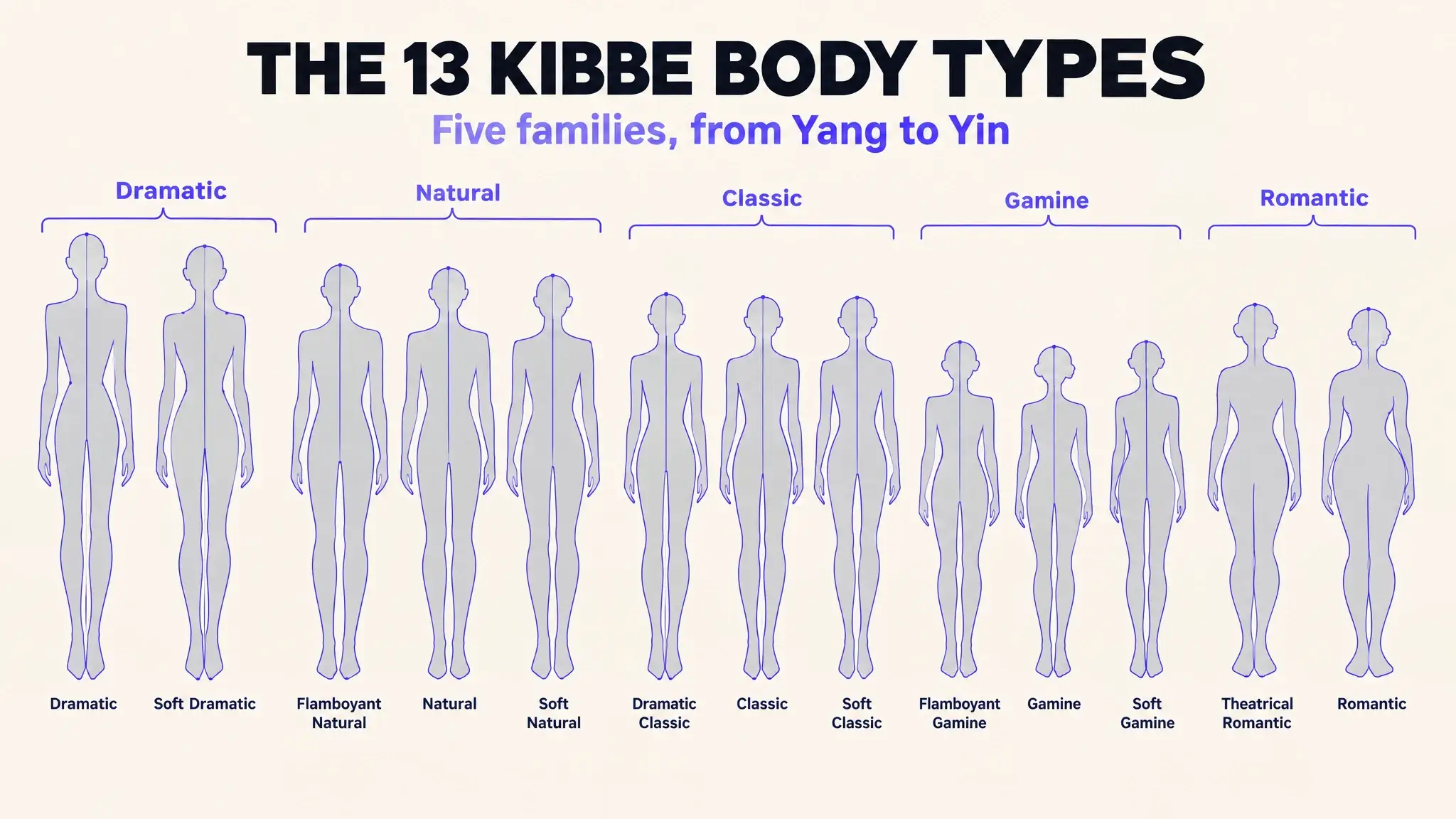
If you're wondering what is Kibbe body types built on, the answer is a single spectrum: according to Kibbe, all body shapes range from Yang (angular and elongated body types) to Yin (rounded and delicate).
What is interesting in Kibbe is that two people can have the same height and weight, yet belong to widely different Kibbe identities. As a result, clothes that may compliment one person may actually highlight areas of the figure of another they wouldn't necessarily want to bring attention to.
The Origins of David Kibbe's Image Identity System
David Kibbe was a New York stylist. In 1987 he published a book — Metamorphosis: Discover Your Image Identity and Dazzle as Only You Can. In the book, he grouped physical line, personal presence, and styling into a system of 13 image identities. The original framework organized those identities into five families:
Dramatic: elongated, sharp, and Yang-dominant
Natural: broad or blunt, relaxed, and Yang-dominant
Classic: balanced and evenly blended
Gamine: compact, animated, and high in contrast
Romantic: rounded, soft, and Yin-dominant
Kibbe later retired three identities: Natural, Classic, and Gamine. In the current system, a person in one of those families has either a Yin or Yang influence. But for the purpose of completeness, in this guide we'll cover all 13 types.
Yin and Yang in the Kibbe Body Type System
In Kibbe terminology, Yin and Yang describe visual qualities.
Yin includes softness, roundness, delicacy, short lines, and curve.
Yang includes length, angularity, width, sharpness, and strong structure.
Blend means Yin and Yang appear smoothly balanced, as in the Classic family.
Contrast means Yin and Yang appear side by side, as in the Gamine family.
Most types combine both sides of the spectrum. A Soft Dramatic, for example, has a Yang-dominant vertical line with a pronounced Yin curve.
How Kibbe System Works
Kibbe considers the whole silhouette, and places people into groups based on:
Bone structure: the visible shape and scale of your shoulders, limbs, hands, feet, and joints
Body flesh: how softness, tautness, or curve sits over your frame
Vertical line: how long or compact your body appears from head to toe
Width: openness through the shoulders and upper torso that clothing needs to accommodate
Curve: a rounded outline that interrupts a straight fall of fabric
Balance: even proportions without one dominant direction
Petite: compact proportions throughout the body, not simply short height
Facial features: part of the original system, though current typing places more emphasis on the body's overall line
What makes Kibbe more nuanced than the standard body type system you're probably familiar with, is the fact that, when taken by themselves, traits don't really affect your placement within the Kibbe spectrum. Broad shoulders, for example, don't automatically make you a Natural, and a defined waist doesn't automatically make you a Romantic. It's how these elements interact together that decides your placement.
This means that Kibbe has more inherent variations and is quite accurate, but it can also make it a little confusing when you're first starting to learn about it. Which is why we've prepared visual Kibbe body types examples to illustrate each Kibbe body type.
Dramatic Kibbe Body Types
The Dramatic family is defined by vertical and sharpness. Its lines are long, deliberate, and visually continuous. It includes 2 sub-types:
Dramatic
Soft Dramatic
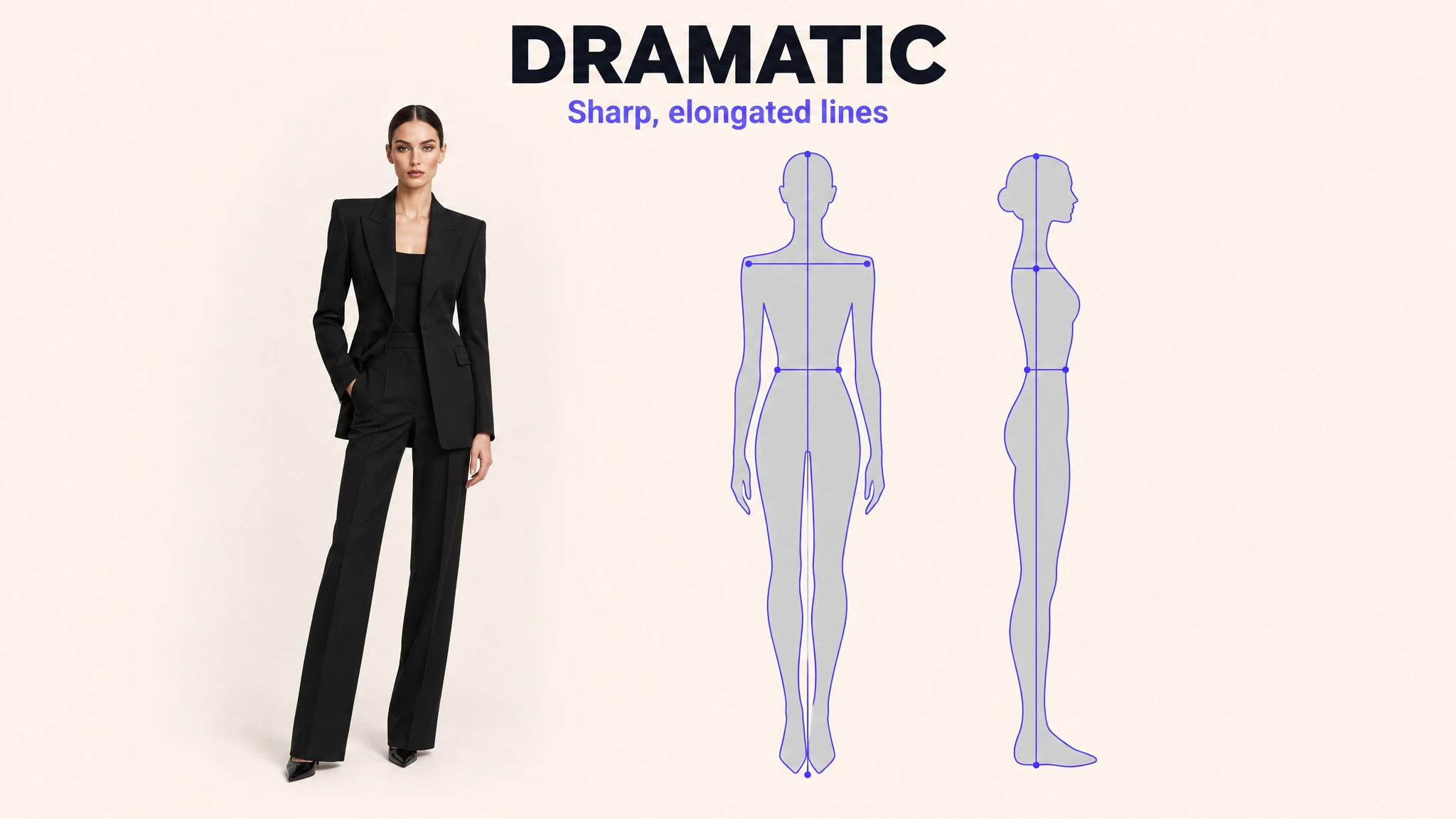
1. Dramatic Body Type
The Dramatic identity represents the strongest Yang expression in the original system. Your silhouette reads as long, narrow, and angular, even when your actual height is moderate.
Key characteristics:
A long or visually elongated vertical line
Narrow, sharp, or angular bone structure
Straight body lines with limited rounded curve
Long limbs, hands, or feet relative to the frame
Defined facial bones and a sculpted overall impression
Best clothing lines:
Long, uninterrupted silhouettes
Precise tailoring and sharp shoulders
Straight trousers, column dresses, and long coats
Monochromatic or low-contrast outfits that preserve vertical
Large geometric details used with restraint
Fabrics and details: Choose smooth, firm, or substantial materials that hold a clean shape. Crisp wool, structured crepe, heavy silk, and polished leather support the frame. Tiny prints, fussy trim, and overly rounded shapes can interrupt the strong line.
Celebrity examples:Tilda Swinton, Anjelica Huston, and Lauren Bacall.
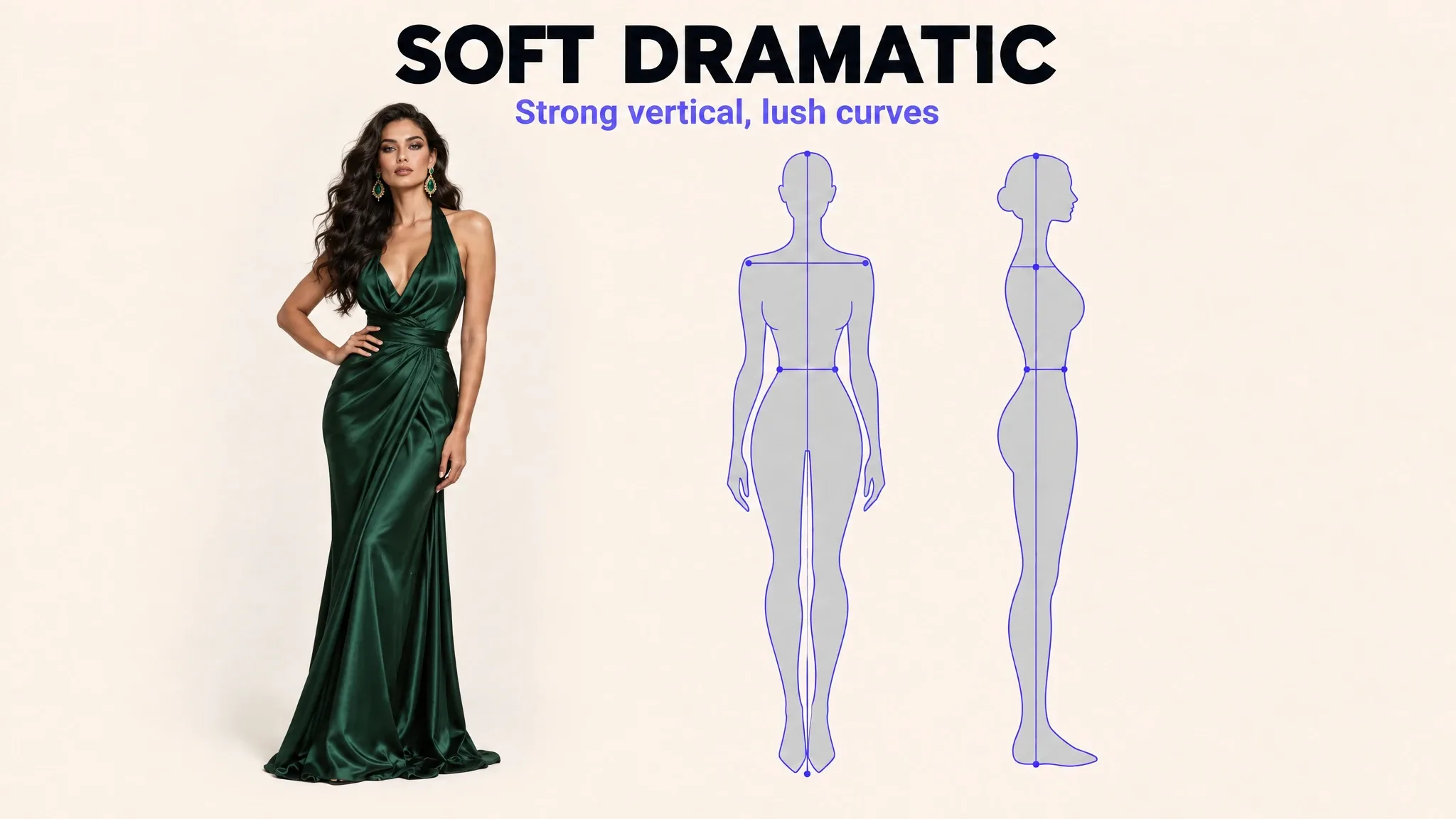
2. Soft Dramatic Body Type
Soft Dramatic combines a long Yang frame with visible Yin softness. Vertical remains the first impression, but curve needs room and definition.
Key characteristics:
A long vertical line with prominent bust or hip curve
Angular or large-scale bone structure
Soft flesh over an elongated frame
Bold facial structure paired with full or rounded features
A statuesque rather than delicate overall effect
Best clothing lines:
Long silhouettes with clear waist definition
Draped dresses, sweeping trousers, and elongated jackets
Open necklines and large, rounded shapes
Bold accessories that match the body's scale
Asymmetry or dramatic detail placed within a continuous line
Fabrics and details: Fluid materials with enough weight to drape work better than either stiff tailoring or shapeless fabric. Velvet, silk jersey, soft crepe, and substantial satin support both vertical and curve.
Celebrity examples:Sofia Vergara, Tyra Banks, and Rachel Weisz.
Natural Kibbe Body Types
The Natural family is defined by width and blunt Yang. Its lines have openness, ease, and visible structure without the knife-like sharpness of the Dramatic family. It includes 3 sub-types:
Flamboyant Natural
Natural
Soft Natural
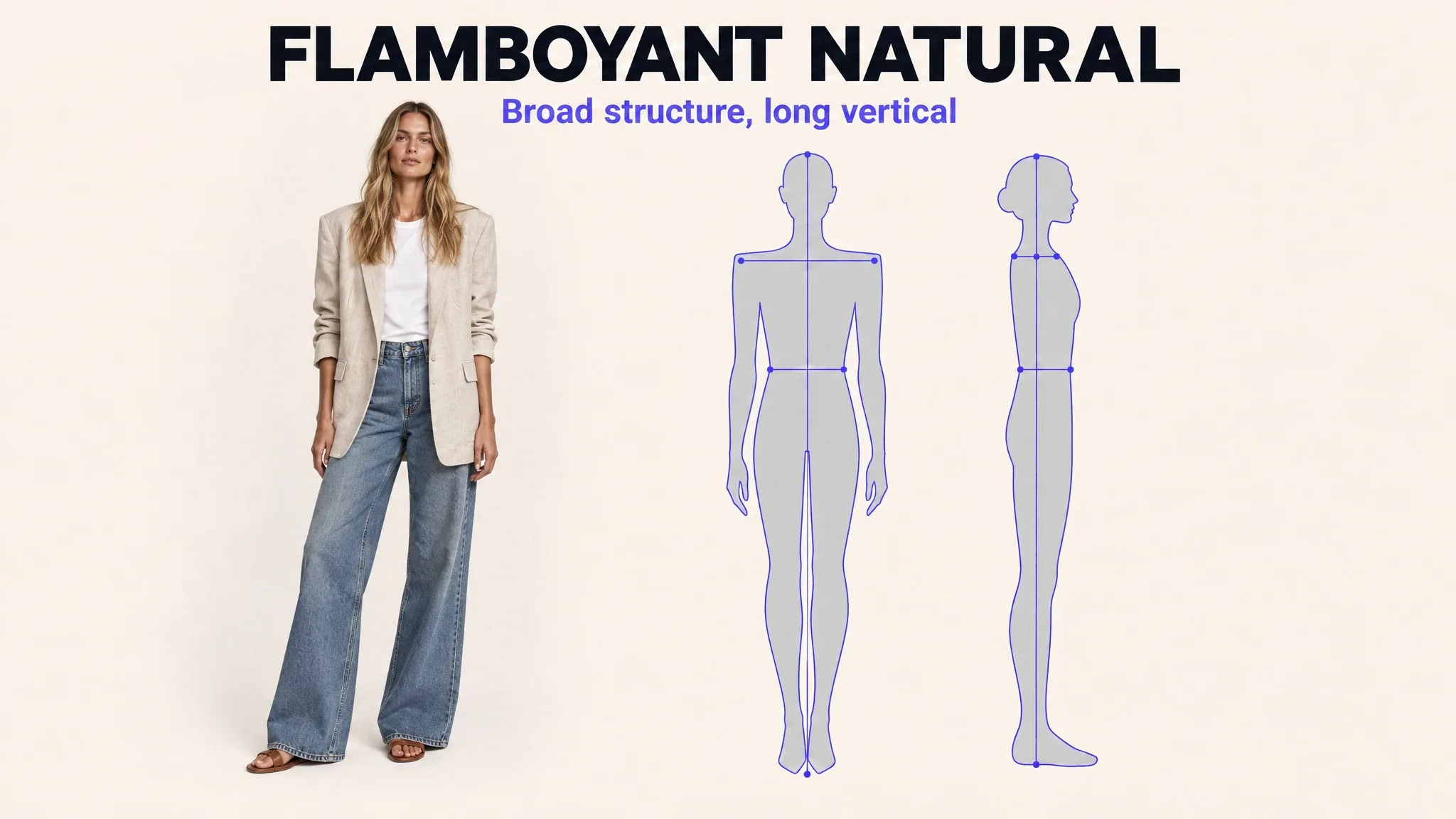
3. Flamboyant Natural Body Type
Flamboyant Natural combines width with a long vertical line. The frame appears broad, open, and substantial, while the overall silhouette remains elongated.
Key characteristics:
Width through the shoulders or upper torso
A long vertical line and extended limbs
Blunt rather than sharp bone structure
Straight or gently curved body lines
A strong, open, and relaxed physical presence
Best clothing lines:
Long, relaxed silhouettes with room through the upper body
Open necklines, dropped shoulders, and unconstructed jackets
Wide-leg trousers, long skirts, and oversized knitwear
Asymmetrical hems and large-scale prints
Layering that follows vertical instead of adding bulk
Fabrics and details: Textured, weighty, and flexible materials suit this type. Linen, denim, suede, chunky knits, and washed silk maintain ease while respecting scale. Tight tailoring and small ornate details can make the frame look restricted.
Celebrity examples:Gigi Hadid, Zendaya, and Cindy Crawford.
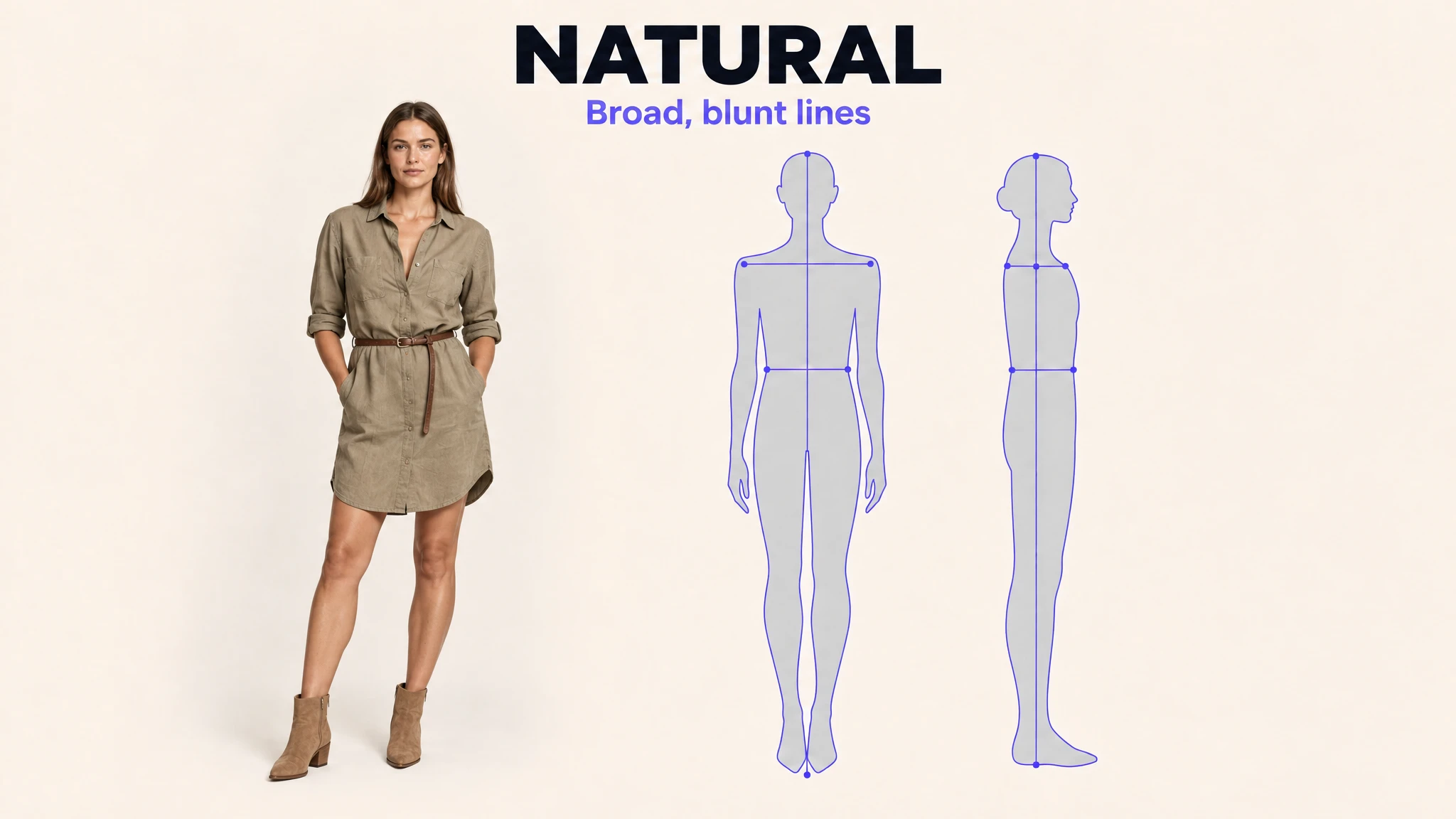
4. Natural Body Type
The original Natural identity sits at the midpoint of the Natural family. It combines moderate proportions with visible width and blunt-edged structure. In the current system, you'd usually compare Flamboyant Natural and Soft Natural instead.
Key characteristics:
Moderate height and vertical line
Broad or slightly square shoulders
Blunt bones without pronounced sharpness
Straight, athletic, or gently muscular body lines
An even, relaxed impression without strong curve or elongation
Best clothing lines:
Easy, moderately loose silhouettes
Straight trousers, shirt dresses, and casual jackets
Open collars and softly structured shoulders
Simple separates with visible texture
Uncomplicated shapes that allow natural movement
Fabrics and details: Medium-weight natural fabrics work well, including cotton, linen, denim, leather, and textured wool. Very stiff construction can look severe, while delicate ornament can feel disconnected from the frame.
Celebrity examples:Jennifer Aniston, Cameron Diaz, and Ingrid Bergman.
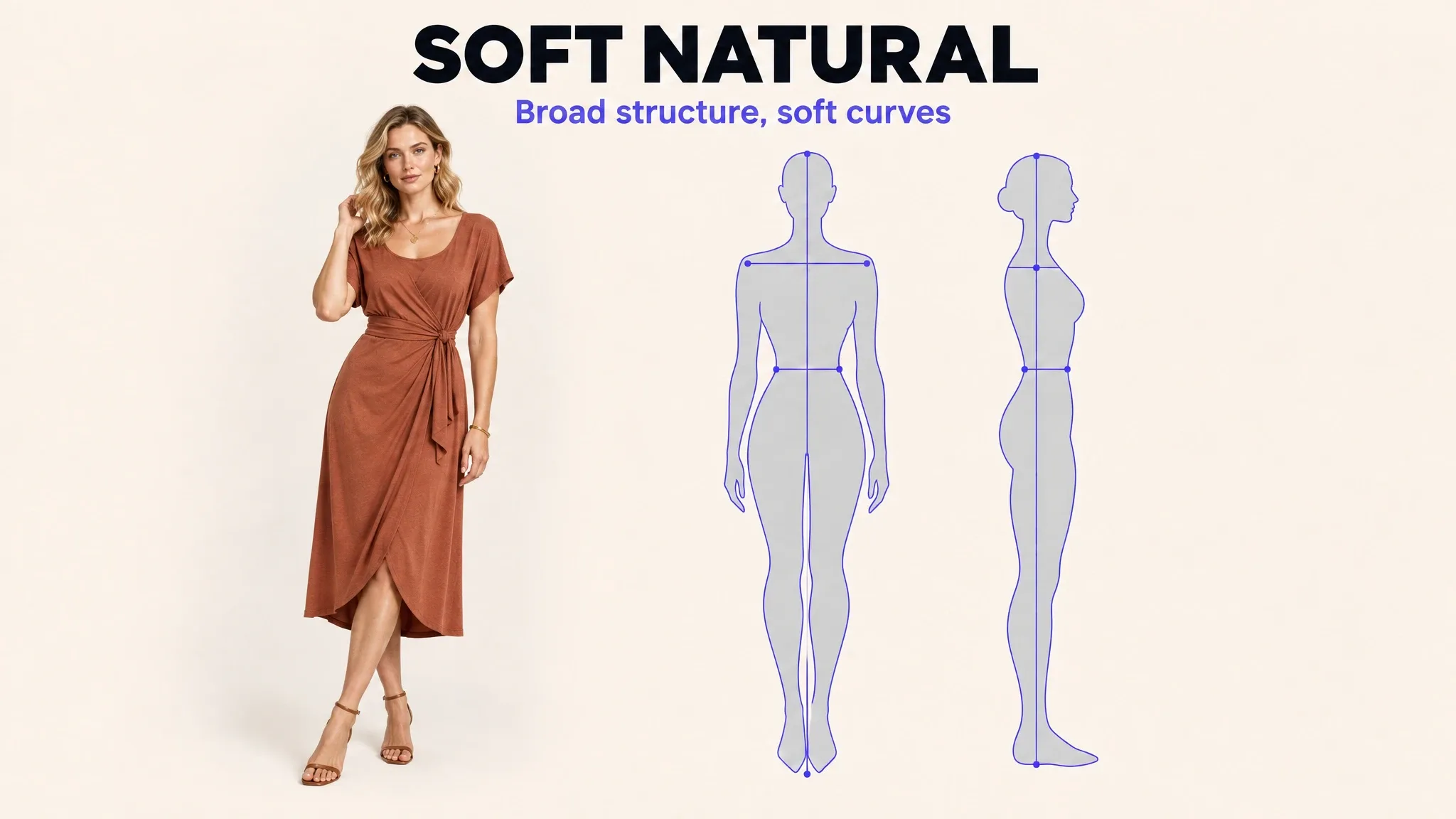
5. Soft Natural Body Type
Soft Natural combines upper-body width with a softer, rounded outline. Clothing needs to allow openness first, then follow curve without becoming rigid or overly fitted.
Key characteristics:
Width through the shoulders, rib cage, or upper back
A short-to-moderate vertical line
Blunt bone structure with soft flesh
Visible curve through the bust, waist, or hips
A relaxed and approachable overall impression
Best clothing lines:
Softly draped shapes with gentle waist definition
Open or softly rounded necklines
Wrap dresses, tapered trousers, and relaxed skirts
Unconstructed jackets that follow the body's shape
Organic prints and slightly irregular details
Fabrics and details: Look for soft linen, lightweight suede, jersey, brushed knits, and fabrics with a fluid surface. A garment should skim rather than squeeze. Severe geometry and boxy, rigid tailoring can hide both width and curve.
Celebrity examples:Scarlett Johansson, Helen Mirren, and Katy Perry.
Classic Kibbe Body Types
The Classic family is defined by balance. Its proportions appear even, and its strongest outfits use controlled shapes, moderate scale, and polished construction. It includes 3 sub-types:
Dramatic Classic
Classic
Soft Classic
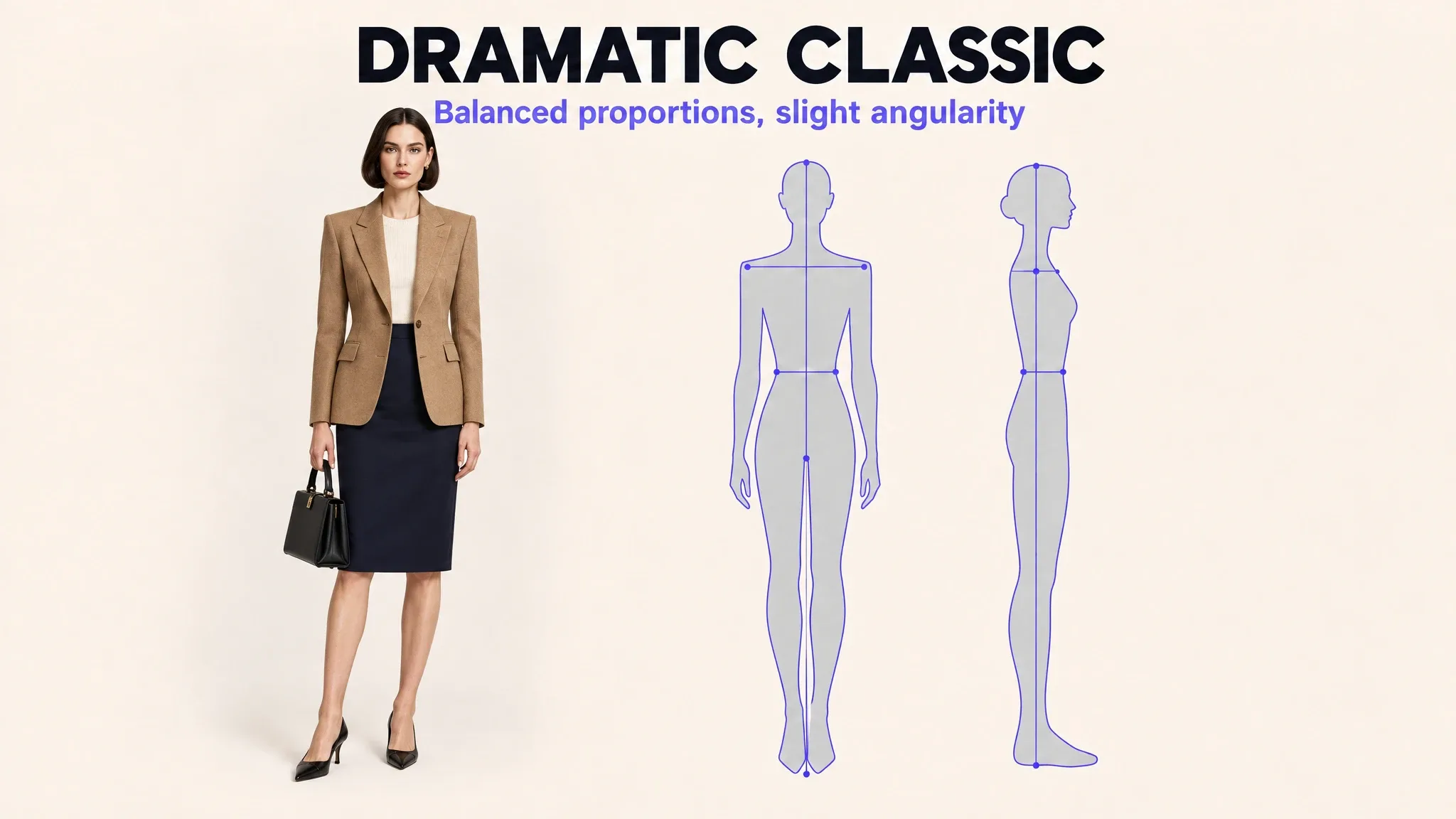
6. Dramatic Classic Body Type
Dramatic Classic combines an even base with a slight Yang influence. The silhouette stays moderate, but edges appear sharper and more tailored than in Soft Classic.
Key characteristics:
Balanced proportions with slight angularity
Moderate vertical line and bone scale
Straight or gently defined body lines
Symmetry with sharper shoulders or facial structure
A polished, composed overall impression
Best clothing lines:
Clean, tailored silhouettes in moderate lengths
Fitted blazers, straight skirts, and streamlined trousers
Controlled asymmetry and geometric details
Crisp collars and defined edges
Simple color combinations with clear contrast
Fabrics and details: Choose smooth materials that hold a precise shape without looking heavy. Fine wool, gabardine, polished cotton, and medium-weight crepe reinforce balance. Oversized shapes and excessive ornament can overwhelm the controlled line.
Celebrity examples:Jackie Kennedy Onassis, Diana Rigg, and Olivia Munn.
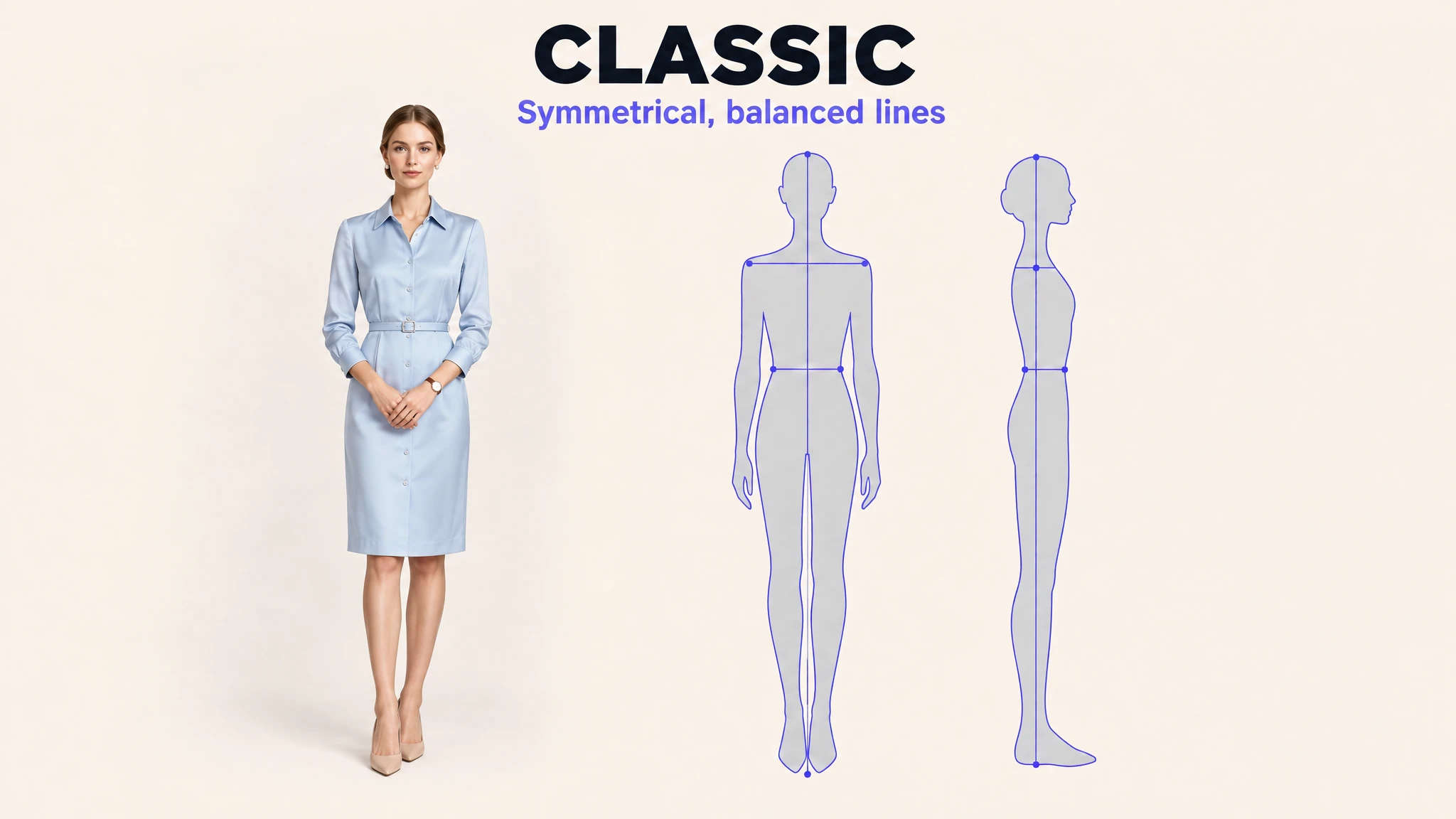
7. Classic Body Type
The original Classic identity represents an exact visual midpoint between Yin and Yang. Nothing appears especially long, broad, sharp, small, or rounded. Since the pure Classic category has been retired, current typing usually points toward Dramatic Classic or Soft Classic.
Key characteristics:
Even proportions and moderate scale
A balanced vertical line
Symmetrical bone structure
Smooth body flesh without pronounced angularity or curve
A refined impression in which no feature dominates
Best clothing lines:
Symmetrical, softly tailored silhouettes
Moderate hemlines, lapels, and accessories
Straight dresses, coordinated separates, and fitted coats
Minimal detail placed with precision
Tonal or restrained color combinations
Fabrics and details: Smooth, high-quality fabrics in medium weights preserve balance. Fine wool, silk, cashmere, and polished cotton work well. Extremely oversized, highly ornate, or aggressively asymmetrical pieces can overpower the even proportions.
Celebrity examples:Grace Kelly, Diane Sawyer, and Catherine Deneuve.
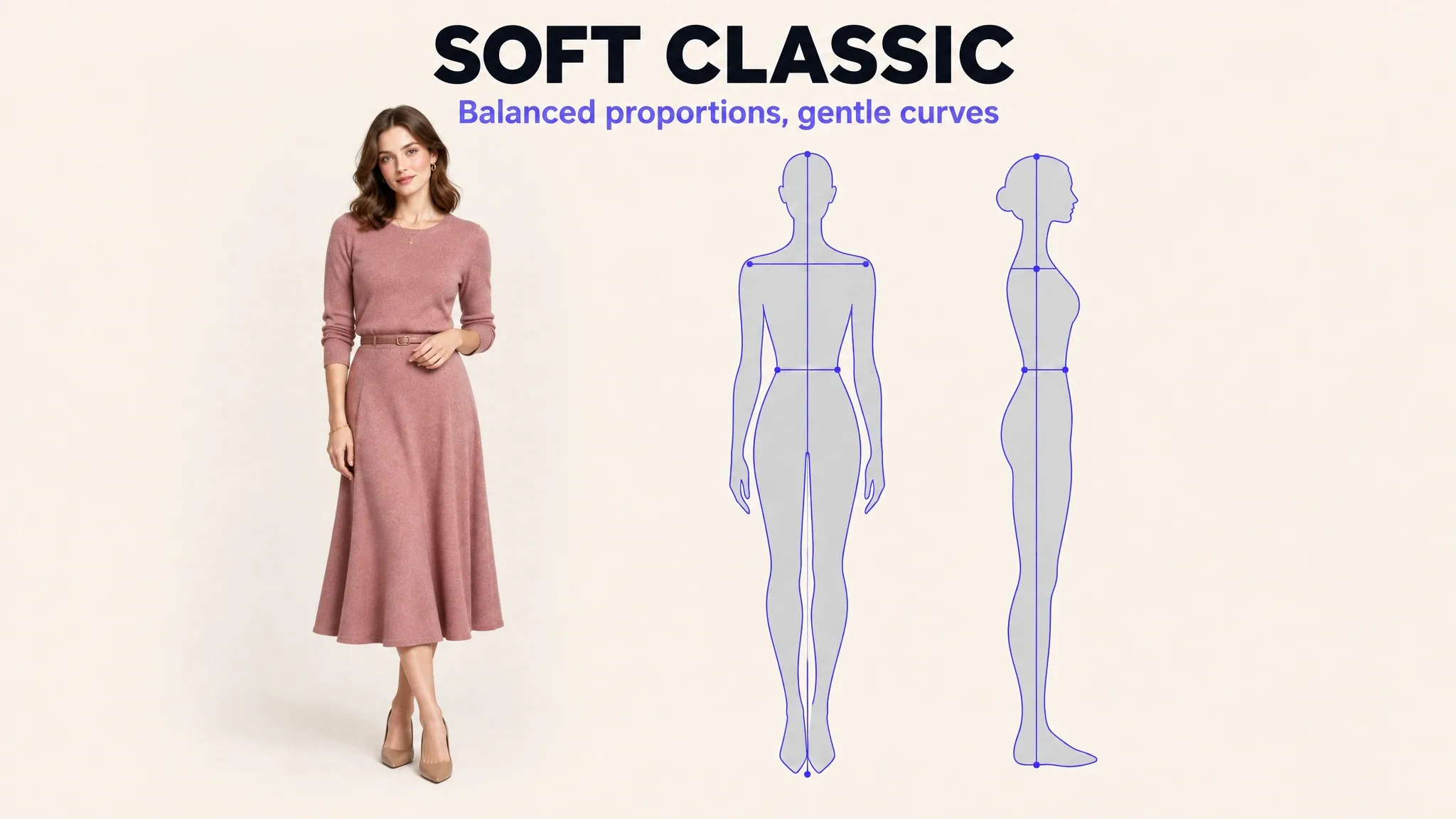
8. Soft Classic Body Type
Soft Classic keeps the Classic family's symmetry and moderation but adds a subtle Yin influence. The effect is balanced first and softly rounded second.
Key characteristics:
Moderate, evenly distributed proportions
Slight softness through the bust, waist, or hips
Gently rounded shoulders and facial contours
A smooth silhouette without extreme curve
A graceful and understated overall impression
Best clothing lines:
Soft tailoring with light waist emphasis
Smooth dresses, tapered trousers, and gently shaped jackets
Rounded necklines and controlled draping
Small, symmetrical prints and refined accessories
Subtle detail rather than visual clutter
Fabrics and details: Fine knits, silk, cashmere, lightweight crepe, and soft wool support the gentle line. Garments should remain polished and moderately fitted. Harsh geometry or unstructured volume can disturb the balance.
Celebrity examples:Meryl Streep, Marion Cotillard, and Naomi Watts.
Gamine Kibbe Body Types
The Gamine family is defined by petite scale and contrast. Its most effective outfits use short visual units, crisp edges, and deliberate breaks instead of one continuous line. It includes 3 sub-types:
Flamboyant Gamine
Gamine
Soft Gamine
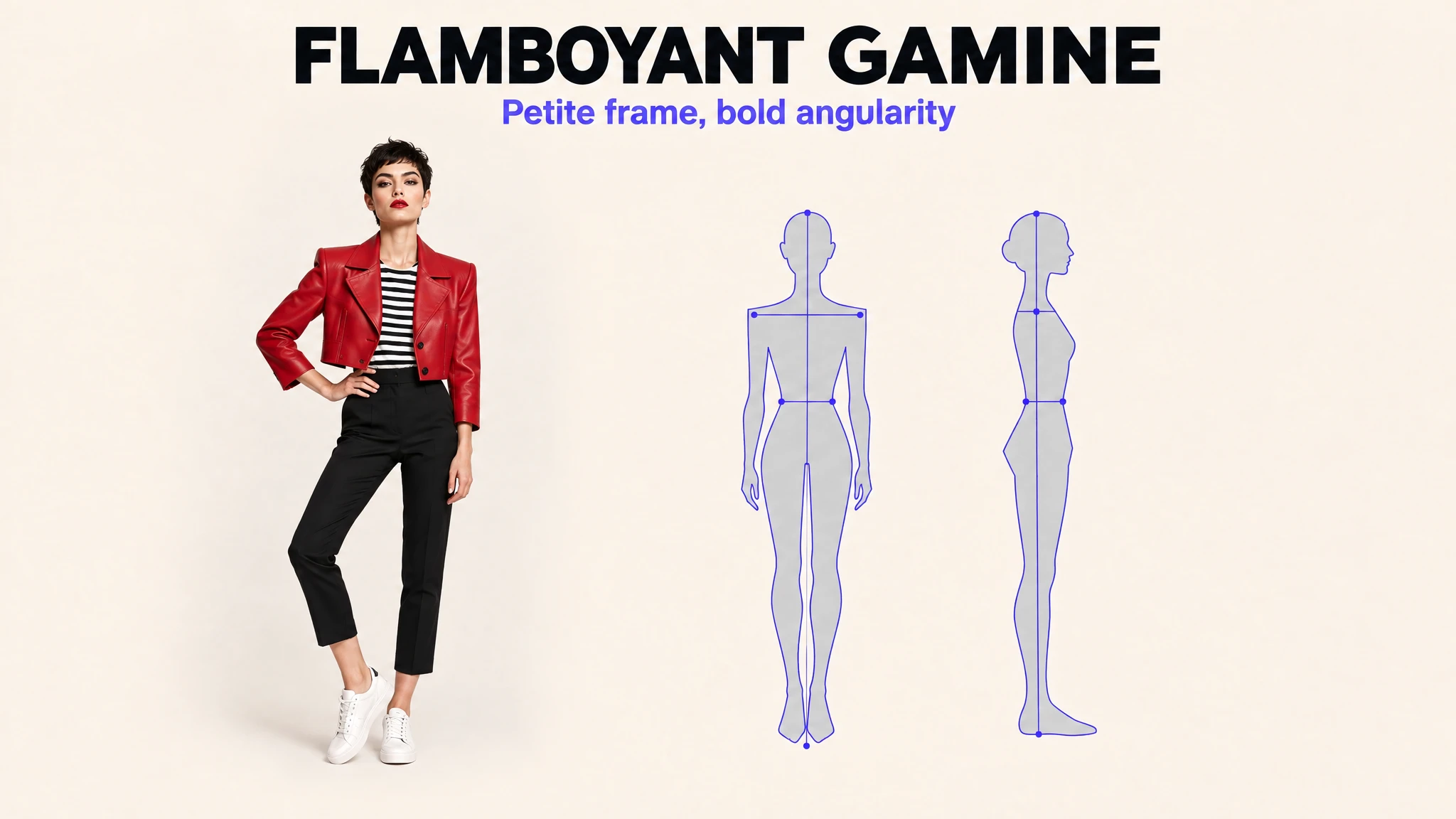
9. Flamboyant Gamine Body Type
Flamboyant Gamine combines compact proportions with a Yang edge. The frame is small in scale but looks angular, energetic, and visually bold.
Key characteristics:
Petite or compact proportions
Sharp or blunt bone structure within a small frame
Straight, taut, or athletic body lines
Noticeable contrast between features
A lively, high-energy overall impression
Best clothing lines:
Cropped jackets, short hems, and broken silhouettes
Boxy shapes with precise edges
Color blocking and high-contrast combinations
Narrow trousers, structured mini skirts, and fitted knits
Bold geometric details in a compact scale
Fabrics and details: Crisp cotton, leather, denim, compact knits, and lightweight wool hold the necessary shape. Long unbroken dresses, loose draping, and tiny romantic details can mute the type's contrast.
Celebrity examples:Audrey Hepburn, Tina Turner, Liza Minnelli, and Keira Knightley.
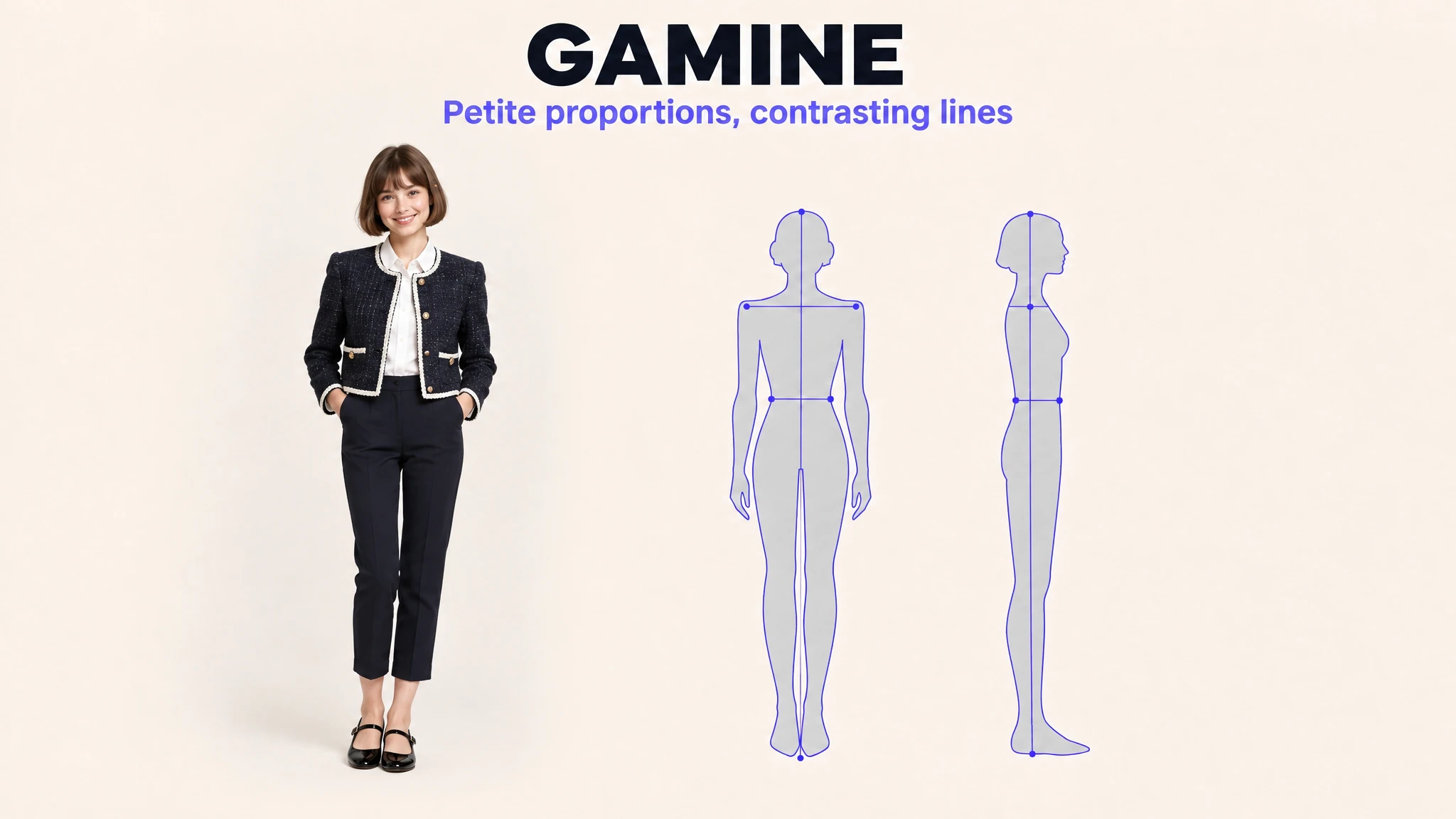
10. Gamine Body Type
The original Gamine identity sits at the midpoint of the Gamine family. It combines compact Yin scale with sharp Yang detail in roughly equal amounts. Current typing usually shifts this balance toward Flamboyant Gamine or Soft Gamine.
Key characteristics:
Compact proportions and a short vertical line
A mix of rounded and angular features
Straight or lightly curved body lines
Quick visual changes between small-scale features
An animated and youthful overall impression
Best clothing lines:
Short, fitted pieces with clear construction
Broken color lines and mixed textures
Cropped trousers, short jackets, and neat skirts
Small geometric prints and contrasting trim
Precise layering without excess fabric
Fabrics and details: Medium-light materials with a crisp finish maintain the compact shape. Contrast matters more than softness or severity alone. Long, flowing outfits can erase the line breaks that define this identity.
Celebrity examples:Mia Farrow, Jean Seberg, and Edith Piaf.
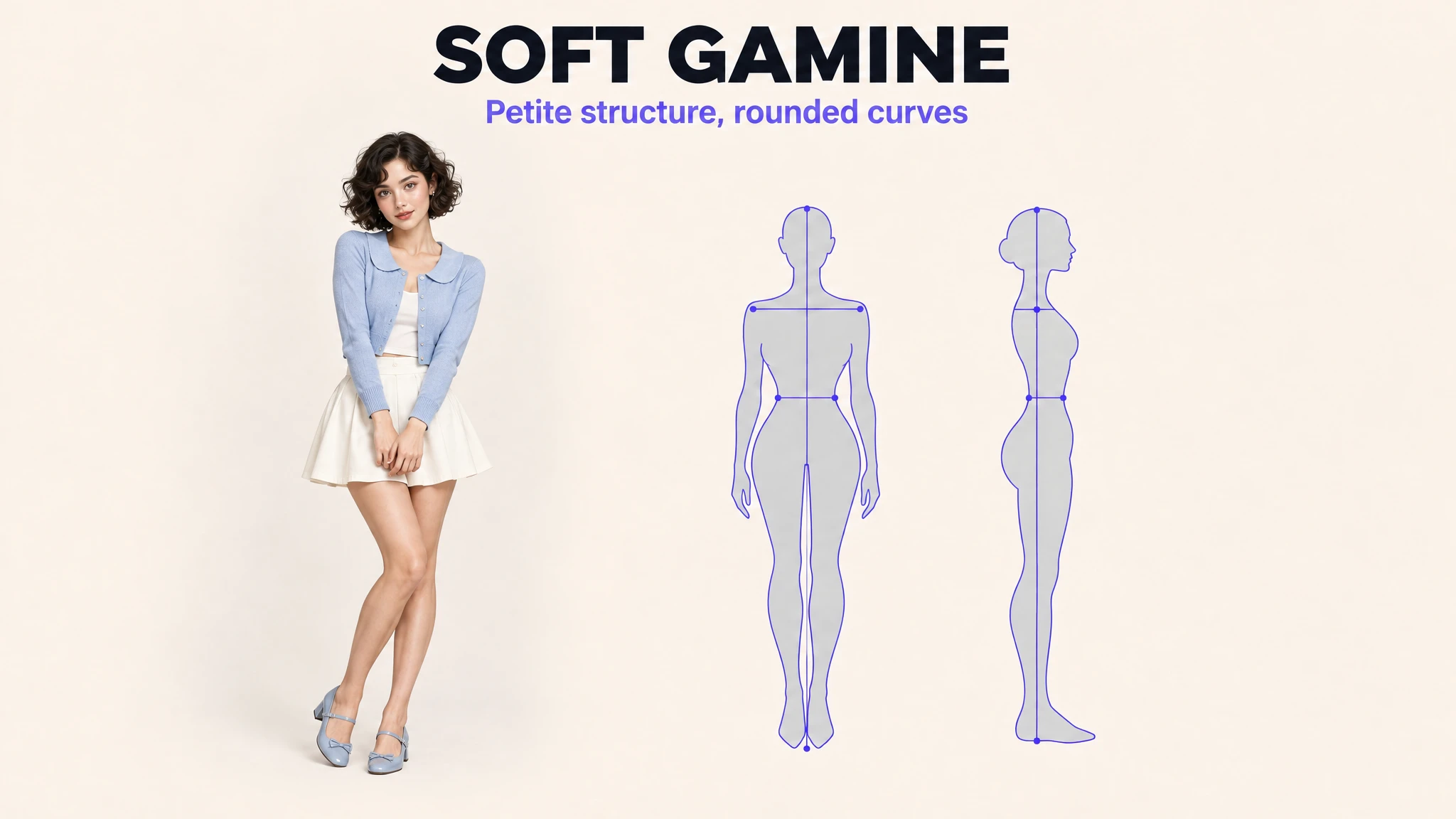
11. Soft Gamine Body Type
Soft Gamine combines compact proportions and visible contrast with a Yin-dominant curve. Clothing works best when it stays fitted and animated while making space for rounded shapes.
Key characteristics:
Petite proportions and a short vertical line
Delicate bones with occasional sharpness
Rounded bust or hip curve within a compact frame
A mix of full and angular facial features
A playful, expressive overall impression
Best clothing lines:
Cropped silhouettes with waist definition
Fitted tops, tapered trousers, and short flared skirts
Rounded collars combined with crisp edges
Small prints, contrast piping, and decorative detail
Clear separation between top and bottom
Fabrics and details: Lightweight fabrics should keep enough structure to preserve shape. Fine knits, crisp cotton, soft tweed, and light crepe work well. Shapeless volume and long monochromatic lines can overwhelm compact proportions.
Celebrity examples:Halle Berry, Reese Witherspoon, and Brenda Song.
Romantic Kibbe Body Types
The Romantic family is defined by curve and Yin. Its clothing lines are rounded, fluid, and closely connected to the body's shape. It includes 2 sub-types:
Theatrical Romantic
Romantic
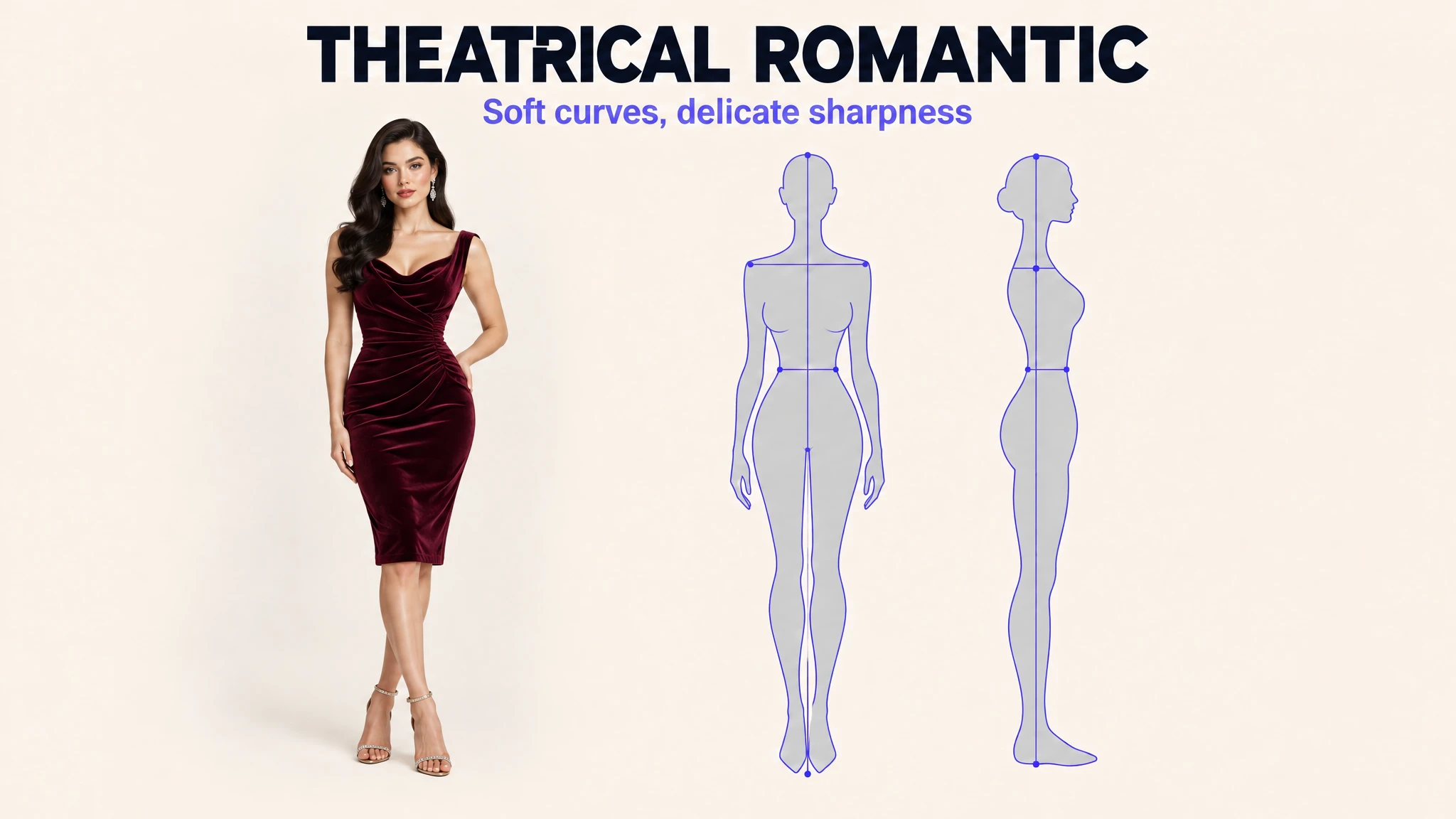
12. Theatrical Romantic Body Type
Theatrical Romantic is Yin-dominant with a narrow Yang edge. The silhouette remains curved and delicate, while sharper details add definition and drama.
Key characteristics:
A short-to-moderate vertical line
Delicate, narrow bone structure
Pronounced curve through the bust and hips
Soft flesh with a defined waist
Rounded features combined with sharp cheekbones, chin, or nose
Best clothing lines:
Close-fitting silhouettes that follow curve
Defined waists, tapered shapes, and draped necklines
Peplums, ruching, and ornate small-scale details
Delicate accessories with a polished or sparkling finish
Soft asymmetry that maintains a narrow outline
Fabrics and details: Silk, velvet, lace, fine jersey, and lightweight crepe support softness while allowing precise shaping. Heavy boxy construction and relaxed oversized layers can hide the delicate frame.
Celebrity examples:Vivien Leigh, Selena Gomez, and Salma Hayek.
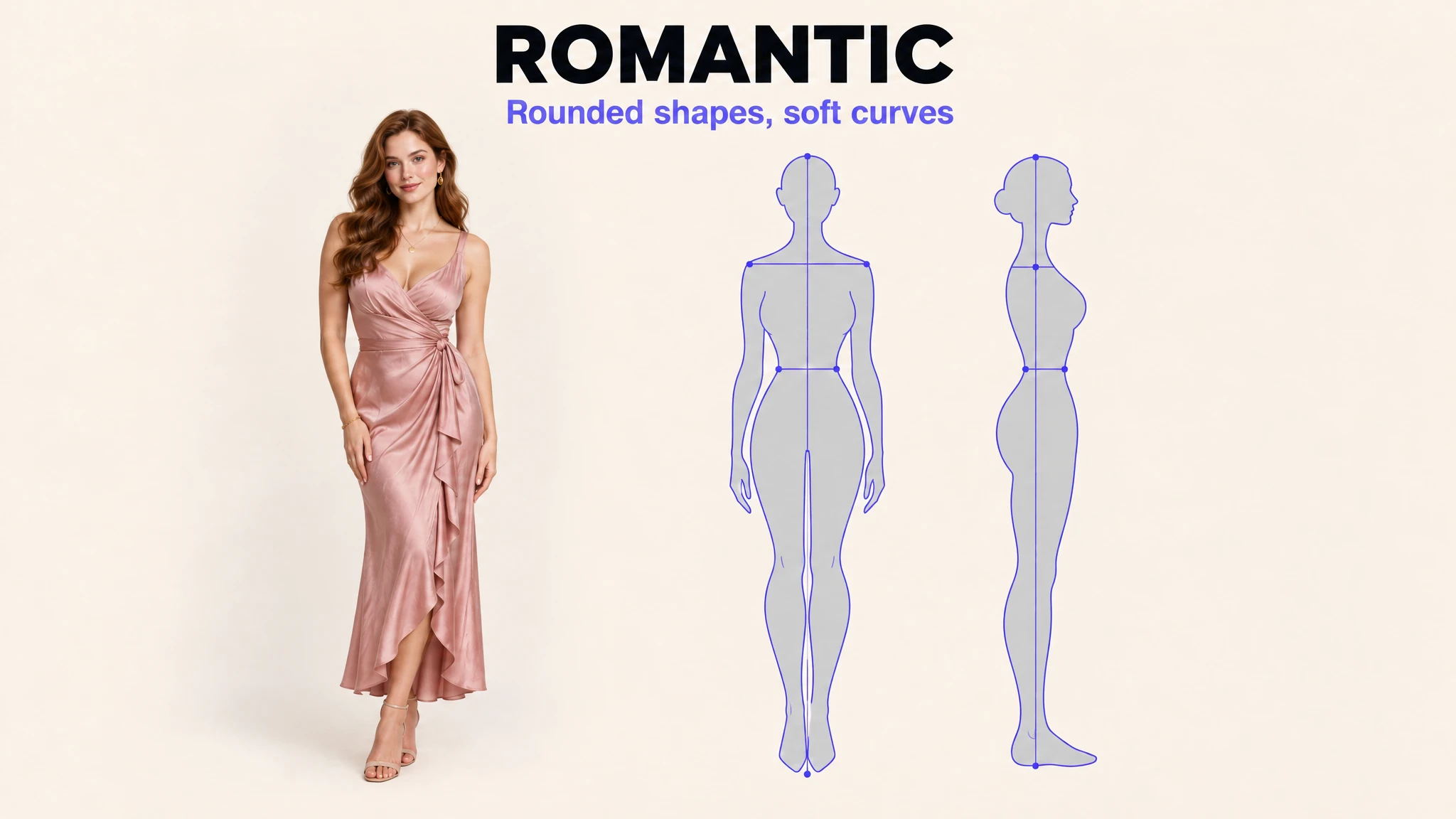
13. Romantic Body Type
Romantic represents the strongest Yin expression in the original system. The silhouette reads as rounded and softly curved, without a dominant vertical or angular frame.
Key characteristics:
A short-to-moderate vertical line
Small, rounded, or delicate bone structure
Soft flesh and continuous curve
Rounded shoulders with a visibly defined waist
Full facial features and minimal angularity
Best clothing lines:
Body-skimming silhouettes with clear waist emphasis
Rounded necklines, draping, and soft gathers
Wrap dresses, flared skirts, and tapered trousers
Small-to-medium floral or rounded prints
Delicate accessories and softly coordinated colors
Fabrics and details: Fluid, lightweight materials such as silk, jersey, chiffon, soft linen, and fine knits follow the rounded line. Stiff tailoring, broad shoulders, and long boxy shapes can conceal the natural curve.
Celebrity examples:Marilyn Monroe, Beyoncé, and Kate Winslet.
How to Find Your Kibbe Body Type with the Overchat AI Test
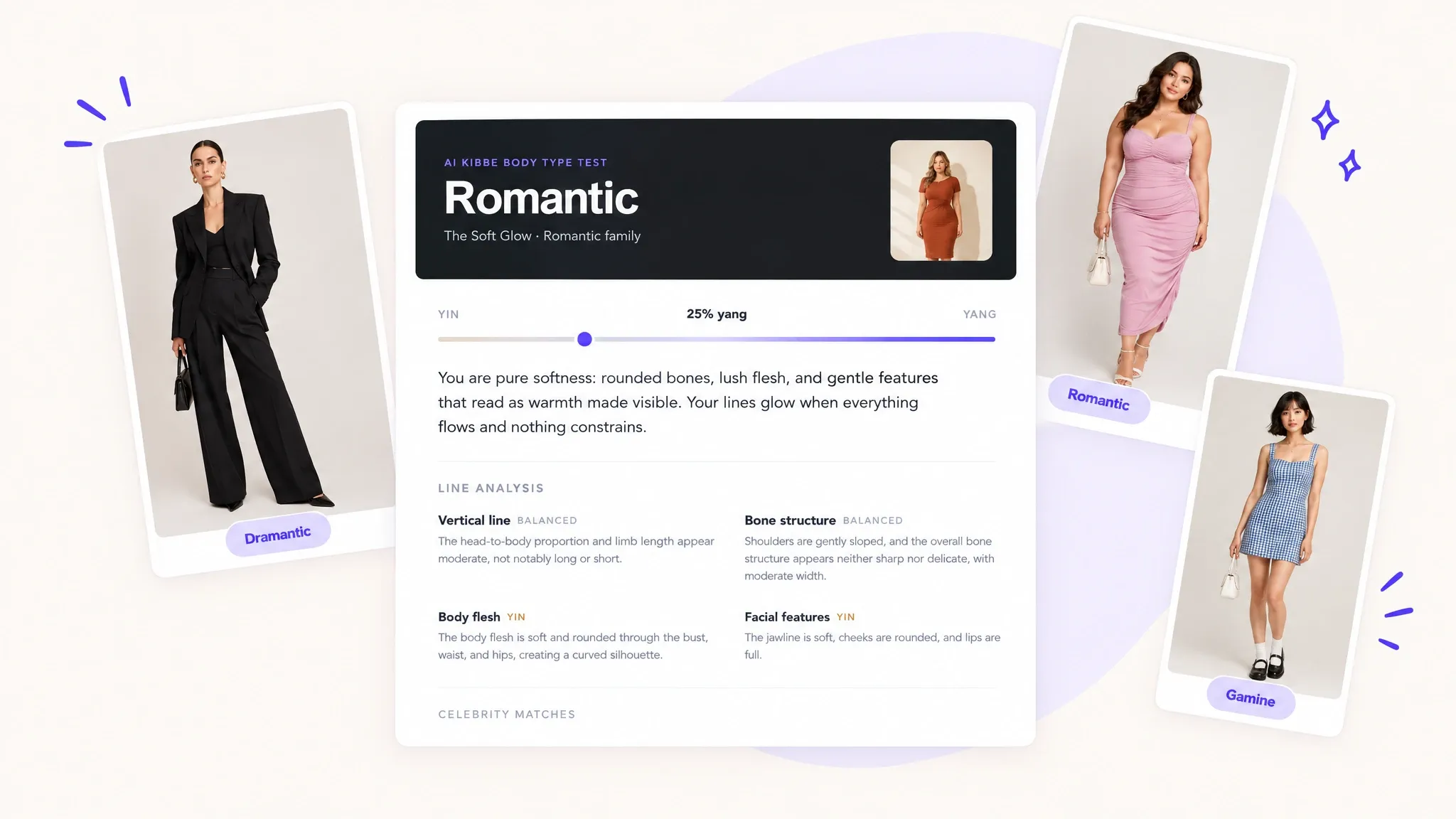
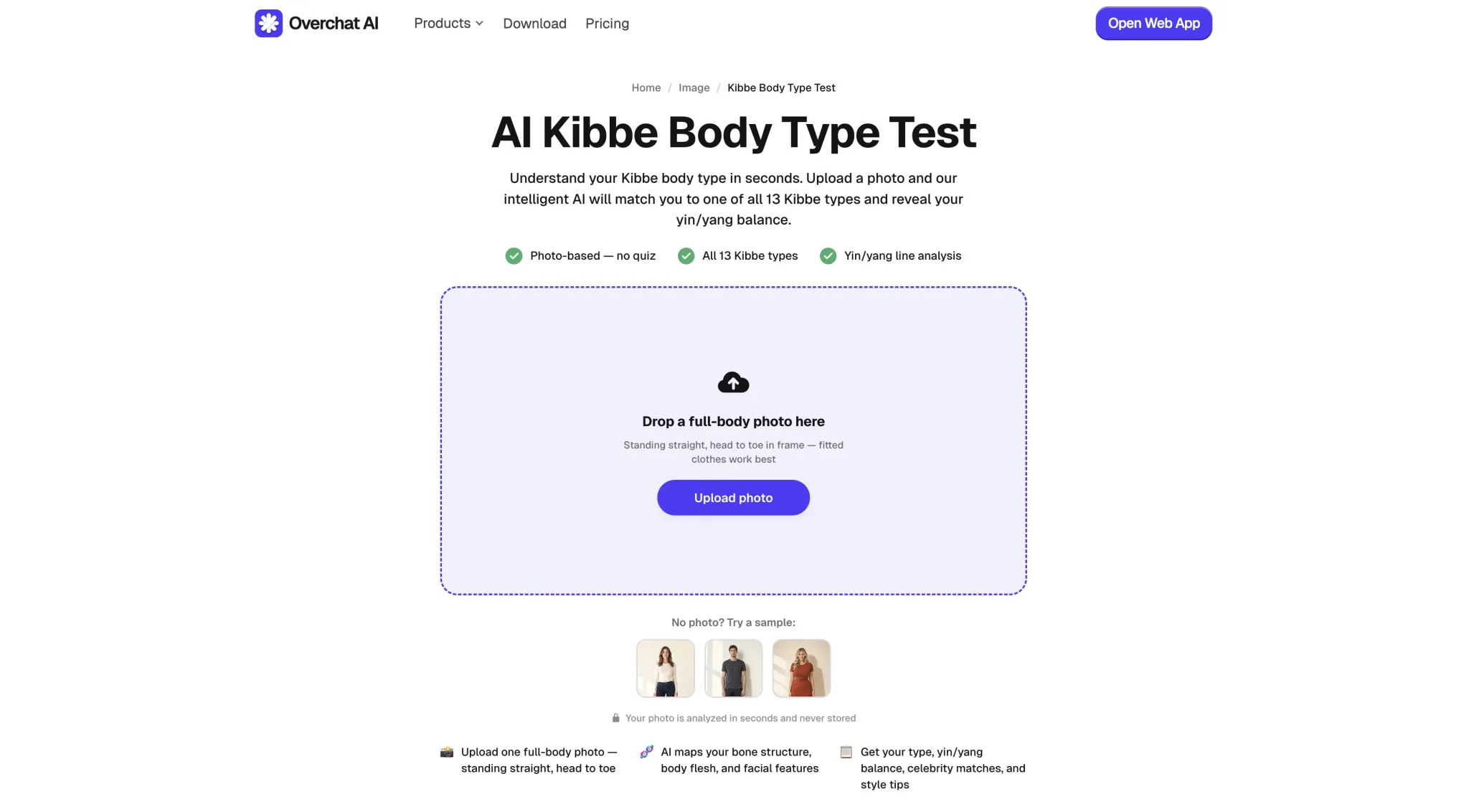
There are a couple of ways to identify your body type, but we'd like to share how you can figure it out online using our Overchat AI Kibbe Body Type Test. Unlike a written Kibbe body types quiz, it's an online AI tool we've built that can analyze your photo and compare it against all 13 original Kibbe identities. This test gives your type, Yin/Yang balance, line analysis, celebrity matches, and styling suggestions.
Here's how it works:
1. Upload a full-body photo
Open the test and select Upload photo. For the clearest analysis, use an image that meets these requirements:
Your full body is visible from head to toe.
You're standing straight and facing the camera.
The camera is level rather than tilted up or down.
Your arms rest naturally instead of covering your waist or torso.
Fitted clothing shows your outline without compressing it.
The photo has even lighting and no wide-angle distortion.
You can also choose one of the sample photos if you want to preview the report format before uploading your own image.
2. Wait for the line analysis
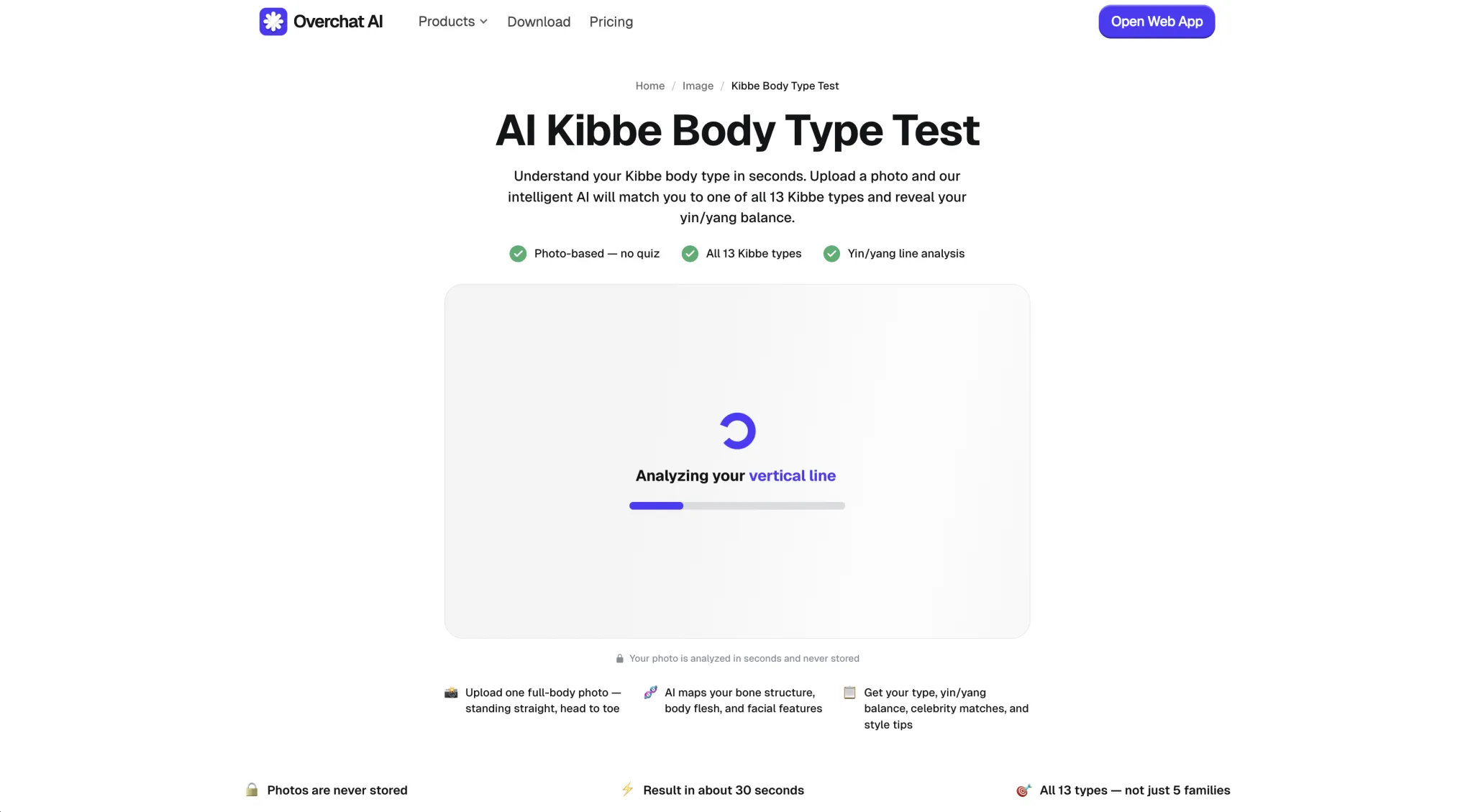
After upload, Overchat AI will process your image using an artificial analysis model and computer vision. It will map out your lines and evaluate how your bone structure, body flesh, and facial features interact with your dominant vertical line. Keep the page open while the progress screen is active. Analysis usually takes about 15-30 seconds.
3. Review your Kibbe body type result
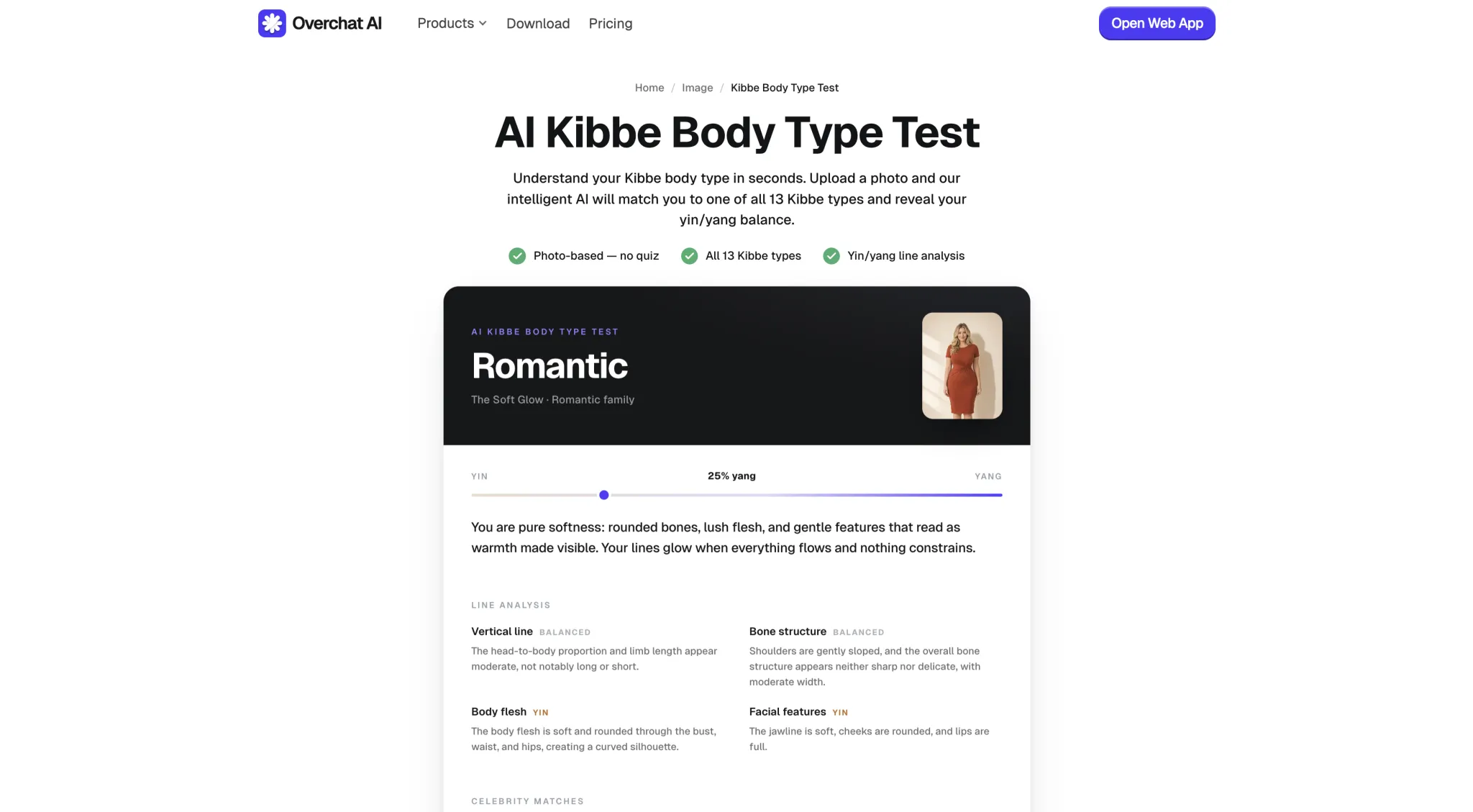
After processing is completed, the Kibbe body types test gives you a detailed report with your Kibbe identity, your position on the Yin/Yang scale, and more:
Vertical-line analysis
Bone-structure analysis
Body-flesh analysis
Facial-feature analysis
Celebrity matches
Recommended clothing lines and style tips
Kibbe Body Types vs. Traditional Body Shapes
Think about it this way — a traditional body shape (such as pear or hourglass) describes the relationship between measurements, but a Kibbe identity describes the visual line that clothing follows across your entire frame.
Kibbe Body Types vs. Hourglass, Pear, Apple, and Rectangle Shapes
Traditional shape systems focus mainly on bust, waist, and hip proportions:
Hourglass: bust and hips appear similar, with a smaller waist
Pear or triangle: hips appear wider than the upper body
Apple or round: fullness is concentrated through the torso
Rectangle: bust, waist, and hips appear relatively similar
Inverted triangle: shoulders or bust appear wider than the hips
These labels can help with garment fit, but they don't describe vertical, bone structure, shoulder openness, or overall scale. Two people with hourglass measurements could be Soft Dramatic, Soft Natural, Soft Classic, Soft Gamine, Theatrical Romantic, or Romantic. Their best silhouettes won't necessarily be the same.
Kibbe, on the other hand, asks whether clothing needs to accommodate vertical, width, curve, balance, petite proportions, or a combination of those qualities, making it potentially more accurate as a styling guide once you understand how to apply it.
Kibbe Body Types vs. Height, Weight, and Clothing Size
Height affects the set of plausible identities because a visibly long vertical line rules out some compact categories. However, height alone doesn't determine your type. People of the same height can have different proportions and clothing needs.
Similarly, weight and clothing size don't create a Kibbe identity. Weight changes can alter how strongly curve or flesh appears, but the underlying relationship between frame, proportion, and visual line generally remains recognizable, so every Kibbe family includes people across a wide range of sizes.
Frequently Asked Questions About Kibbe Body Types
The questions below come up most often once people start typing themselves.
What Are Kibbe Body Types?
Kibbe body types are 13 image identities that describe the visual line of your whole silhouette rather than your measurements. Each one sits somewhere between Yang (long, sharp, wide) and Yin (short, rounded, delicate), and each one suits a different set of clothing lines.
What Is the Rarest Kibbe Body Type?
There's no verified rarest Kibbe body type. No representative population study has measured how frequently each identity occurs. Claims that Dramatic, Theatrical Romantic, or another type is the rarest usually come from small community polls or personal observation.
How Do I Determine My Kibbe Body Type?
Start with your overall silhouette, not individual measurements. Identify whether clothing first needs to accommodate vertical, width, curve, balance, or petite proportions. Then read the Kibbe body types description and how to determine which family it points to, then compare the neighboring identities that share that dominant quality. You can use the Overchat AI Kibbe Body Type Test to get a photo-based starting point.
What Kibbe Type Is Kim Kardashian?
Kim Kardashian is commonly typed as Soft Natural in online Kibbe discussions, but this isn't an official David Kibbe verification. Her public images also involve shapewear, tailoring, posing, and body changes, so she isn't a reliable template for self-typing.
What Is the Hardest Body Type to Dress?
No Kibbe type is inherently the hardest to dress. Difficulty usually comes from the gap between your lines and current retail trends. A Romantic may struggle when oversized tailoring dominates stores, while a Flamboyant Natural may struggle during a trend cycle built around small, fitted details. Once you know the line a garment needs to preserve, shopping becomes more predictable.