Short answer: AI voice cloning refers to the process of recreating someone's voice from a short audio sample and using it to generate new speech that sounds exactly like the original. Essentially, the AI can copy your voice and say things aloud while sounding exactly like you.
The technology is now used for everything from audiobook narration to dubbing. In this article, we’ll explain what voice cloning is, how it works, and highlight the six best tools for cloning your voice. We’ll also cover some of the less obvious pitfalls, including legal and ethical ones, so you know what to watch out for when cloning voices with AI.
AI voice cloning takes a short audio sample of a voice and produces a model that can speak any text in that voice.
Modern AI voice cloning tools produce output that's often indistinguishable from the real speaker.
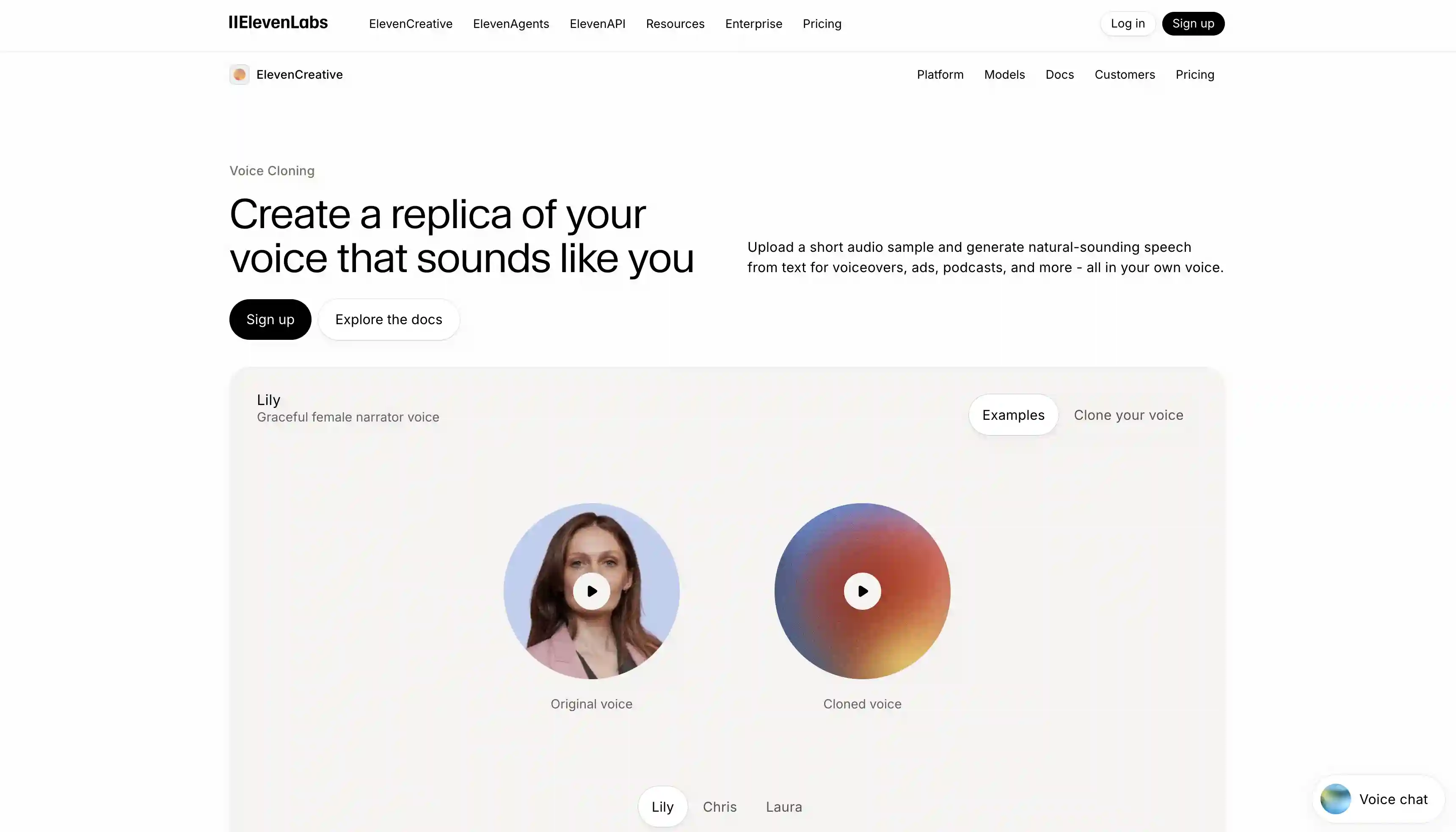
ElevenLabs is the most famous AI voice cloning tool.
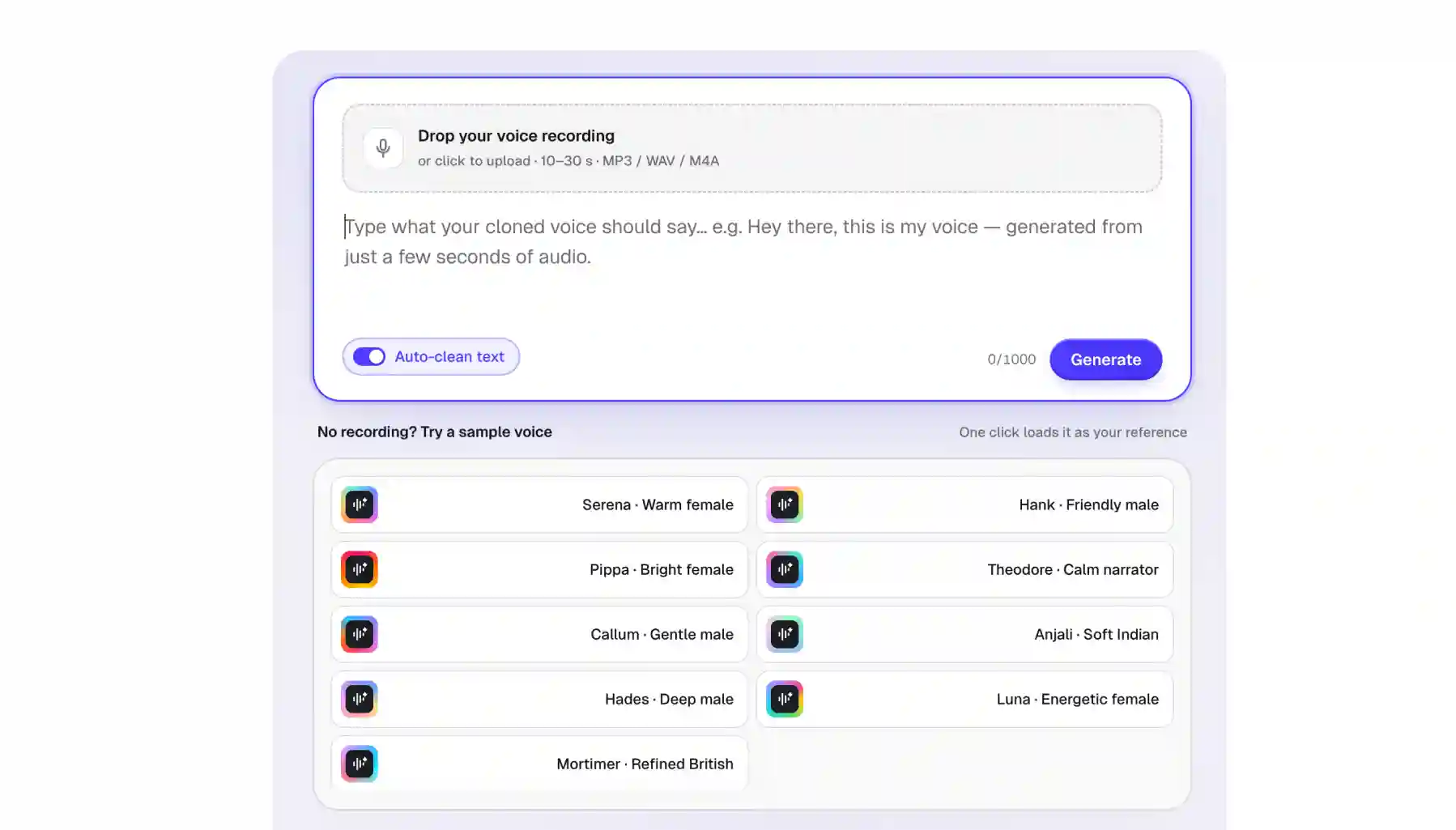
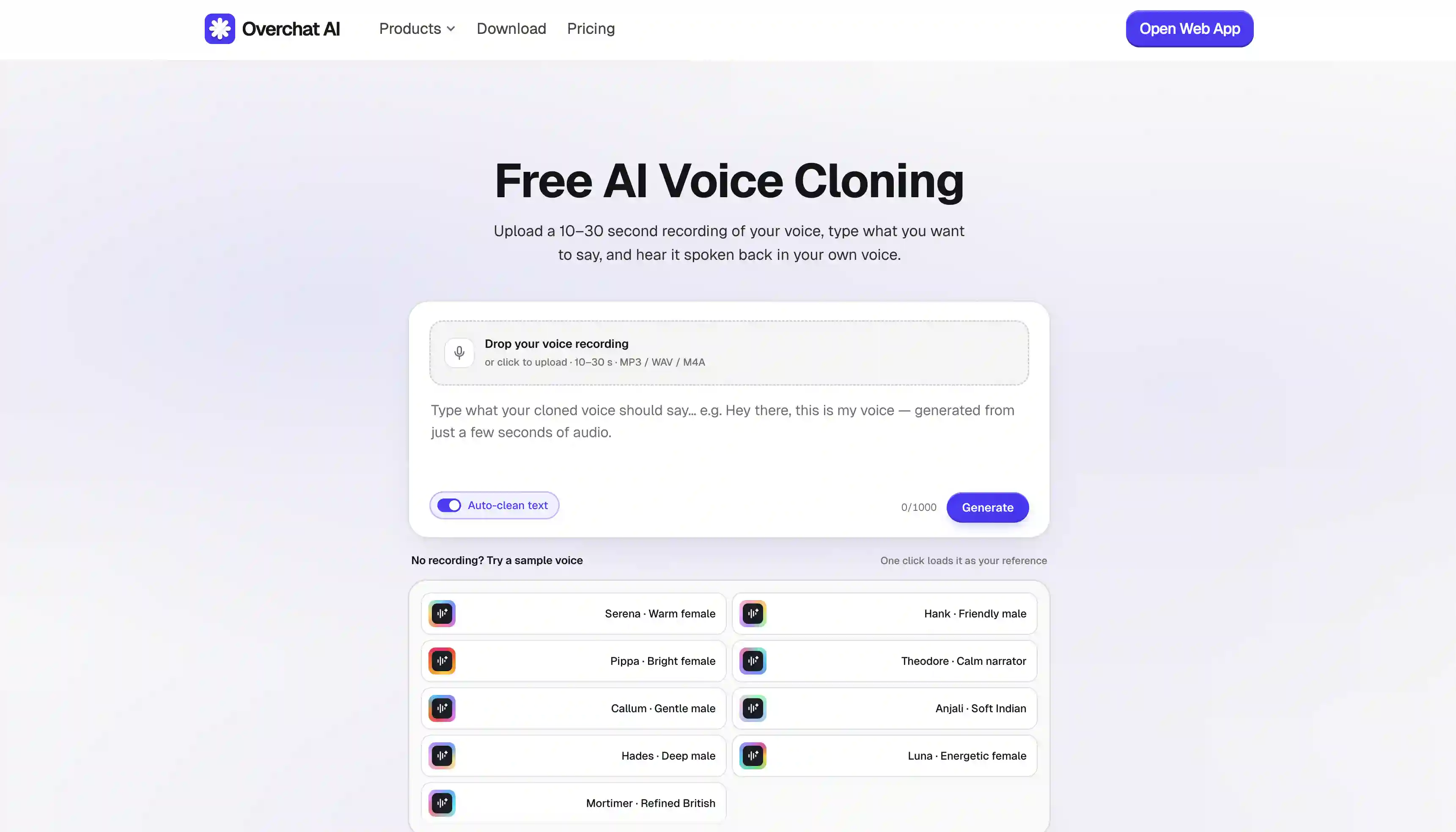
Overchat AI is the best free alternative, if you don't want to pay for a subscription.
Cloning your own voice is legal everywhere.
Cloning someone else's voice requires their consent, and using a cloned voice to impersonate or defraud is illegal in most jurisdictions.
What Is AI Voice Cloning?
AI voice cloning is the process of using machine learning to capture the unique characteristics of a person's voice — pitch, timbre, accent, rhythm, breathing patterns — and then generate new speech in that voice from text.
Once a voice is cloned, you can type any sentence and the system will speak it as if the original person were reading it aloud.
This is different from regular text-to-speech (TTS).
Standard TTS uses pre-built generic voices that don't sound like any specific person.
Voice cloning produces a voice that does sound like a specific person, because it was trained on samples of that person speaking.
How to Clone Your Own Voice in 60 Seconds
If you want to try voice cloning on your own, it’s very easy to do.
Record 30 to 60 seconds of speech in a quiet room, with a normal microphone. You can read any text out loud at your natural pace, or just say random things.
Type what you want your clone to say and hit generate.
You’ll receive a downloadable WAV file with the cloned voice regording — and that’s it.The same procedure works on every tool in the list below — the differences are in quality, language support, and pricing.
The 6 Best AI Voice Cloning Tools (2026)
We tested over 12 voice cloning platforms, but the six below are the ones worth using — each for a different reason.
Tool
Best for
Free plan?
Starting price
Overchat AI
Best free alternative
✅
$14.99/month
ElevenLabs
Best overall quality
✅
$5/month
Resemble AI
Enterprise and developers
❌
$19/month
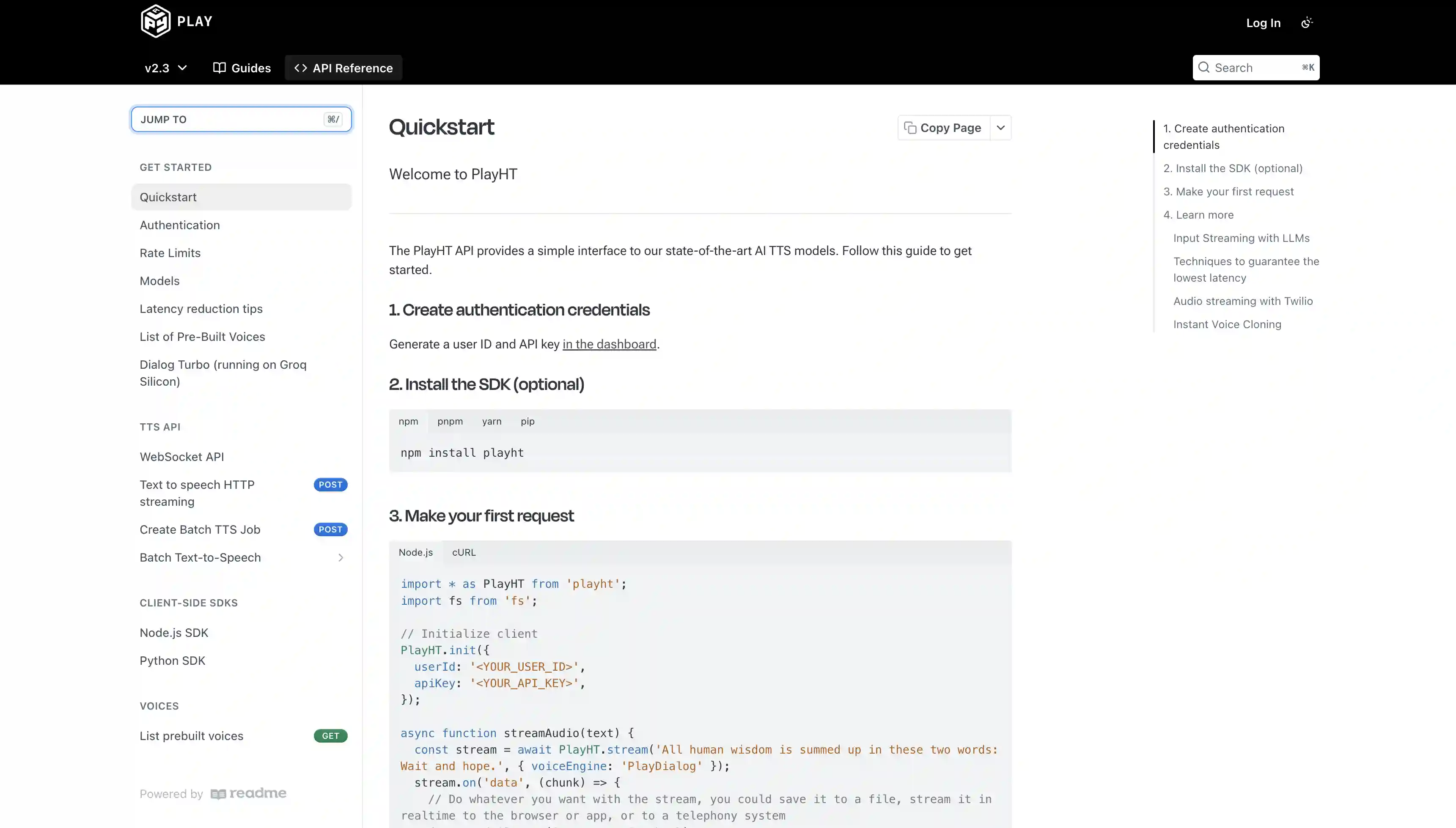
Play.ht
Long-form and audiobooks
✅
$39/month
Descript Overdub
Podcasters using Descript
✅
$16/month
HeyGen
Video avatars with voice
✅
$24/month
Read on for what makes each one worth using and where the trade-offs are.
1. ElevenLabs — Best Overall
ElevenLabs is, probably, the most well-known voice cloning system on the market. Its instant cloning works from samples as short as 10 seconds, while the Professional Voice Cloning tier produces results that can pass blind listening tests, and it supports 32+ languages with cross-language cloning (meaning you can clone a voice in English, and use it to narrate in Japanese).
The Free plan gives you 10,000 credits per month covering TTS, voice cloning, sound effects, and Studio, with no commercial license (but the output is watermarked). Starter is $5/month with full commercial rights. Creator is $22/month with professional voice cloning unlocked. Pro is $99/month with 44.1 kHz PCM via API.
Best for: Audiobook narrators, professional content creators, dubbing studios.
Drawback: Pricing scales fast if you need volume.
2. Overchat AI — Best Free Alternative
Overchat AI voice cloning tool is the best free alternative to ElevenLabs. It runs on frontier voice cloning models — including ElevenLabs own offerings, accessible through an easy-to-use web-based UI.
Voice cloning quality is exactly the same as the other players on the list, since the tool uses the same underlying voice generation engine.
Best for: Creators who want voice cloning alongside other AI tools, or who want to try cloning without paying for an expensive subscription.
3. Resemble AI — Best for Enterprise
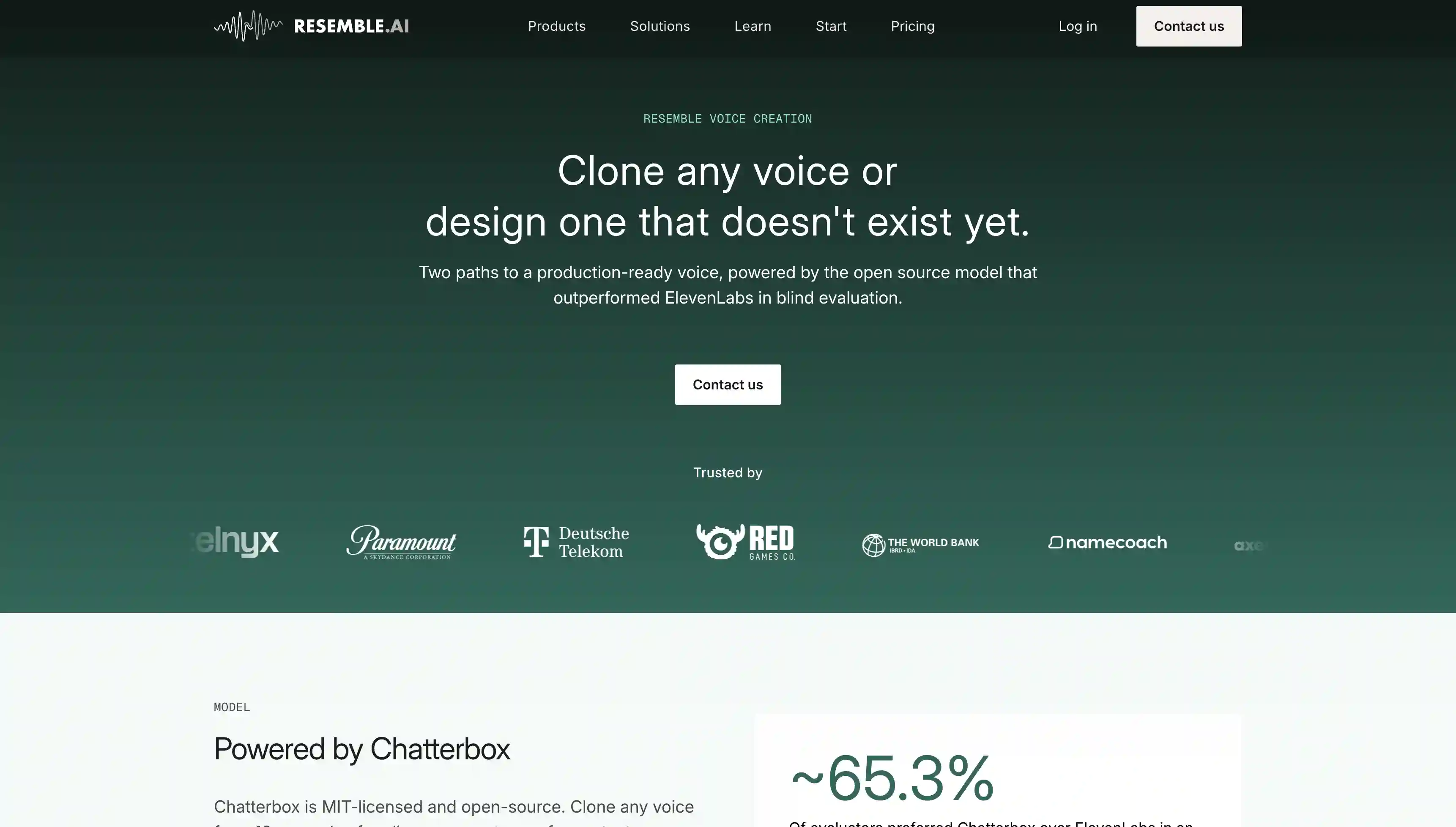
Resemble AI has what is most likely the most mature voice cloning API, with SDK support, detailed control over voice parameters, and enterprise features like custom deployment and audit logs.
Pricing is API-first, with usage-based billing. The Creator plan starts at $19/month for individual creators, but the real value sits in the enterprise tier with custom pricing.
Best for: Developers building voice cloning into products. Enterprise teams needing audit and compliance features.
Drawback: Less accessible for individual creators who just want to clone their voice and use it.
4. Play.ht — Best for Long-Form and Audiobooks
Play.ht specializes in long-form narration where consistent quality across hours of output matters the most. Its Play 3.0 model is specifically tuned to hold voice consistency across thousands of words.
The free tier gives you basic cloning with watermarked output. Paid plans start at $39/month for Creator (commercial rights, 10 voice clones, 50K characters), scaling to $99/month for unlimited generation.
Best for: Audiobook authors, podcast producers, anyone generating hours of narrated content.
Drawback: Pricing is steeper than competitors for occasional users.
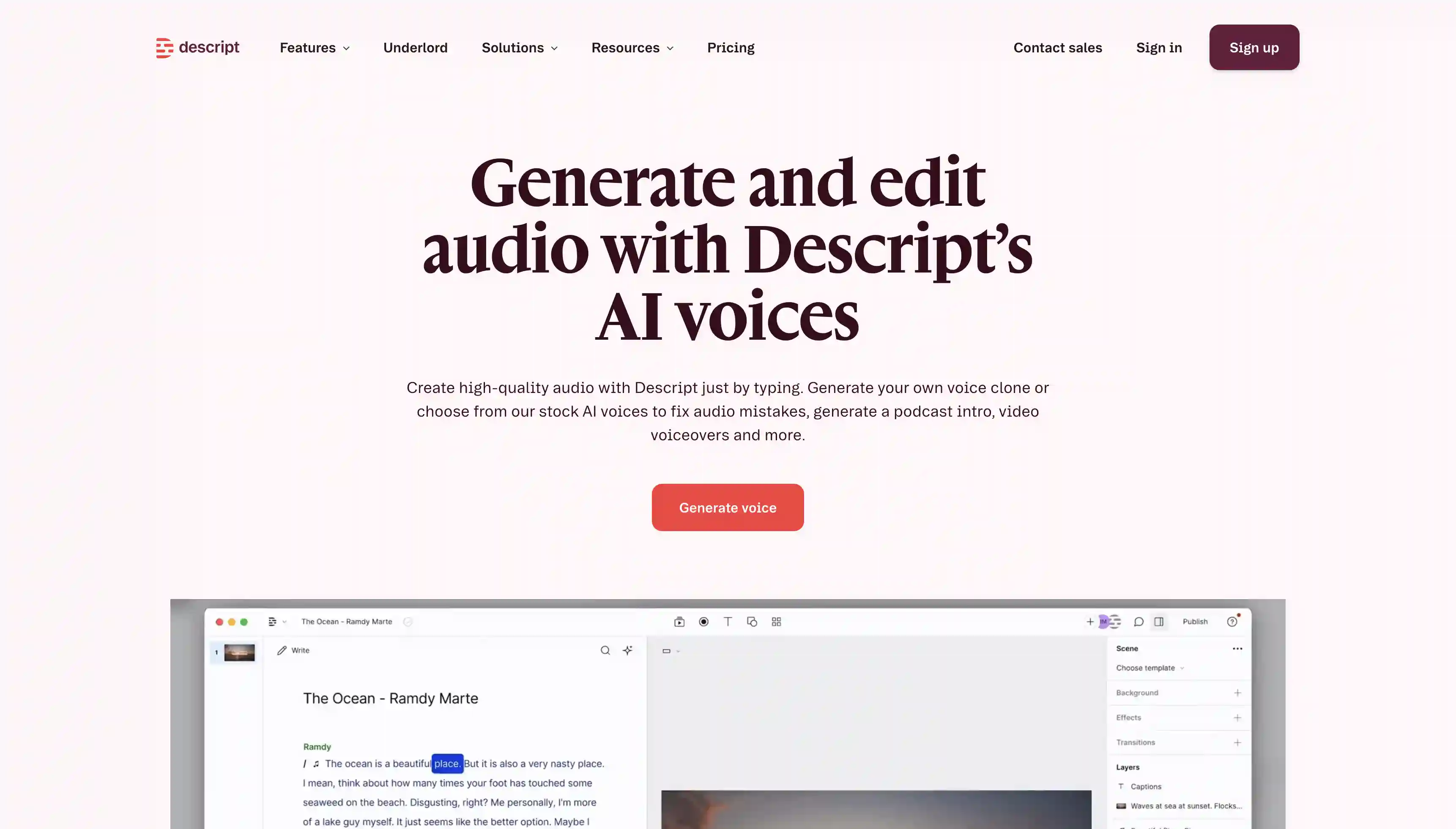
5. Descript Overdub — Best for Podcasters
Descript Overdub voice cloning is a feature built into Descript, a podcast and video editor.
Here’s how it works:
Clone your voice once during setup (Descript walks you through a 10-minute training script for higher quality)
Correct mistakes in recorded audio by typing the corrected text
Overdub generates a fix in your own voice that splices into the recording
For podcasters who already use Descript for editing, this is the killer feature: re-recording an audio fix that was botched the first time is a major time sink, and Overdub eliminates it.
Pricing follows Descript's tiers — Free, Creator ($16/month), Pro ($24/month), with Overdub available on the paid tiers.
Best for: Podcasters and video editors who already work in Descript.
Drawback: Not useful as a standalone voice cloning tool — the value is in the editor integration.
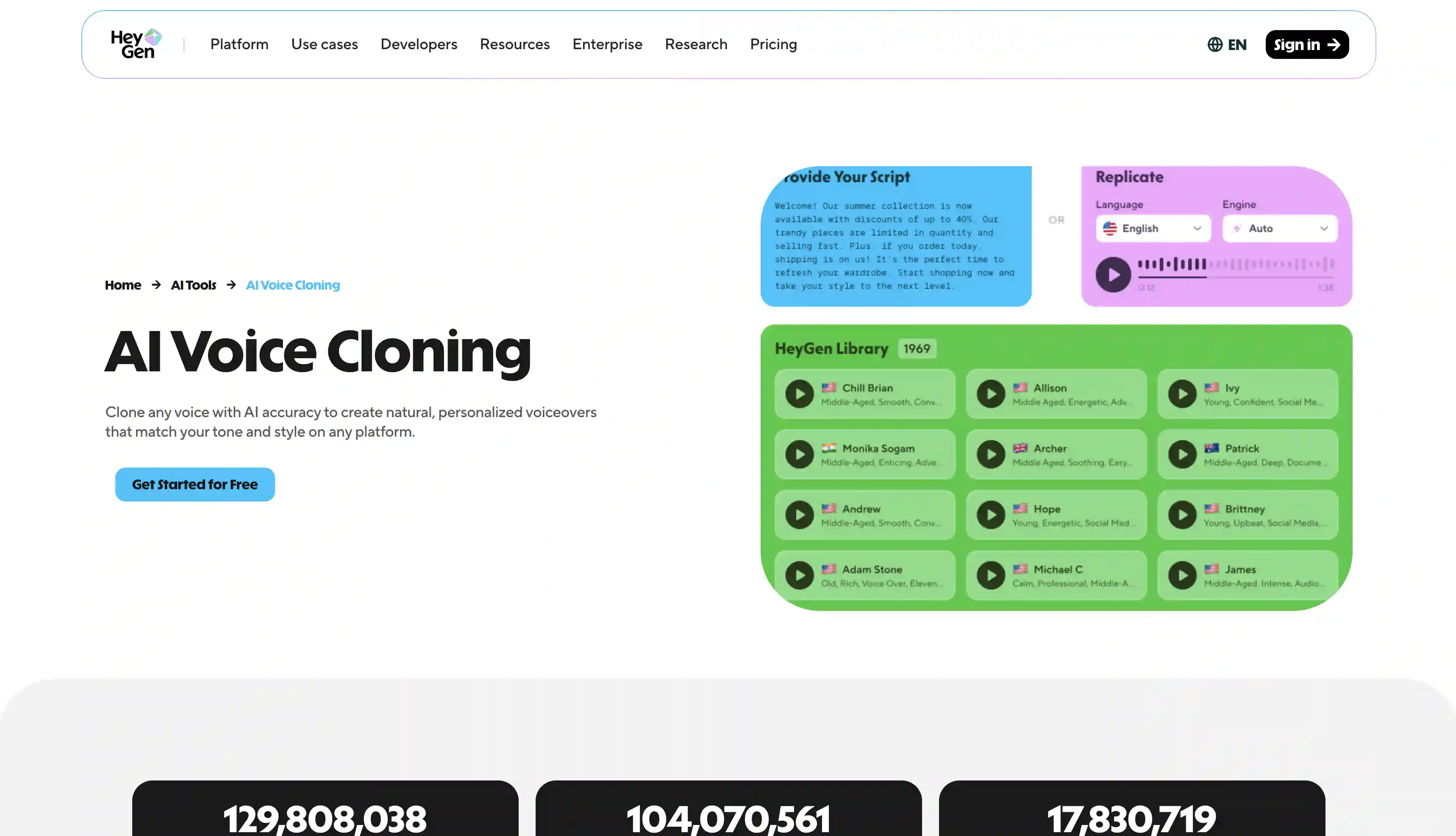
6. HeyGen — Best for Video Avatars
HeyGen does voice cloning as part of a broader avatar product. You record a short video sample, and HeyGen creates an AI avatar that matches your face, voice, and mannerisms.
You then type a script and the avatar speaks it on camera in your voice — useful for marketing video, training content, and personalized outreach at scale.
Voice cloning quality is good but not best-in-class; the value is in the video-plus-voice combination. Pricing starts at $24/month for the Creator plan and scales for higher volume.
Best for: Marketers, sales teams, and creators producing personalized video at scale.
Drawback: Not the right tool if you only need audio.
How AI Voice Cloning Works
Voice cloning systems work in three steps:
Sample
Embedding
Generation
1. Sample
This involves collecting an audio sample of the voice you want to clone, which is a voice recording lasting anywhere from 3 seconds to multiple minutes. The typical recommended duration is at least 30 seconds.
2. Embedding
The model analyzes the sample and extracts a compact mathematical representation of what makes that voice distinctive:
Frequency
Formant patterns
Prosody
Dozens of other features
This embedding is the fingerprint the system will use to generate new speech.
3. Generation.
During this last step, you provide text, and the model uses the voice embedding to synthesize speech in that voice.
Underneath, the system is doing the same technology TTS apps do — converting text into a sequence of phonemes, then generating audio waveforms — but conditioned on the voice embedding so the output sounds like the cloned speaker.
Types of AI Voice Cloning
There's a meaningful distinction between different types of voice cloning tools, and here are the most popular ones:
Zero-shot vs one-shot
Real-time vs batch
Zero-shot models can clone a voice from a single short sample without any additional training — the embedding alone is enough. Few-shot models use longer samples (30 seconds to several minutes) and produce noticeably more accurate results.
Batch cloning takes your text, generates the audio, and delivers a finished file — the standard workflow for voiceover, narration, and dubbing. Real-time voice cloning runs the system fast enough that you can speak and have your cloned voice come out the other end in near-real-time. Real-time is harder, and if a system supports it it will usually sit under a higher subscription tier on the same platform, or as an add on.
What People Use Voice Cloning For
The technology has a reputation problem because of scam calls and political deepfakes, but the actual user base is overwhelmingly working on legitimate things.
Content creators. Use voice cloning to record their own voiceovers without sitting in front of a microphone for hours, and to dub their content into languages they don't speak.
Audiobook narrators and authors. Produce audiobooks faster and more cheaply than booking studio time.
Dubbing studios. Use voice cloning to preserve the original actor's voice across languages, which keeps performances feeling consistent in international releases.
Game developers. Clone voice actors to generate variation and additional dialogue without re-booking talent.
Is Voice Cloning Legal?
The short answer:
Cloning your own voice is legal everywhere
Cloning someone else's voice requires their consent
Using a cloned voice to impersonate, deceive, or commit fraud is illegal under existing laws even when the technology itself is legal.
In more detail, three legal frameworks are worth knowing when it comes to voice cloning legality:
Tennessee's ELVIS Act (Ensuring Likeness Voice and Image Security), which came into force in mid-2024, was the first US state law to explicitly protect a person's voice as part of their right of publicity. Under the ELVIS Act, using AI to clone someone's voice without permission — even for non-commercial use — is actionable. Several other states have introduced similar legislation.
The EU AI Act classifies voice cloning systems used to generate deep fakes of real people as high-risk AI under Annex III, with transparency obligations that require providers to clearly label AI-generated audio when it depicts a real person. The act came into force in stages from 2024 through 2026.
The FTC's Impersonation Rule in the US (finalized 2024) makes it illegal to use AI to impersonate government officials or businesses for fraud purposes, with civil penalties up to $52,000 per violation. The FTC has explicitly cited AI voice cloning in its enforcement guidance.
Frequently Asked Questions
How much audio do I need to clone a voice?
For a usable clone, 30–60 seconds of clean audio is recommended.
Can I clone a celebrity's voice legally?
No. Public figures have a right of publicity that protects their voice as part of their identity. Cloning a celebrity's voice without their consent is actionable in most jurisdictions, and explicitly illegal in Tennessee under the ELVIS Act and in the EU under the AI Act's deep fake transparency rules.
What's the best free AI voice cloning tool?
Overchat AI — it doesn’t watermark output on the free plan, you can use it without sign up, and it uses frontier voice-generation models, including those by ElevenLabs, to clone your voice and generate voiceovers, meaning the quality matches the best on the market.
How accurate is AI voice cloning?
Very accurate. In fact, for short and medium length clips, cloned voices have passed blind listening tests in studies, which is very impressive. It gets a bit more complicated for long-form narration, since over a long period of time small artifacts are more likely to creep in and give away the artificial nature of the voiceover.
Can AI voice cloning be detected?
Yes, but detection is increasingly difficult and the arms race favors generation. Tools like ElevenLabs' own AI Speech Classifier and academic detectors from institutions like the University of Florida and MIT can sometimes catch clones, but accuracy drops as models improve, and false positives are quite common.
What's the difference between voice cloning and text-to-speech?
Text-to-speech uses pre-built generic voices that don't correspond to any specific real person.
Voice cloning produces a voice that sounds like a specific person, because the model was trained on samples of that person speaking. Both technologies share the same underlying machinery — the difference is whether the voice is generic or personalized to a specific speaker.
Bottom Line
A few things to take with you:
Voice cloning is a different technology than text-to-speech, even though they share the same underlying machinery.
TTS gives you a generic voice, and cloning gives you a specific person's voice.
To clone a voice accurately, it is recommended to record at least 30 seconds of speech at normal speed.
Cloning your own voice is unambiguously legal everywhere, but cloning anyone else's requires their consent.
Thanks to voice cloning, things that used to cost thousands of dollars in studio time now cost single-digit dollars per month, or nothing at all on free tiers.