
Pergunte ao MiniMax M3

Use o modelo de raciocínio e programação com pesos abertos da MiniMax direto no seu navegador. Sem chave de API, sem configuração — basta escolher o M3 na lista de modelos e começar a trabalhar.

Por que usar o MiniMax M3 no Overchat AI?

O MiniMax M3 é o modelo principal de raciocínio e programação do laboratório. Ele trabalha com código, lê documentos longos do início ao fim, entende imagens e vídeos curtos e mantém o contexto ao longo de sessões muito longas. Use o MiniMax M3 no Overchat AI para programar, analisar documentos, estudar e resolver tarefas do dia a dia.

Feito para longas sessões de programação e documentos densos

M3 is what you reach for when the work doesn't fit in a normal chat turn — a whole repo to refactor, a long PDF to read end-to-end, a debugging thread that keeps growing. It stays coherent across the full session, follows multi-step instructions without losing thread, and reasons over screenshots and diagrams the same way it reasons over code. On Overchat AI you can also hand off to Claude, GPT-5.5, or Gemini mid-session when a different model is the better fit.

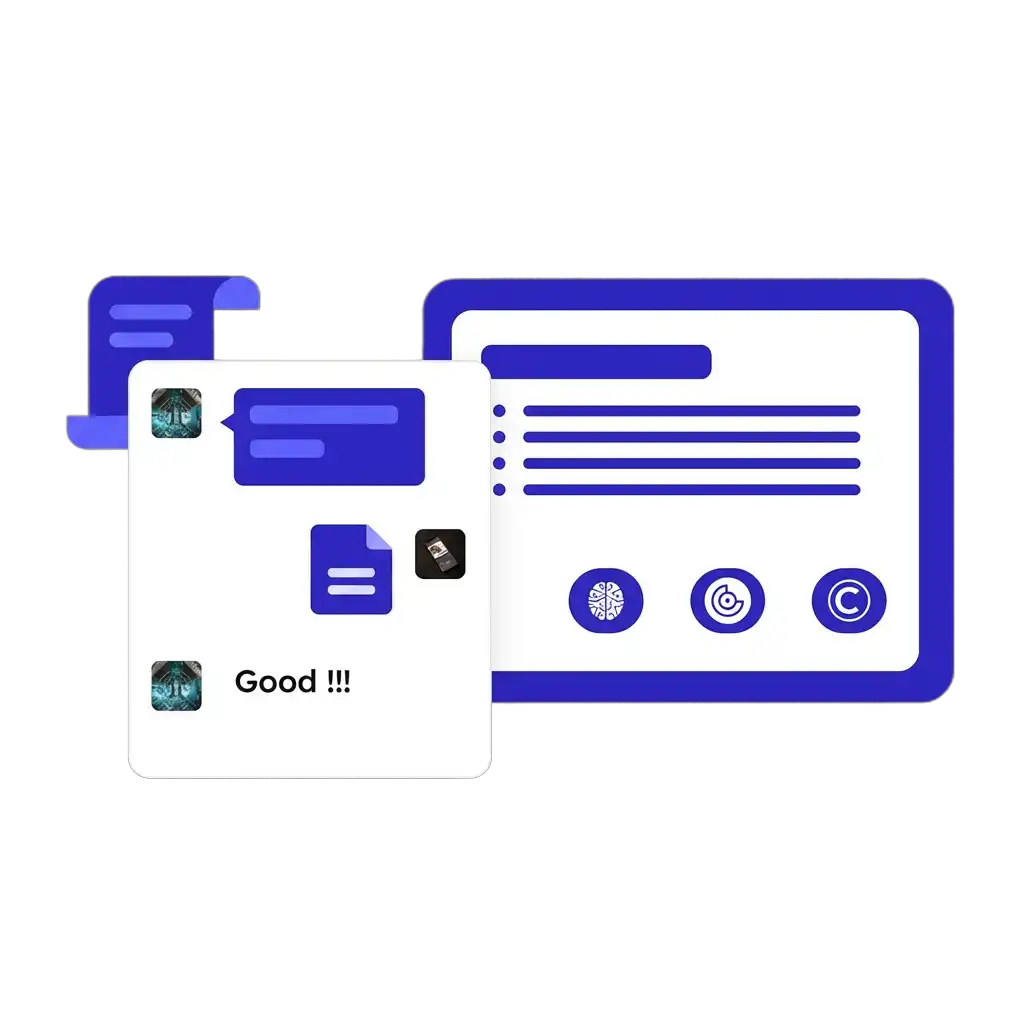
Ilustração minimalista da interface de usuário mostrando a interface de bate-papo e documento com IA do Overchat, com cartões em camadas, balões de mensagens e ícones simplificados em azul e branco, representando comunicação e geração de conteúdo com inteligência artificial.

Janela de contexto de 1 milhão de tokens

Coloque um repositório inteiro, um PDF longo ou um artigo de pesquisa e continue a conversa sobre ele. O M3 mantém os detalhes ao longo de sessões muito longas sem esquecer o que veio antes.

🎚️

Constante em problemas difíceis e de várias etapas

O M3 planeja a resposta em vez de partir para a primeira ideia. Passe a ele um bug complicado, uma questão de arquitetura ou um problema denso de matemática ou direito, e ele trabalha passo a passo até chegar à solução.

🖼️

Entende imagens e vídeos de forma nativa

O M3 lê imagens e clipes de vídeo curtos no mesmo passo que o texto. Anexe a captura de tela de um bug de interface, um wireframe, um gráfico difícil de interpretar ou um trecho de um tutorial, e continue a mesma conversa.

MiniMax M3 vs Claude Opus 4.8

Which flagship AI model should you use?

MiniMax M3
Claude Opus 4.8
Released
June 1, 2026
May 28, 2026
Context window
1,000,000 tokens
200,000 tokens
Open weights
Image input
Short video input
Agentic tool use
SWE-Bench Pro
59.0%
69.2%
Terminal-Bench 2.1
66.0%
74.6%

Três passos para começar a programar com o MiniMax M3

1.

Entre no Overchat AI

Abra o Overchat AI no navegador ou instale o aplicativo no celular e entre com e-mail, Google ou Apple. Sem chave de API, sem precisar de uma conta separada na MiniMax.

2.

Escolha o M3 na lista de modelos

Abra um novo chat e selecione o MiniMax M3 no seletor de modelos. Você pode trocar por qualquer outro modelo da plataforma na mesma conversa, caso outro se encaixe melhor na tarefa.

3.

Adicione código, documentos ou capturas de tela

A janela de 1 milhão de tokens do M3 dá conta de repositórios inteiros, PDFs longos e documentos jurídicos densos. Anexe capturas de tela de bugs, mockups de design ou clipes de vídeo curtos — a entrada multimodal nativa entende tudo na mesma conversa.

Comece
Use o Claude Opus 4.6 no Overchat AI

Sobre Overchat AI

A IA do Overchat traz para você o poder dos principais modelos de IA do mundo: ChatGPT, Claude, Gemini, Mistral e muito mais.

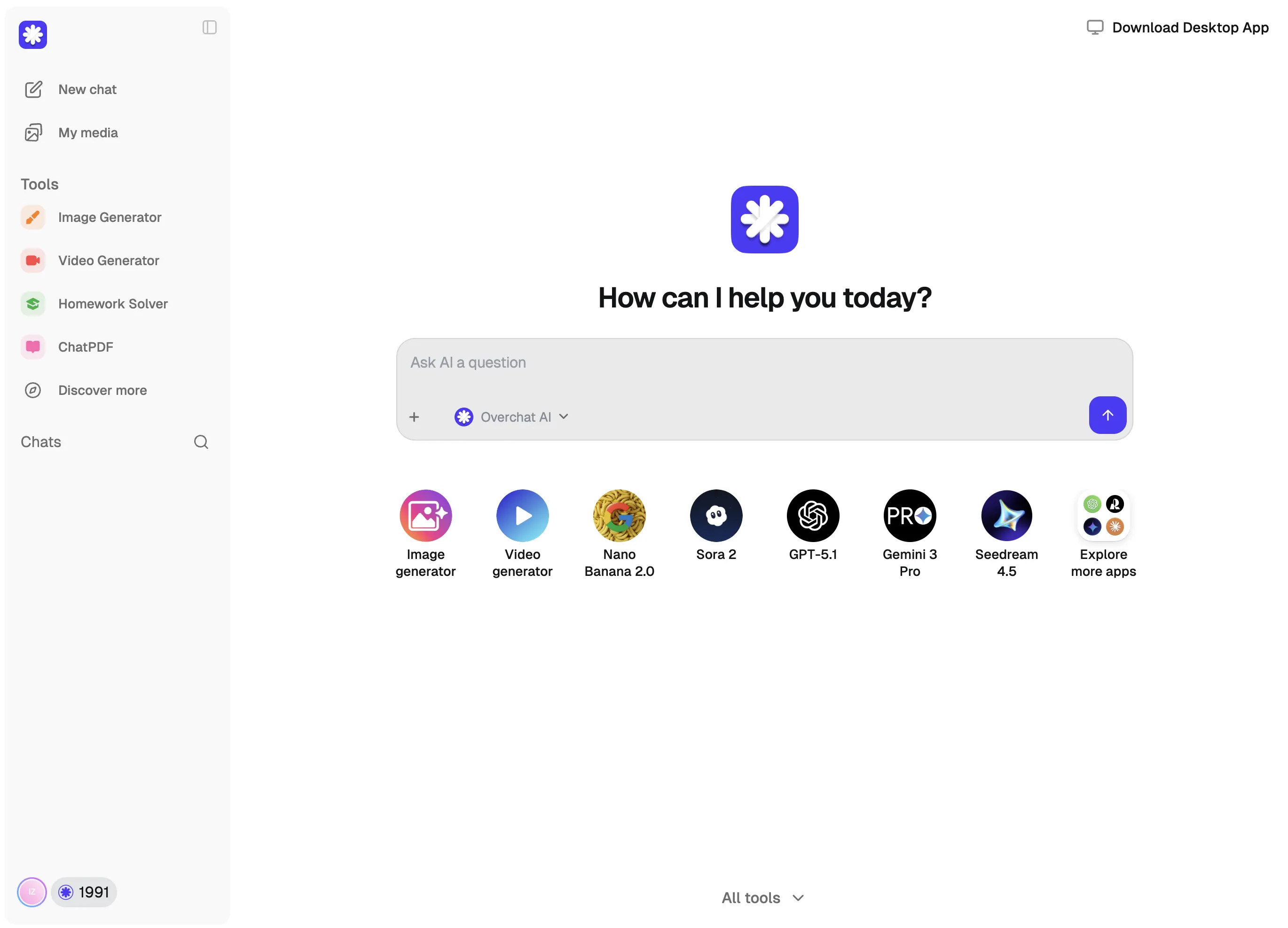
Interface de IA Overchat

Melhores modelos de IA disponíveis

Logotipo do Chat GPT

GPT-5.4

O modelo mais avançado da OpenAI com raciocínio, criatividade e recursos multimodais excepcionais.

Pergunte ao GPT-5.2 ↗
Logotipo DeepSeek

DeepSeek V3.2

Modelo de raciocínio avançado projetado para resolução de problemas complexos, raciocínio matemático e programação.

Pergunte ao DeepSeek ↗
Logotipo Claude

Claude Opus 4.6

O modelo principal da Anthropic se destaca em tarefas de raciocínio, conhecimento, matemática e codificação.

Pergunte ao Claude ↗
Logotipo da Gemini

Gemini 3 Pro

O modelo mais eficiente do Google com compreensão e geração multimodais avançadas.

Pergunte a Gemini ↗
Logotipo Grok

Grok 4.2

O poderoso modelo da XAI com conhecimento em tempo real e respostas diretas e inteligentes.

Pergunte ao Grok ↗
Logotipo da Qwen

Qwen 3.5

O modelo avançado do Alibaba com fortes capacidades multilíngues e habilidades de raciocínio.

Pergunte a Qwen ↗

Por que o MiniMax M3 é o modelo a ser observado

MiniMax M3 is the lab's newest flagship and the model the team has been pointing toward for months. It's built for the kinds of jobs that used to require a tool change halfway through — reading a long codebase, debugging an unfamiliar stack, working through a dense research paper, or holding context across a multi-hour session. On Overchat AI you talk to it the same way you talk to Claude or GPT-5.5: open a chat, attach what you need, and start working.

MiniMax is a Shanghai-based AI lab founded in 2021. It built a reputation first on the consumer side with the Talkie chat app and the Hailuo video generator, and on the technical side with models the company released as open weights rather than locked behind a paid API. M3 continues that pattern: it's a frontier-grade model that the lab is putting in the hands of builders rather than gating behind enterprise contracts.

Coding is where M3 is strongest. The model writes, refactors, and debugs across whole projects — not just isolated functions — and follows multi-step instructions without losing the thread. Outside code, it does the unglamorous heavy lifting well: reading dense legal or financial documents end-to-end, comparing two long specs side by side, summarizing a hundred-page report into the parts that matter. Image and short-video understanding are built in, so you can hand it a screenshot of an error, a diagram, or a clip from a tutorial and continue the same conversation.

Quando usar o MiniMax M3

Under the hood, M3 runs on a new attention design MiniMax calls Sparse Attention (MSA). The practical upshot for you: it stays fast and coherent at the long end of its context window, where most models start to slow down, contradict themselves, or quietly forget earlier turns. You feel it as snappier replies on long prompts and a model that actually uses the whole conversation, not just the last few messages.

Engineers reach for M3 on the work that breaks a normal chat — a refactor that touches twenty files, a debugging session that runs across a whole afternoon, a code review on a PR larger than the model can usually hold. Researchers and analysts use it to read and reason across long sources at once: a stack of PDFs, a 100-page contract, a quarter of earnings transcripts. Anyone who works with screenshots, diagrams, or video stills appreciates that they can drop the image straight into the same chat instead of describing it in words.

Getting to M3 on Overchat AI is the same flow as every other model on the platform: sign in, open a chat, pick MiniMax M3 from the model dropdown. There's no API key to fetch, no HuggingFace deployment to spin up, no local install. The conversation looks and feels like any other chat you've had with an AI — the difference is which model is doing the thinking on the other side.

M3 sits next to MiniMax's other models: Hailuo for video generation, Speech-02 for voice, and the ABAB chat models for general use. On Overchat AI you can move between M3 and other top models in the same session without copying anything across tabs — ask M3 to write the code, hand off to Claude Opus for a second opinion, then back to M3 to apply the changes.

For readers who want the leaderboard numbers: M3 scores 59.0% on SWE-Bench Pro — ahead of GPT-5.5 and Gemini 3.1 Pro, and approaching Claude Opus 4.7. It also leads Gemini 3.1 Pro on OmniDocBench and Claude Opus 4.7 on SVG-Bench, with strong showings on Terminal-Bench, MCP-Atlas, and long-video understanding. Treat those as the floor: independent labs are still working through their own evaluations, and the most reliable signal is still your own work in the chat.

Perguntas frequentes

Is MiniMax M3 actually open-source?

Open weights, to be precise. MiniMax publishes the M3 weights and a technical report on Hugging Face and GitHub shortly after launch, so teams that need on-prem inference, custom fine-tunes, or full data control can run the model themselves. The training data and training code remain proprietary — the standard arrangement now common across DeepSeek, Qwen, and Llama. On Overchat AI none of that matters: you just chat with M3 in the browser.

What's MiniMax Sparse Attention?

MSA is the attention design that powers M3. Standard transformers attend to every previous token at every step, which slows down sharply on long inputs. MSA looks at only the parts of the conversation each token actually needs. You feel it as a model that stays snappy and coherent across very long prompts — the kind of behavior that lets you keep pasting context instead of trimming it to fit.

Which is Better, MiniMax M3 or Claude Opus 4.8?

Different jobs, different model. M3 is the one to reach for when context length and steady coherence matter more than anything — a long codebase, a stack of PDFs, an afternoon-long debugging thread. Claude Opus 4.8 still has the edge on the hardest single-shot reasoning and on agent-style tool orchestration. On Overchat AI you don't have to pick once: switch between them in the same session as the work changes.

Is MiniMax M3 good for analyzing long PDFs and documents?

Yes — long-document analysis is one of M3's strongest jobs. The 1M-token context window means you can paste a whole contract, a 100-page research paper, a stack of earnings transcripts, or several legal filings into a single chat and ask cross-document questions without chunking anything by hand. M3 stays coherent across the full session, surfaces specifics on demand, and keeps track of where each claim came from. On Overchat AI you do this in a normal chat — drop the PDF, ask the question, keep iterating.

What other MiniMax AI models are there besides M3?

M3 is MiniMax's flagship reasoning and coding model, but it sits in a larger family. Hailuo handles text-to-video and image-to-video, Speech-02 covers voice synthesis and cloning across 30+ languages, and the earlier M-series text models (M1, M2, M2.5, M2.7) remain available on Hugging Face. On Overchat AI you mainly use M3 — it's the model where MiniMax pushed the lab's frontier coding and 1M-token context features.

Can I use MiniMax M3 for AI coding agents?

Yes — M3 is built around agentic coding workflows. It can plan multi-step changes across a codebase, reason about failures, run through long debugging threads, and follow detailed instructions without losing the thread. On Overchat AI you get this behavior in a normal chat: paste the repo, describe the goal, and let M3 work through it. For programmatic agent setups, the open weights and standard API also let teams build their own coding agents on top of M3 directly.

Does MiniMax M3 support agentic tool use and long-running tasks?

M3 is tuned for the kinds of agentic tasks that span many steps and many minutes: tool calls, multi-step planning, browsing and reading long sources, working through a problem with self-correction. It scores at the top end of public agentic-coding evaluations and stays coherent across very long sessions thanks to MiniMax Sparse Attention. On Overchat AI you experience this as a model that doesn't lose track of the goal mid-conversation — you can hand it a complex task and keep iterating.

How does MiniMax M3 compare to DeepSeek and Qwen?

All three are Chinese open-weight families competing at the frontier, and the right pick depends on the job. M3 leads on long-context coding sessions and native multimodal input (image + short video), which DeepSeek and Qwen don't match. DeepSeek tends to be the strongest pure-reasoning open-weight model. Qwen has the deepest multilingual support and a wider lineup of fine-tuned variants. On Overchat AI you can switch between them in a single chat — hand the same prompt to two models and compare side by side.

Can MiniMax M3 read images, screenshots, and short videos?

Yes. M3 has native multimodal input: drop in a screenshot of a UI bug, a wireframe, a chart you can't quite parse, a slide from a deck, or a short video clip, and it reasons through what it sees alongside your text prompt. No separate vision model, no OCR step — the same chat handles text, images, and short video. On Overchat AI just attach the file the way you would in any other chat.

Do blog

Overchat AI para todas as plataformas

Disponível na Web, iOS e Android. Acesse seu assistente de IA em qualquer lugar, a qualquer hora.

Emblema da Google Play StoreEmblema da App Store
Interfaces móveis e de desktop com IA do Overchat