
Conheça o Anthropic Claude Opus 4.7
O Claude Opus 4.7, lançado pela Anthropic em 16 de abril de 2026, é a versão mais recente dos modelos da linha Opus, otimizados para raciocínio complexo, codificação e fluxos de trabalho empresariais. A linha Opus representa o nível de maior capacidade da Anthropic, acima do Sonnet e do Haiku.
O Opus 4.7 é posicionado explicitamente abaixo do Claude Mythos Preview em capacidade bruta, mas é o primeiro modelo de produção usado para testar proteções de cibersegurança no mundo real, incluindo a detecção e o bloqueio automáticos de solicitações de alto risco. Isso o torna estrategicamente importante no roadmap da Anthropic, e não apenas uma atualização de rotina.
Recursos do Claude Opus 4.7
A principal melhoria do Opus 4.7 é o desempenho avançado em engenharia de software em tarefas difíceis e de longa duração. Nos testes de acesso antecipado, os usuários relataram conseguir delegar trabalhos de codificação complexos que antes exigiam supervisão contínua. O modelo não apenas executa tarefas em várias etapas, como também verifica seus próprios resultados antes de retorná-los, o que impacta diretamente a confiabilidade em pipelines de produção.
Obediência a instruções. Ficou bem mais rigorosa. Diferente do Opus 4.6 e das versões anteriores, o modelo interpreta os prompts ao pé da letra e executa todas as restrições — isso pode fazer prompts antigos falharem, mas deixa o modelo mais previsível.
Capacidades de visão. O modelo aceita imagens com lado maior de até 2.576 pixels (~3,75 megapixels). Essa resolução é mais de três vezes maior do que a suportada pelos modelos Claude anteriores, o que permite uma interpretação muito mais precisa de elementos visuais.
Benchmarks. O benchmark Finance Agent (v1.1) avalia fluxos financeiros de ponta a ponta, como valuation, modelagem e relatórios — o Opus 4.6 atinge uma taxa de sucesso de ~64,4% nas tarefas, contra os ~60% do 4.6. O GDPval-AA é um benchmark de terceiros que mede trabalho intelectual de valor econômico usando um sistema de pontuação no estilo Elo — o Opus 4.7 ocupa o 1º lugar com cerca de 1753 pontos, o que equivale a uma taxa de vitória direta de ~58–60% contra o GPT-5.4 em tarefas do mundo real.
Gerenciamento de memória. O modelo consegue usar uma memória baseada em sistema de arquivos ao longo de sessões longas, basicamente anotando o que precisa lembrar. Isso melhora a precisão em conversas extensas ou ao trabalhar com documentos e bases de código maiores.
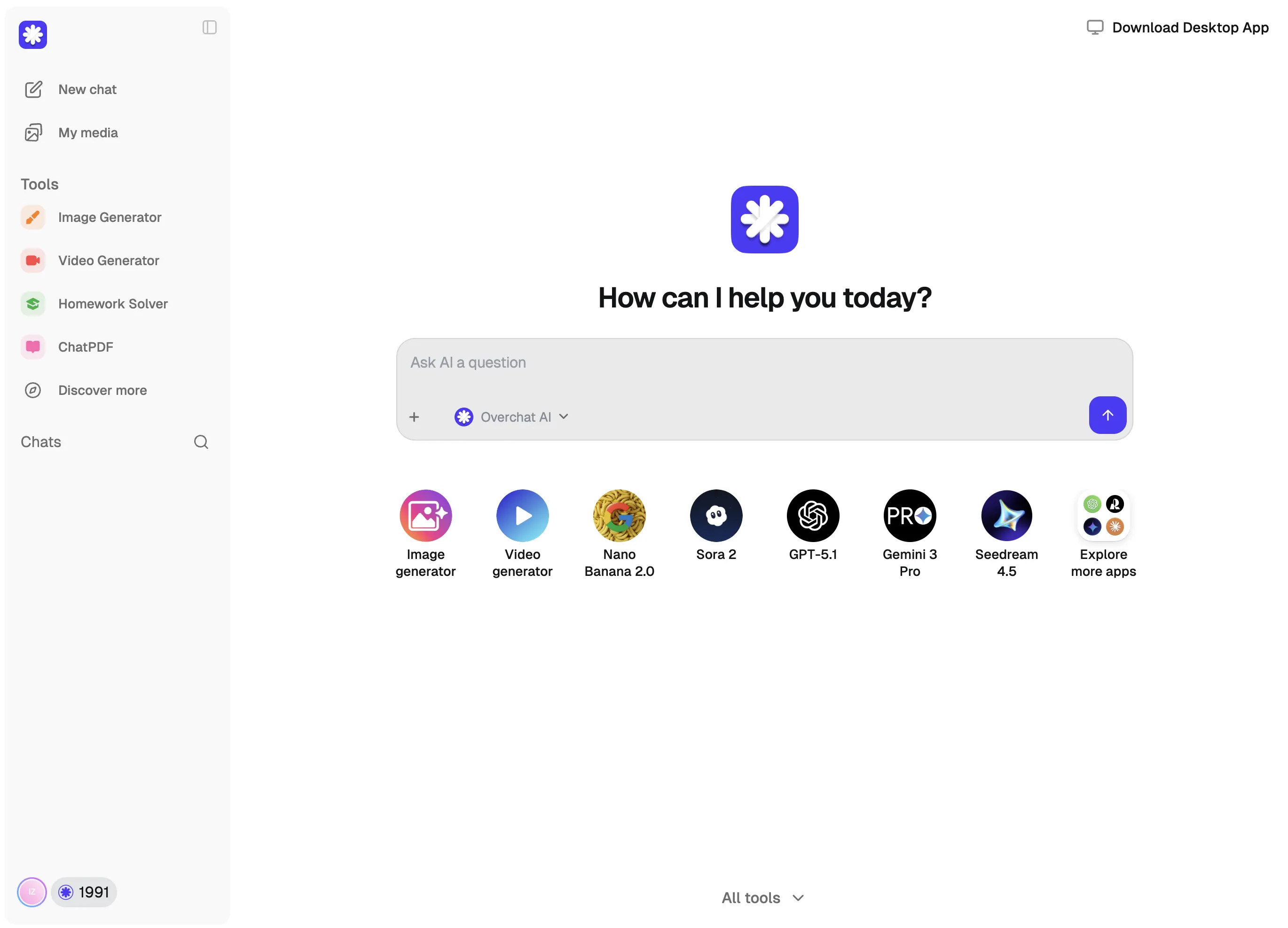
Disponibilidade. O Claude Opus 4.7 pode ser acessado pelo Overchat AI.
Claude Opus 4.7 vs Opus 4.6 vs Opus 4.5
Opus 4.7 vs Opus 4.6. O Opus 4.7 foi lançado dois meses depois do Opus 4.6. Ele vence em 12 dos 14 benchmarks divulgados pela Anthropic. SWE-bench Verified: 80,8% --> 87,6% SWE-bench Pro --> de 51,9% para 64,3% MCP-Atlas — 14,6 pontos a mais O Opus 4.7 trouxe uma visão melhor: o novo modelo aceita imagens de até 3,75 megapixels, contra 1,15 megapixel no 4.6, então ele entende melhor prints de tela, diagramas e mockups de design. Foi adicionado um novo nível de esforço xhigh, e o 4.7 em esforço baixo iguala o 4.6 em esforço médio em qualidade. No comportamento, o 4.7 se autoverifica (escreve testes e faz checagens de sanidade antes de responder) e segue as instruções mais ao pé da letra. As duas regressões estão nos benchmarks BrowseComp (−4,7 pontos) e CyberGym (−0,7, intencional: o 4.7 é o primeiro Claude com bloqueio automático de usos proibidos em cibersegurança).
Opus 4.7 vs Opus 4.5. O modelo Opus 4.5 foi lançado em 24 de novembro de 2025 — cinco meses antes do Opus 4.7, que supera em todos os benchmarks esse carro-chefe hoje duas gerações mais antigo. No SWE-bench Verified, por exemplo, o Opus 4.5 marcou 80,9%, e o Opus 4.7 marca 87,6%. A janela de contexto aumentou 5×, de 200K tokens no 4.5 para 1M de tokens (introduzida no 4.6 e mantida no 4.7), o que elimina os fluxos de fatiamento que a maioria dos usuários do 4.5 precisava montar para lidar com bases de código e documentos longos. É no raciocínio abstrato que a diferença é maior: o Opus 4.5 marcou 37,6% no ARC-AGI-2, enquanto a geração 4.7 levou esse número para a faixa dos 68%+ — quase o dobro. A infraestrutura agêntica também é radicalmente diferente, com Agent Teams para orquestração multiagente (herdado do 4.6) e a Compaction API para conversas de agentes praticamente ilimitadas. A resolução de visão praticamente triplicou.
A linha Opus é o modelo principal dentro da família Claude. Abaixo dela está o Claude Sonnet, o modelo de uso geral da Anthropic. Mais abaixo vem o Claude Haiku, voltado para tarefas rápidas e de alto volume. Os três modelos estão disponíveis no Overchat AI, então você pode escolher o mais adequado para cada conversa.
A Anthropic, criadora do Claude, foi fundada em 2021 pelos ex-pesquisadores da OpenAI Dario e Daniela Amodei. A empresa já captou mais de US$ 10 bilhões em financiamento e trata a segurança da IA como uma disciplina central de engenharia — não como algo secundário. Cada versão do Claude passa por rigorosos testes de red-teaming e de alinhamento antes de chegar aos usuários.



.svg)