Os laboratórios de IA vêm lançando modelos de ponta em um ritmo implacável. Em junho de 2026, os quatro modelos que valem a comparação são o GPT-5.5 da OpenAI, o Grok 4.3 da xAI, o Gemini 3.1 Pro do Google e o Claude Opus 4.8 da Anthropic — então, se você está em busca do melhor modelo de IA para programar ou escrever, essa é a lista que importa.
Vamos explicar o que é cada um desses modelos, no que eles se destacam e comparar os quatro com base em benchmarks, recursos e preços.
No final, você vai saber qual modelo de IA é o melhor para o seu caso de uso específico.
Atualizado em junho de 2026: revisado para refletir a linha de modelos de ponta atual — GPT-5.5, Grok 4.3, Gemini 3.1 Pro e Claude Opus 4.8, agora o modelo de IA nº 1 geral e o melhor modelo para programar.
Introdução
O ritmo de lançamentos de IA não desacelerou. Depois da leva intensa de novembro de 2025 (GPT-5.1, Grok 4.1, Gemini 3 Pro, Claude Opus 4.5), cada laboratório lançou um novo carro-chefe: GPT-5.5 (OpenAI, abril de 2026), Grok 4.3 (xAI, abril de 2026), Gemini 3.1 Pro (Google, fevereiro de 2026) e Claude Opus 4.8 (Anthropic, maio de 2026).
Aqui vai a versão resumida. Em junho de 2026, o Claude Opus 4.8 é o melhor modelo de IA geral — ele lidera o Artificial Analysis Intelligence Index com 61,4, à frente do GPT-5.5 (60,2), do Gemini 3.1 Pro (57) e do Grok 4.3 (53). Para tarefas específicas: o Opus 4.8 e o GPT-5.5 estão empatados no topo em programação, o Gemini 3.1 Pro lidera em raciocínio e análise de dados, o GPT-5.5 lidera em escrita criativa e o Grok 4.3 é o mais barato dos quatro, com pontuações fortes em uso de agentes e de ferramentas.
A seguir, explicamos o que é cada modelo, no que ele se destaca e como eles se comparam em benchmarks, recursos e preços — para que você saiba qual é o melhor para o seu caso de uso específico.
O que é o GPT-5.5?
O GPT-5.5 é o carro-chefe atual da OpenAI, lançado em abril de 2026. Ele foi feito para trabalho com agentes e profissional — programação, uso de ferramentas, pesquisa e tarefas de longo prazo — mantendo a velocidade de resposta da geração anterior, mas com uma capacidade notavelmente maior e mais eficiência no uso de tokens.
O GPT-5.5 vem em várias variantes:
Instant, o padrão do plano gratuito para tarefas do dia a dia, com equilíbrio entre velocidade e inteligência.
Thinking, para tarefas complexas de raciocínio.
Pro, que usa computação paralela em tempo de inferência para os problemas mais difíceis (planos pagos).
O ChatGPT consegue alternar entre essas variantes com base no contexto e no tipo de pergunta, então você não precisa escolher qual usar.
O GPT-5.5 é o motor do ChatGPT — disparado o chatbot de IA mais popular e um dos produtos de crescimento mais rápido da história. Ele sucede o GPT-5.1 (novembro de 2025) e o GPT-5.2 (dezembro de 2025).
O Grok 4.3 é o carro-chefe atual da xAI, lançado no fim de abril de 2026. É um modelo que prioriza o raciocínio, com raciocínio sempre ativo ("contínuo"), uma janela de contexto de 1 milhão de tokens e o preço mais agressivo dos quatro modelos de ponta. É um sólido modelo de fronteira entre os cinco melhores, especialmente forte em uso de ferramentas com agentes, em seguir instruções e em trabalho que exige alta precisão factual — atualmente ele ocupa o nº 1 no benchmark de raciocínio jurídico CaseLaw da Artificial Analysis.
Em vez de variantes separadas, o Grok 4.3 expõe níveis configuráveis de esforço de raciocínio (nenhum, baixo, médio, alto), então você pode regular o quanto o modelo "pensa" conforme a tarefa. A xAI também lançou junto com ele uma suíte separada de clonagem de voz, a Custom Voices.
Lançado em fevereiro de 2026, o Gemini 3.1 Pro é o modelo de raciocínio mais avançado do Google na série Gemini 3. Ele foi feito para a resolução de problemas complexos de múltiplas etapas e para programação com agentes, e é amplamente multimodal — consegue raciocinar sobre texto, áudio, imagens, vídeo, PDFs e repositórios de código inteiros dentro de uma janela de contexto de 1 milhão de tokens. Seu antecessor, o Gemini 3 Pro, foi o primeiro modelo do Google a reivindicar o nº 1 na Artificial Analysis.
O Gemini 3.1 Pro chega como um único modelo "Pro" com um modo Deep Think opcional para raciocínio prolongado nos problemas mais difíceis. (O Google também lançou um Gemini 3.5 Flash mais rápido e adiantou um "3.5 Pro em breve", mas esses são modelos separados.)
O Gemini se integra diretamente ao ecossistema do Google, incluindo a Busca, o Workspace e plataformas para desenvolvedores como a Vertex AI.
O que é o Claude Opus 4.8?
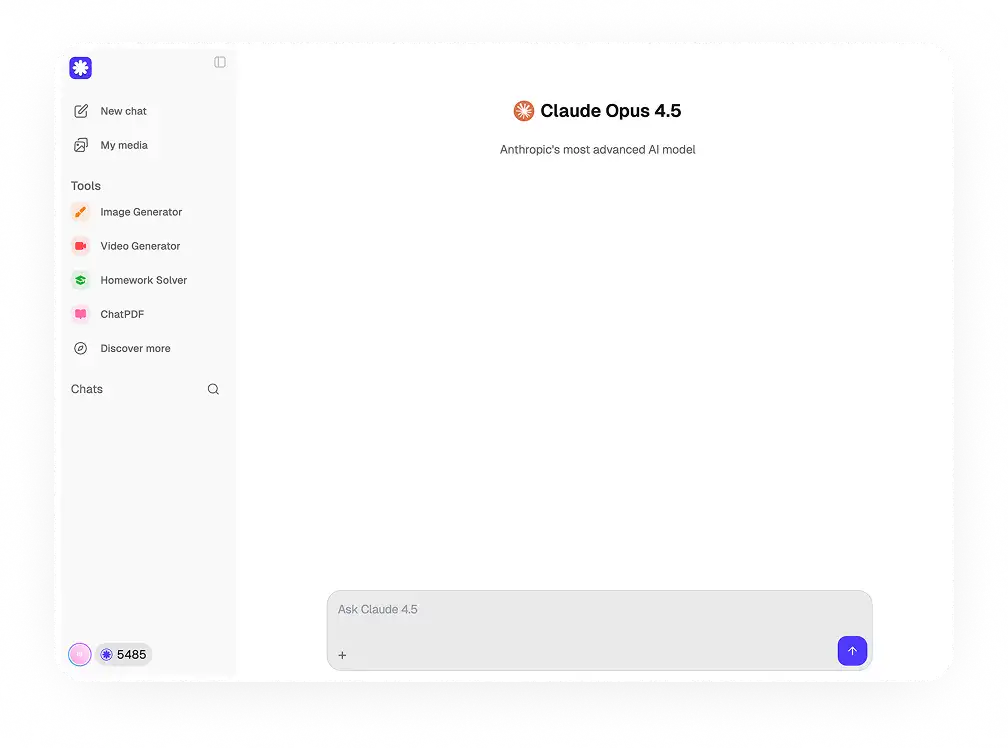
O Claude Opus 4.8, lançado em 28 de maio de 2026, é o modelo mais capaz da Anthropic e, atualmente, o modelo de IA nº 1 geral. Ele foi feito para raciocínio complexo, programação com agentes de longo prazo e trabalho com agentes de alta autonomia — uso do computador, agentes de navegador e análise financeira — e lidera o Artificial Analysis Intelligence Index. É o sucessor direto do Opus 4.5 (novembro de 2025), do Opus 4.6 e do Opus 4.7.
É o modelo mais capaz que a Anthropic já lançou, excelente em tudo, desde pesquisa aprofundada até o trabalho com slides e planilhas. Ele funciona com raciocínio adaptativo e um nível de esforço configurável (com "alto" como padrão), além de um modo Fast opcional que multiplica a velocidade de saída por cerca de 2,5 vezes, a um preço mais alto.
O Opus 4.8 também é um programador notavelmente mais confiável do que seus antecessores: a Anthropic relata que ele tem cerca de 4 vezes menos chance do que o Opus 4.7 de deixar passar falhas no próprio código, usando ao mesmo tempo cerca de 35% menos tokens para concluir uma tarefa. A Anthropic diz que ele é um modelo de programação melhor do que a maioria dos humanos — quando sua equipe testou um Opus anterior em um exame interno de engenharia de desempenho, ele obteve uma pontuação maior do que qualquer candidato humano já havia conseguido.
Comparação de benchmarks
Os benchmarks nos dão dados concretos para comparar o desempenho bruto entre os modelos. Veja como o GPT-5.5, o Grok 4.3, o Gemini 3.1 Pro e o Claude Opus 4.8 se comparam em programação e raciocínio. (O Grok 4.3 aparece como "–" onde a xAI não publicou uma pontuação comparável para aquele benchmark específico — não preenchemos essas células com números do Grok 4 mais antigo.)
Qual é o melhor modelo de IA? Comparação de benchmarks
Benchmarks de programação
Benchmark
GPT-5.5
Grok 4.3
Gemini 3.1 Pro
Opus 4.8
O que ele mede
SWE-bench Verified
88.7%
-
80.6%
88.6%
Resolução de issues reais do GitHub
SWE-bench Pro
58.6%
-
54.2%
69.2%
Tarefas de software mais difíceis, com vários arquivos
Terminal-Bench
82.7%
-
68.5%
74.6%
Execução de tarefas em linha de comando
Preste muita atenção ao SWE-bench Verified — ele mede o quão bem os modelos resolvem issues reais do GitHub e é o melhor benchmark para desempenho no mundo real. Aqui, o GPT-5.5 (88,7%, número informado pela OpenAI) e o Claude Opus 4.8 (88,6%) estão praticamente empatados no topo, com o Gemini 3.1 Pro um passo atrás, em 80,6%. A diferença aumenta no SWE-bench Pro, mais difícil, em que o Opus 4.8 lidera com folga, com 69,2%, contra os 58,6% do GPT-5.5 e os 54,2% do Gemini — e é por isso que o Opus 4.8 é a nossa escolha para trabalho sério de programação.
Uma ressalva sobre a linha do Terminal-Bench: os 74,6% do Opus 4.8 são medidos no mais novo Terminal-Bench 2.1 (Terminus-2), enquanto os números do GPT-5.5 e do Gemini são da versão 2.0, então essa coluna não é uma comparação exatamente justa. A xAI não publicou números comparáveis de SWE-bench ou Terminal-Bench para o Grok 4.3, então deixamos essas células em branco em vez de tomar emprestadas as pontuações do Grok 4 mais antigo.
Benchmarks de raciocínio
Benchmark
GPT-5.5
Grok 4.3
Gemini 3.1 Pro
Opus 4.8
O que ele mede
GPQA Diamond
93.5%
-
94.3%
93.6%
Perguntas de ciência em nível de doutorado
ARC-AGI-2
85.0%
-
77.1%
-
Quebra-cabeças inéditos de raciocínio abstrato
Humanity's Last Exam (no tools)
-
-
44.4%
49.8%
Perguntas de nível especialista em diversas áreas
No GPQA Diamond — perguntas de ciência em nível de doutorado — os três modelos com pontuação publicada estão essencialmente empatados: Gemini 3.1 Pro (94,3%), Opus 4.8 (93,6%) e GPT-5.5 (93,5%). Esse benchmark está perto da saturação, então essas pequenas diferenças são ruído, e não um ranking real. O ARC-AGI-2, que testa quebra-cabeças inéditos de raciocínio abstrato difíceis de resolver por força bruta, separa melhor os modelos: o GPT-5.5 lidera com 85,0%, à frente do Gemini 3.1 Pro, com 77,1%. No Humanity's Last Exam, o Opus 4.8 (49,8%) supera por pouco o Gemini 3.1 Pro (44,4%) no cenário sem ferramentas. Assim como na programação, a xAI não publicou essas pontuações específicas para o Grok 4.3.
Melhor modelo de IA para programação
Claude Opus 4.8
O Opus 4.8 lidera o setor em programação no mundo real. Ele obtém 88,6% no SWE-bench Verified — praticamente empatado com os 88,7% informados pelo GPT-5.5 — e abre uma vantagem clara no SWE-bench Pro, mais difícil, com 69,2%, contra os 58,6% do GPT-5.5 e os 54,2% do Gemini 3.1 Pro. O SWE-bench é o benchmark mais importante a acompanhar aqui, pois mede o desempenho em issues reais do GitHub.
Segundo a Anthropic, o Opus 4.8 é excelente para escrever e depurar código, é proficiente em várias linguagens e consegue entender grandes bases de código. Boa parte disso se deve a uma otimização inteligente da janela de contexto — em vez de carregar a base de código inteira de uma vez, o Claude raciocina sobre onde procurar e traz para o contexto apenas trechos específicos. Igualmente importante para o trabalho em produção, ele tem cerca de 4 vezes menos chance do que o Opus 4.7 de deixar passar falhas no próprio código, ao mesmo tempo que conclui as tarefas com cerca de 35% menos tokens.
Qual IA fica em segundo lugar em programação? O GPT-5.5 — ele está lado a lado com o Opus 4.8 no SWE-bench Verified e é especialmente forte em fluxos de trabalho de terminal e linha de comando. Se você vive dentro de ferramentas de programação com agentes, ele é um ótimo padrão.
Se você curte vibe coding, o Gemini 3.1 Pro também vale uma olhada — o Google criou o Antigravity, um IDE pensado em torno do vibe coding, no qual você pode criar aplicativos completos com tecnologia de IA a partir de prompts simples.
O Gemini 3.1 Pro lidera no raciocínio científico em nível de doutorado, ficando no topo do GPQA Diamond com 94,3% — logo à frente do Opus 4.8 (93,6%) e do GPT-5.5 (93,5%) no que hoje é um benchmark quase saturado. Sua arquitetura multimodal também o torna especialmente bom em problemas que misturam texto, gráficos e dados.
Quando o modo Deep Think está ativado, o Gemini passa mais tempo raciocinando sobre problemas complexos, o que melhora a precisão nas tarefas matemáticas e lógicas mais difíceis.
Já para o raciocínio abstrato puro, o GPT-5.5 se destaca: ele obtém 85,0% no ARC-AGI-2 — um teste de quebra-cabeças inéditos difíceis de resolver por força bruta — bem à frente dos 77,1% do Gemini 3.1 Pro. Então, se o seu trabalho envolve muita matemática e lógica passo a passo, o GPT-5.5 e o Gemini 3.1 Pro são duas excelentes escolhas.
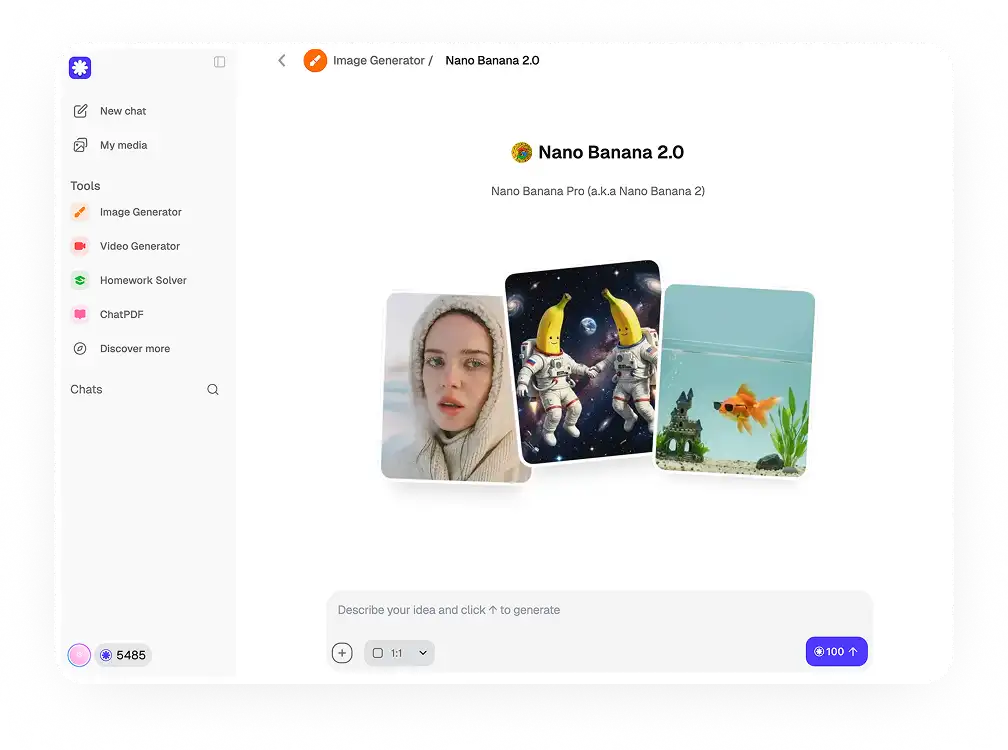
O Nano Banana 2 é o melhor modelo de geração de imagens de IA no momento. Muitos dizem que é o melhor gerador de imagens de IA do mundo — e provavelmente é verdade. O Nano Banana 2 (tecnicamente o Gemini 3.1 Flash Image) é o componente de geração de imagens do Google que trabalha junto com a linha Gemini.
Você pode mesclar até 14 imagens de uma vez
Você pode editar imagens por meio de prompts
Você pode criar infográficos com dados precisos do mundo real
Você pode gerar imagens altamente realistas com resolução de até 4K
Quais são as desvantagens? Ele custa mais e é mais lento do que outros modelos. É por isso que o Nano Banana 2 também é chamado de Nano Banana Pro. Ele não foi um substituto para o modelo original. Em vez disso, foi lançado como uma versão premium e mais avançada.
Outros geradores de imagens dignos de nota incluem:
Flux 2
Reve
Seedream 4
E o ChatGPT? O GPT-Image é o modelo de geração de imagens da OpenAI, que cria imagens dentro do ChatGPT. Em certo momento, essa era a melhor escolha para geração de imagens, mas hoje já não é tão bom quanto os concorrentes.
O Grok também oferece geração de imagens, mas não é tão bom quanto o Nano Banana 2. Dito isso, o Grok permite conteúdo explícito, então você pode, em tese, criar imagens que outros modelos não deixariam você criar por causa da filtragem de segurança.
Melhor modelo de IA para vídeo
Sora 2 e Kling o1
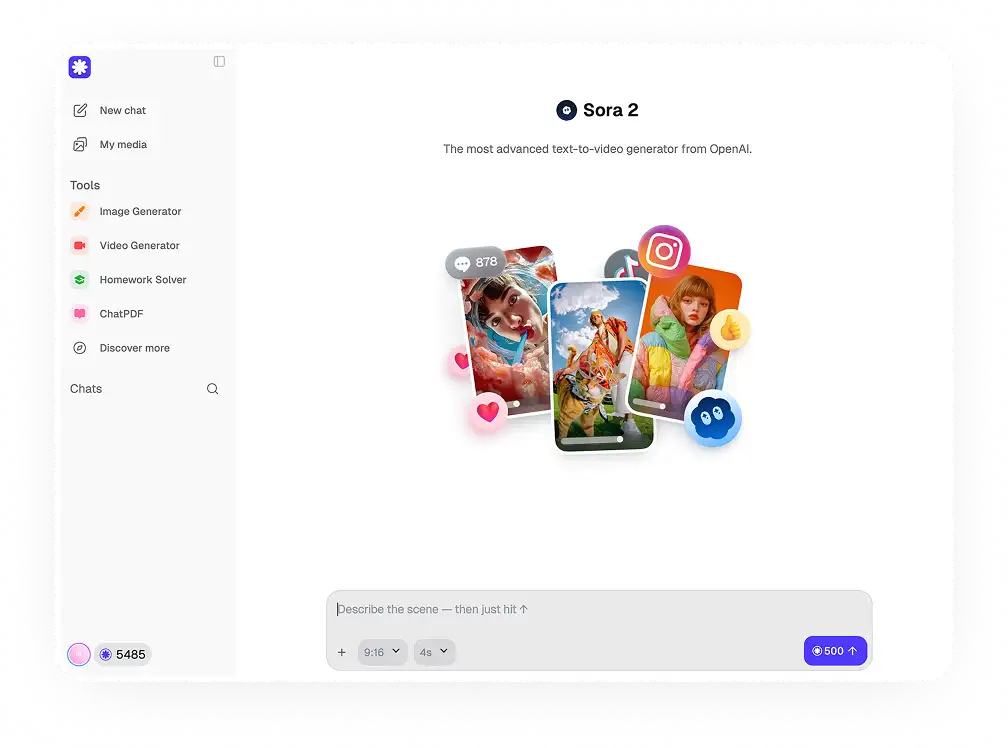
O Sora 2 e o Kling o1 são os melhores modelos de vídeo de IA no momento. O Sora é o modelo de geração de vídeo da OpenAI, que oferece qualidade excepcional e física realista em comparação com os concorrentes. Ele também consegue gerar vídeos com som.
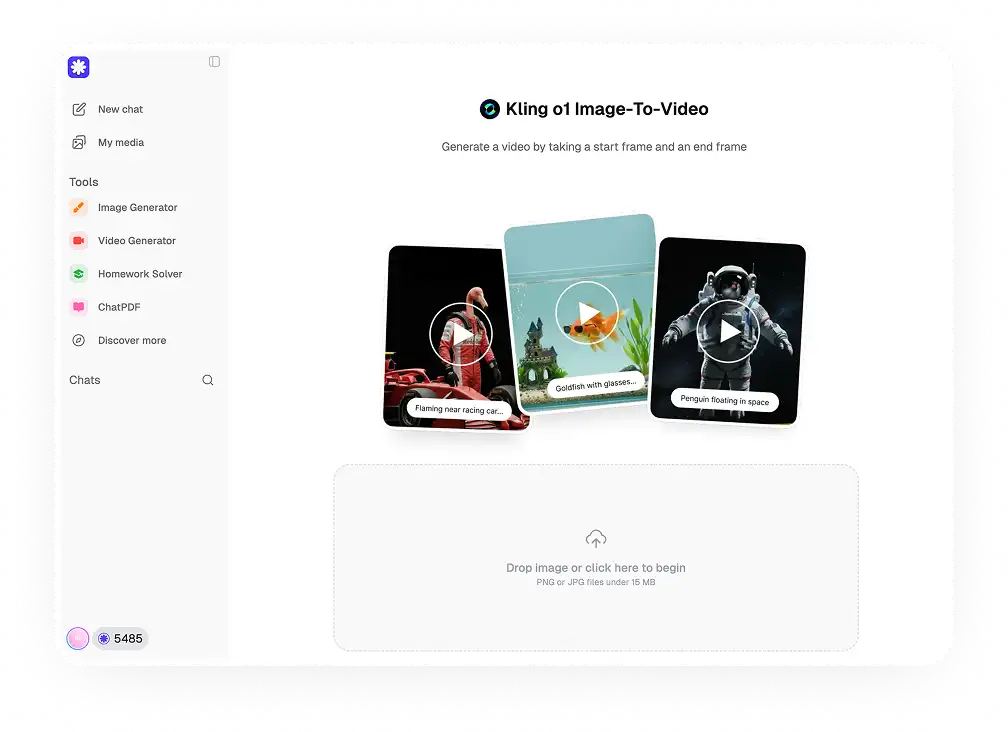
O Kling o1 é o primeiro modelo de IA multimodal unificado do mundo, o que significa que você pode jogar qualquer conteúdo e anexos nele e criar prompts ultracomplexos, dando a você mais controle sobre o resultado final do que qualquer outra coisa no mercado.
O que mais vale a pena considerar? O Veo 3.1 — este é o modelo de geração de vídeo do Google, que trabalha junto com o Gemini. Ele é quase tão bom quanto o Sora 2, mas os vídeos não são tão realistas.
Melhor modelo de IA para análise de dados
Gemini 3.1 Pro
O Gemini 3.1 Pro tem uma janela de contexto de 1 milhão de tokens, que permite digerir e raciocinar sobre documentos muito longos, planilhas grandes, arquivos CSV ou bancos de dados.
Ele tem outra vantagem: um forte processamento multimodal. Isso significa que o modelo consegue ler imagens, digitalizações e conteúdo visual com muita precisão, o que o torna ideal para analisar e conversar com documentos em PDF.
Os usuários do Google Workspace também vão achar conveniente que o Gemini 3.1 Pro se integra diretamente com o Google Sheets, o Google Analytics e outras ferramentas do Google Workspace.
Por que o Gemini 3.1 Pro é tão bom em análise de dados? Ele é construído de um jeito diferente (sem trocadilhos).
Ao contrário de outros modelos, que processam diferentes tipos de mídia em sequência, o Gemini entende texto, imagens, tabelas e gráficos ao mesmo tempo dentro de sua arquitetura. Isso o torna particularmente forte na análise de documentos que combinam vários formatos de dados — como relatórios trimestrais com gráficos incorporados ou artigos de pesquisa com tabelas e gráficos.
Comparação de preços
Todos os quatro carros-chefes oferecem planos gratuitos e várias opções pagas. Veja como as estruturas de preço se comparam:
Preços para o consumidor
Plano
ChatGPT
Grok
Gemini
Claude
Gratuito
GPT-5.5 Instant (padrão) com limites, busca na web, modo de voz, upload de arquivos
Grok 4.3 com limites, DeepSearch, raciocínio
Gemini 3.1 Pro com limites (app Gemini / AI Studio)
US$ 19,99/mês - Google AI Pro: Gemini 3.1 Pro com contexto de 1 milhão de tokens
US$ 20/mês - Claude Pro
Premium
US$ 200/mês - ChatGPT Pro: GPT-5.5 ilimitado, modo GPT-5.5 Pro, Deep Research, Sora
~US$ 300/mês - SuperGrok Heavy: acesso mais completo ao Grok 4.3, recursos antecipados
A partir de US$ 100/mês - Google AI Ultra (plano de topo a US$ 200/mês)
A partir de US$ 100/mês - Claude Max
No plano básico, o ChatGPT Plus, o Google AI Pro e o Claude Pro ficam todos em torno de US$ 20/mês, enquanto o SuperGrok da xAI é um pouco mais caro, em cerca de US$ 30/mês. O Plus e o Pro vêm com extras como Canvas, GPTs personalizados e Projetos.
O Google AI Pro é parecido com o ChatGPT Plus, a cerca de US$ 20/mês, e funciona com apps do Google Workspace como Gmail, Docs e Sheets — útil se você já vive no ecossistema do Google. (Observação: os planos para consumidor mudam com frequência, então confira a página de preços atual de cada provedor.)
Preços da API
Para desenvolvedores que criam aplicativos, veja como os custos da API se comparam entre os quatro carros-chefes atuais (por milhão de tokens; consulte cada provedor para ver os valores atualizados):
Grok 4.3: US$ 1,25 de entrada / US$ 2,50 de saída — o mais barato dos quatro
Gemini 3.1 Pro: US$ 2,00 de entrada / US$ 12,00 de saída (sobe para US$ 4,00 / US$ 18,00 em prompts acima de 200 mil tokens)
GPT-5.5: US$ 5,00 de entrada / US$ 30,00 de saída (entrada em cache US$ 0,50; prompts longos acima de cerca de 272 mil tokens são cobrados com sobretaxa)
Claude Opus 4.8: US$ 5,00 de entrada / US$ 25,00 de saída (um modo Fast opcional custa US$ 10 / US$ 50; o cache de prompts pode reduzir o custo de entrada em até 90%)
O Grok 4.3 é disparado o mais acessível, e o Gemini 3.1 Pro é o mais barato dos modelos de fronteira fechados para prompts curtos. O GPT-5.5 e o Opus 4.8 ficam na ponta premium — você está pagando por desempenho de primeira linha em programação e em uso de agentes. O preço do Gemini praticamente dobra para contextos muito grandes, acima de 200.000 tokens, então leve isso em conta no trabalho com documentos longos.
Conclusão
Os quatro laboratórios continuam ultrapassando uns aos outros. Em junho de 2026, os carros-chefes atuais são o GPT-5.5 (abril de 2026), o Grok 4.3 (abril de 2026), o Gemini 3.1 Pro (fevereiro de 2026) e o Claude Opus 4.8 (28 de maio de 2026) — e o Opus 4.8 é o que todos querem superar, liderando o Artificial Analysis Intelligence Index e no topo dos benchmarks de programação. Mas não existe um único vencedor para tudo: o Opus 4.8 e o GPT-5.5 dominam a programação, o Gemini 3.1 Pro lidera em raciocínio e análise de dados, o GPT-5.5 lidera em escrita criativa e o Grok 4.3 é a opção econômica.
O único problema é que assinar todos eles é caro — facilmente mais de US$ 100/mês somando os quatro. Felizmente, existe uma opção melhor.
Com uma única assinatura a partir de US$ 4,99 por semana, você pode acessar todos os quatro modelos na Overchat AI.
Perguntas frequentes (FAQ)
O que é um modelo de IA?
Um modelo de IA é um grande modelo de linguagem treinado em quantidades enormes de dados de texto usando redes neurais baseadas em transformers. Esses modelos aprendem padrões na linguagem e conseguem gerar texto parecido com o humano, analisar dados, escrever código e realizar várias outras tarefas.
Qual é o melhor modelo de IA no momento?
Em junho de 2026, o Claude Opus 4.8 é o melhor modelo de IA geral — ele lidera o Artificial Analysis Intelligence Index com 61,4, logo à frente do GPT-5.5, com 60,2. O Opus 4.8 também lidera em programação, o Gemini 3.1 Pro lidera em raciocínio e análise de dados, e o GPT-5.5 lidera em escrita criativa e em fluxos de trabalho de terminal/linha de comando.
Qual modelo de IA é melhor para programação?
O Claude Opus 4.8 (o sucessor do Opus 4.5 abordado neste artigo) é o melhor modelo de IA para programação em meados de 2026. O Opus 4.5 já liderava o SWE-bench Verified com 80,9% em novembro de 2025, e o Opus 4.8 ampliou essa vantagem ainda mais — SWE-bench Verified de 88,6% e SWE-bench Pro de 69,2%, à frente do GPT-5.5 (58,6%) e do Gemini 3.1 Pro (54,2%).
Qual modelo de IA é melhor para escrever?
O GPT-5.5 é o melhor modelo de IA para escrita criativa. A linha GPT da OpenAI lidera essa categoria desde que o GPT-5.1 ficou no topo do benchmark Creative Writing v3 no fim de 2025, e o GPT-5.5 mantém essa liderança com um tom caloroso e natural.
Qual modelo de IA é melhor para matemática e raciocínio?
O Gemini 3.1 Pro e o GPT-5.5 são as escolhas mais fortes para matemática e raciocínio. O Gemini 3.1 Pro lidera por pouco no GPQA Diamond (94,3%, logo à frente do Opus 4.8 e do GPT-5.5), enquanto o GPT-5.5 é o líder claro no teste de raciocínio abstrato ARC-AGI-2, com 85,0%.
Qual modelo de IA é melhor para geração de imagens?
O Nano Banana 2 é o melhor modelo de geração de imagens de IA. Muita gente diz que seu lançamento foi um avanço tão grande para a geração de imagens quanto o lançamento do GPT-3 foi para a geração de texto. Isso porque ele torna possível fazer coisas que simplesmente não eram possíveis antes, como mesclar 14 imagens em uma só ou criar infográficos detalhados com texto perfeito e fatos precisos.
Qual é o melhor modelo da OpenAI?
Em junho de 2026, o GPT-5.5 é o modelo mais capaz da OpenAI e o abordado neste artigo. Ele vem nas variantes Instant (o padrão do plano gratuito), Thinking e Pro, para tarefas do dia a dia versus tarefas complexas, e sucede o GPT-5.1 e o GPT-5.2.